
The art of video games
Playful news
“Are video games art?” - I once was asked, and I answered in the affirmative without even thinking. Mass/popular culture is always around with a more “elite” /high culture, and contemporary artists have long used video game aesthetics in their works. Thus, video games have quietly become an integral part of contemporary culture and the environment around us - the budget of the next game release can be compared to the budget of a blockbuster, and it always clearly has more viewers than any theatrical production or exhibition. Using video game elements in art allows you to experiment with new forms of expression and communicate with the viewer on a different level, attracting new audiences and bringing a fresh perspective to contemporary art.
Video games + artists
One way of symbiosis is to use video games as an artistic medium. High culture? Yes and no. Alan Butler's photographs in GTA, which explore the process of segregation and marginalisation within modern metropolises, the work of Jacolby Satterwhite, which explores themes of memory, and Jenova Chen's arthouse video games, where people are asked to play for the wind, among other things, are examples of how modern artists have made games a creative method. The artist's works are found in different genres of video games, ranging from indie games to large-scale AAA projects. Another way is to use a gaming aesthetic, for example, in the famous video work of Jon Rafman, “Dream Journal” (also known for installations for Balenciaga), shown at the Venice Biennale in 2019. After all, French street artist Invader, who creates 8-bit mosaic images on house facades, also uses game characters.
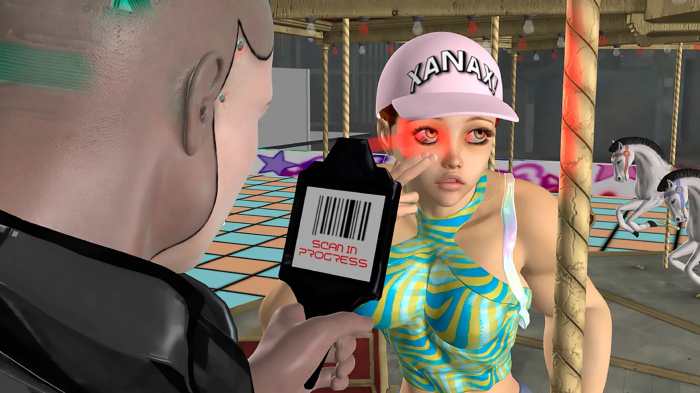
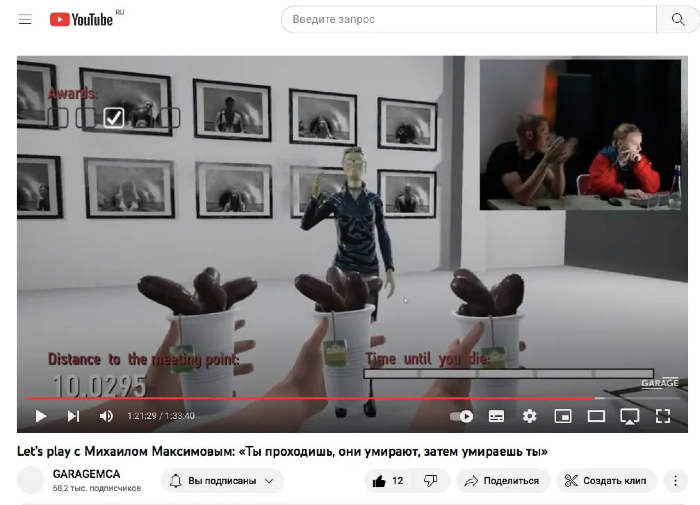
Among Russian artists, one can note media artist Mikhail Maksimov, who presented a video game at the Garage Museum in which you can fight with Olga Sviblova and Sergei Bratkov, and The Blueprint-100 participant Anna Rotaenko, who in her works edits staged videos from GTA with discussions about economic and social reality of art. To them, you can add AES+F, Sarah Kulman, the ШШШ Art Group, and Alec Petuk - the list is quite impressive. Video games have become an object of research, a medium, and an element of modern painting. For example, Sasha Yazov rethinks the computer aesthetics of the 2000s in the space of a canvas - by recreating screenshots from video games, and Sasha Yakutina creates digital collages from photographs taken from stock.
Video games + cultural institutions
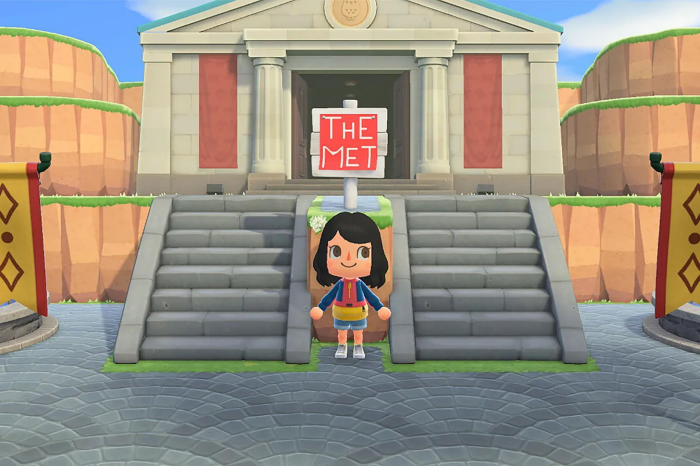
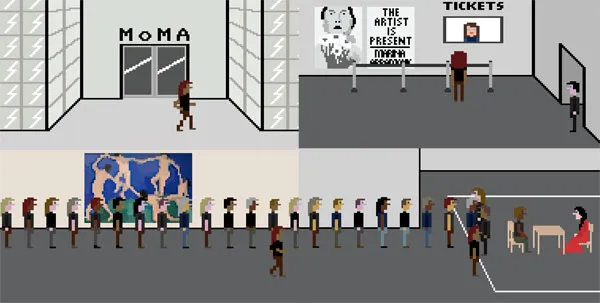
Creating exhibitions in video games can attract people into the world of contemporary art who may have yet to be interested in visiting a cultural institution. This is one way to reach new audiences and bring a fresh perspective to art. For example, in 2020, The Met featured its permanent collection in the video game Animal Crossing: New Horizons. Players had the opportunity to walk among the exhibits virtually. Later, the performance “In the Presence of the Artist” by Marina Abramovic was recreated inside the same game. The Serpentine Gallery's KAWS exhibition has opened in Fortnite, marking the first virtual replica of an art gallery.
And vice versa: some spaces and exhibitions focus on art in video games. One example is The Museum of Art and Digital Entertainment in San Francisco, where visitors can study the history of video games. Another example is the “The Art of Video Games” exhibition at the Washington National Museum of American History. The exhibition talked about the influence of video games on modern culture. Several major museums and galleries around the world, such as the Museum of Modern Art in New York, the British Museum and the National Museum of Scotland, include works by artists who create works inspired by video games and video games themselves. The Museum of Modern Art in New York and the Victoria and Albert Museum in London show video games from The Last of Us to The Sims.
Russian cultural institutions are also researching game studies (video games in the context of art history). You can recall the Garage Digital program at the Garage Museum or the computer class as part of the exhibition “The Coming World: Ecology as a New Politics. 2030–2100" or episodes of V-A-C Sreda, as well as games that could be played at the exhibition "I take gondola engines apart" at GES-2. Unfortunately, most program texts about game studies have not yet been translated into Russian, but this is a matter of time. To indicate the level of the conversation, let’s say that in 2011, for example, David Getsy, a professor at the Art Institute of Chicago, published the bestseller “From Diversion to Subversion: Games and the History of 20th Century Art,” where he talked about how Pablo Picasso and artistic practices surrealists influenced modern game mechanics.
Video games + auction houses
In recent years, the world of video games has begun to emerge as a new source of income for auction houses. Video games are not only popular entertainment but also an element of the art market - after all, they can be classified as “collectables” or collectables. Auction giants sell everything from real estate and handbags to wine and sneakers, and games are legitimately included in this ranks. Collectors are willing to pay big money for rare items: for example, in May 2021, a copy of the game Super Mario Bros. released in 1986 in unopened packaging, sold for $660,000. Another example is that The Legend of Zelda, released in 1987, also in unopened packaging, was sold at auction for $870,000. In addition, some game companies have begun releasing particular collector's editions of games, which can cost even more.

Video games + us
To look at the future, in the company of a friend and co-owner of our communication agency CO-WORKING Polina Smirnova, in the middle of the work week, I went to the basement in the Kitay-Gorod area, where the “Cobra” computer club was located. Among the screaming and swearing students (presumably MGIMO), we sat at the computers, taking the last chips at the checkout.
We argued for a long time about the nature of the author's universes and the differences between design and art while simultaneously killing terrorists in Counter-Strike. We overheard conversations about how games change people’s destinies and how the essence of gaming has transformed; I watched the finals of the world championships in stadiums, studied the biography of Buddha, who is 2019, at the age of sixteen, won the first Fortnite world championship, learned about UFOs in GTA, discussed politics in gamer chats and the presence of the Valentino brand in Animal Crossing.
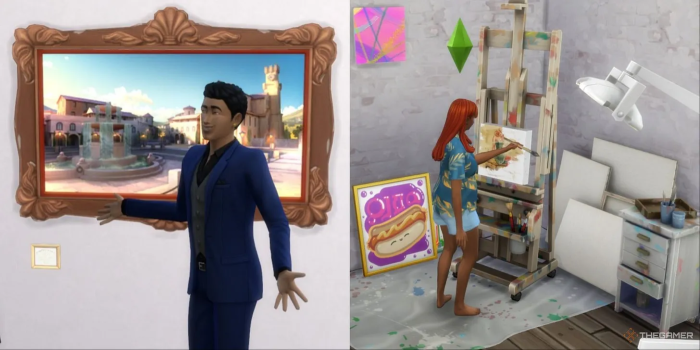
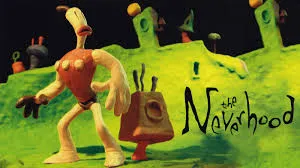
I remembered the games we played as children, from “Neighbours from hell” (Достать соседа) to “The Neverhood/ Неверьвхудо” and laughed at the fact that in The Sims, to sell a piece of work painted on canvas at home, a Sim needs to throw it in the air. Here’s a great illustration of how pop culture provokes unrealistic expectations from life in its consumers. A field study of Fortnite's endless creative map ended, admittedly, in a compromise.
What are computer games in the modern world? A form of escapist leisure, built on explicit algorithms, or a form of creative (self-)expression? Both. Can video games be used as a medium to convey ideas and concepts, or are they purely entertainment? Do commercial factors and the interest of a wider audience interfere with the artistic intent? Are games themselves art without institutional support? However, the fact that “video games” in these questions can be replaced by “cinema”, “literature”, and “theatre” and still not find an answer speaks volumes.
This is how I thought while walking around VDNKh in Atomic Heart (a Russian-Cypriot shooter game about an alternative USSR with twin robots and murders that broke all records), read oracles about the exhibits and was surprised at the presence of wheelchair ramps. Very inclusive.
The only thing that prevented me from enjoying the exhibition was the iron monsters with the funny name Vovchik attacking me. However, today, there is nowhere to hide from them.