
What’s Wrong With the ‘Female Gaze’?
How the internet sanitised the public image of female lust
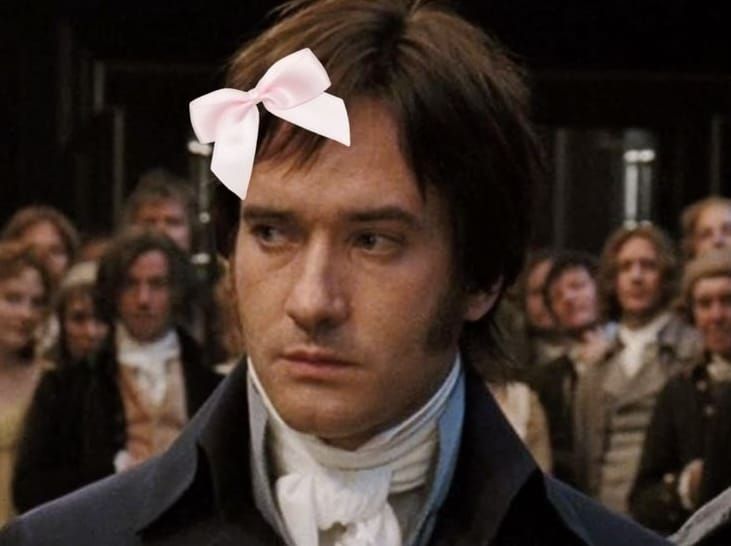
The Male Gaze, before it became internet shorthand for ‘this director has definitely never made a woman come,’ started as a film theory concept. In 1975, British feminist critic Laura Mulvey published Visual Pleasure and Narrative Cinema, the essay that basically walked into Hollywood, looked around at decades of women existing as accessories to male self-discovery and plot, and asked: what the hell?
Her argument was that mainstream cinema had been built around a heterosexual male point of view: men looked, moved, chose, acted, while women simply appeared, not as full subjects, but as objects orbiting the male protagonist to be consumed by him, the camera and the audience in one neat little patriarchal relay race.
The counter-spell to this was supposed to be the Female Gaze: less a single doctrine than a loose feminist answer to Mulvey’s question of what happens when women are not just the image, but the eye. Not just what is looked at, but the force seeing and shaping what is seen.
But somewhere between 50-year-old film theory and modern online discourse, that original idea got reduced to ‘please give women better interior lives and let them shape the story’. And while that is true, the gaze in media is not just about agency in the abstract, but about erotic direction. So where does the eye go when it is finally allowed to move on its own?
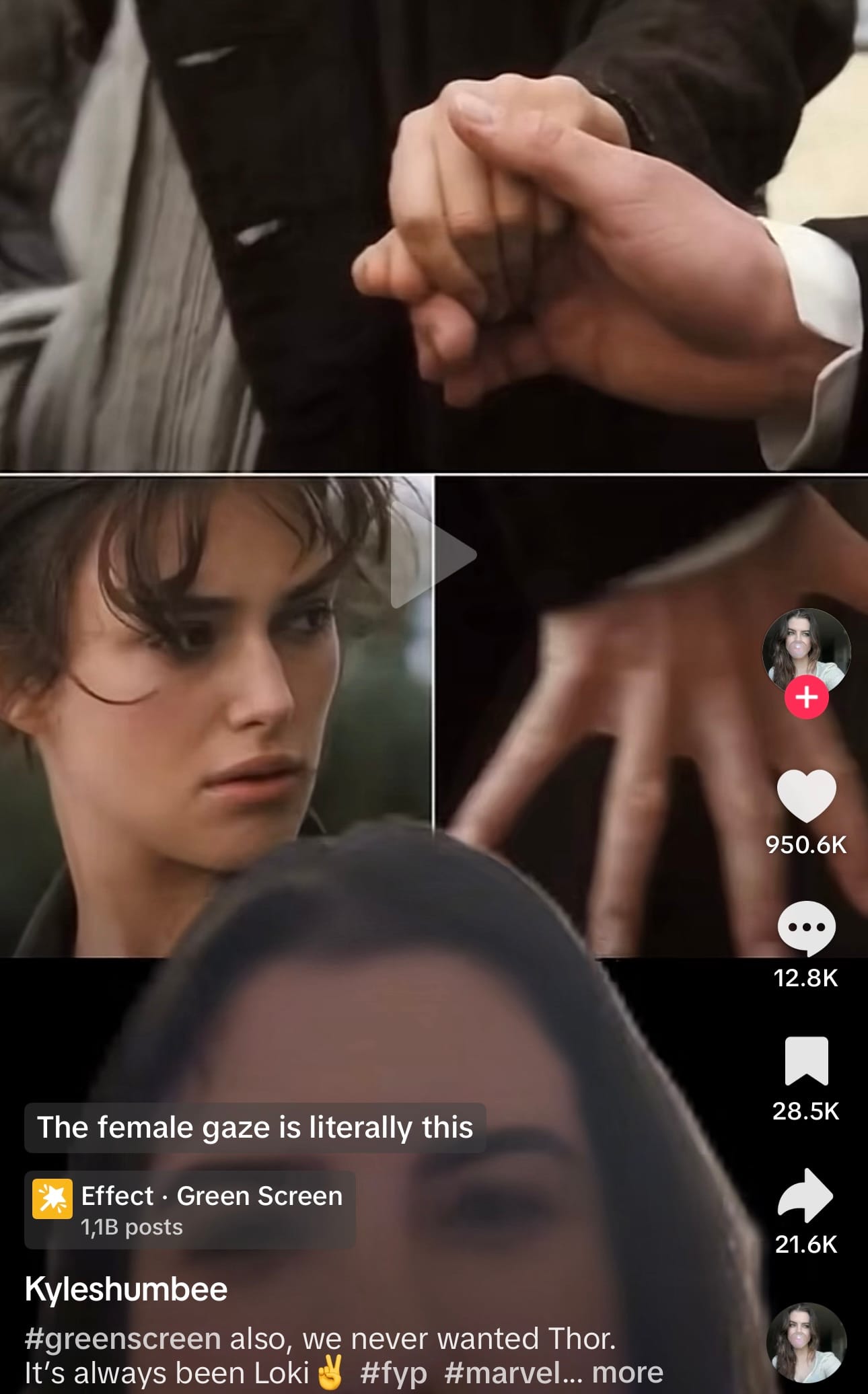
To Mr Darcy touching Elizabeth Bennet’s delicate wrist, apparently. The online consensus around the heterosexual Female Gaze seems to be that it is less about women salivating over sweaty muscles, a suggestive grin and a hand at the groin, and more about depth, and tension. Liam Hemsworth as Thor is what men think women want; women, apparently, are more turned on by a mutual longing with a complex underdog in a slow burn.
Which is strange, because female desire — actual female desire, the kind that keeps publishing houses, fan-fiction archives, audio erotica platforms, anonymous Kindle purchases and AO3 tabs hidden behind work documents alive — is not exactly built on physical and emotional moderation.
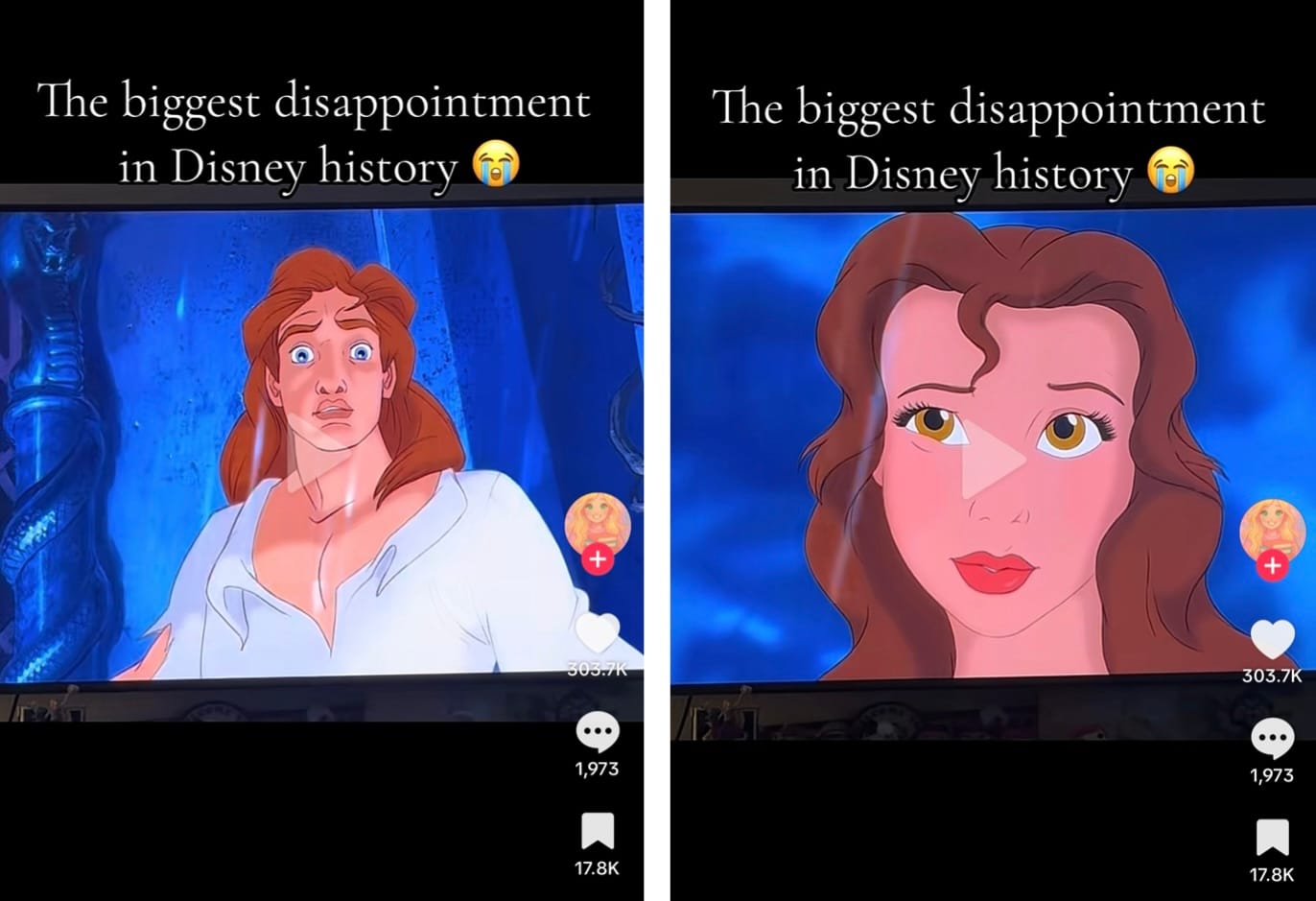
It is a messy continuum: from Hermione choosing Draco, the Death Eater, over awkward, freckly Ron; to the suspicious number of memes zooming in on Belle’s disappointed face when the Beast turns into a blond, blue-eyed prince; to the thousands of volumes of ‘corset-rippers’, full of obsessive men, growling men, dominance, jealousy, obsession, corruption, humiliation and coercive dynamics, all wrapped in enough psychological volatility to make a doctor prescribe a lobotomy. A whole industry built on intense female fantasy.
So why is the public language around the Female Gaze so genteel? How come the same women consuming these fantasies also insist that the Female Gaze is not the opposite of the Male Gaze, but something more elevated?
Partly because the Male Gaze is associated with non-consensual objectification, porn-brain and the whole ‘boobs before personhood’ tradition, so when women are asked point blank to define the Female Gaze, they often avoid making it a simple reversal — women looking at men as bodies — because that sounds too close to the thing being criticised. Instead, the Female Gaze becomes not ‘women also look,’ but ‘women look better.’ More ethically, more beautifully
In this context, words like ‘yearning’ and ‘longing’ have become so useful because they offer perfect plausible deniability. They say ‘I am sensual’ without saying ‘I am horny.’ It is tasteful, respectful, ‘lady-like’.
Male desire has historically been externalised through images: pin-ups, porn, cinema, advertising, bodies arranged for looking, while female desire has often been displaced into narrative, which gets read as proof that women are somehow less visual, or that men want bodies while women need story. But women’s desire is not morally superior or more ethical; it is just as animalistic as men’s. It is simply laundered through a safer, more private medium. Written erotica is still intensely visual: it’s all hands, mouths, shoulders, scars, sweat, pressure and movement. The image remains; it is just generated inside the reader’s imagination, where no one can judge it.

It does occasionally seep onto the screen, though most of the time it is still born out of literary fiction written by a woman. Take the cinematic masterpiece, the cultural monument, that is Fifty Shades of Grey. Christian Grey, who tells the blushing virgin Anastasia, ‘I don’t make love, I fuck,’ seems at first like the dominant, rich, sexually certain man who takes what he wants. But Christian is not really ‘a man’ so much as a character born out of a female psychic framework.
He exists less as an autonomous male consciousness and more as a tool for generating particular emotional and erotic experiences for the heroine and, by extension, for the female reader. Anastasia embodies the socially acceptable feminine self: hesitant, uncertain, reactive, desired. Christian embodies the disowned but very real aspects of female desire: control, sexual aggression, obsession, hunger, dominance and certainty.
But instead of integrating these impulses into the female protagonist directly, even written erotica still mostly projects them outward into a male figure who acts upon her. The ‘dominant man’ is a projection space for female appetite itself. In that sense, Anastasia and Christian are not opposites, but two poles of the same female psyche.
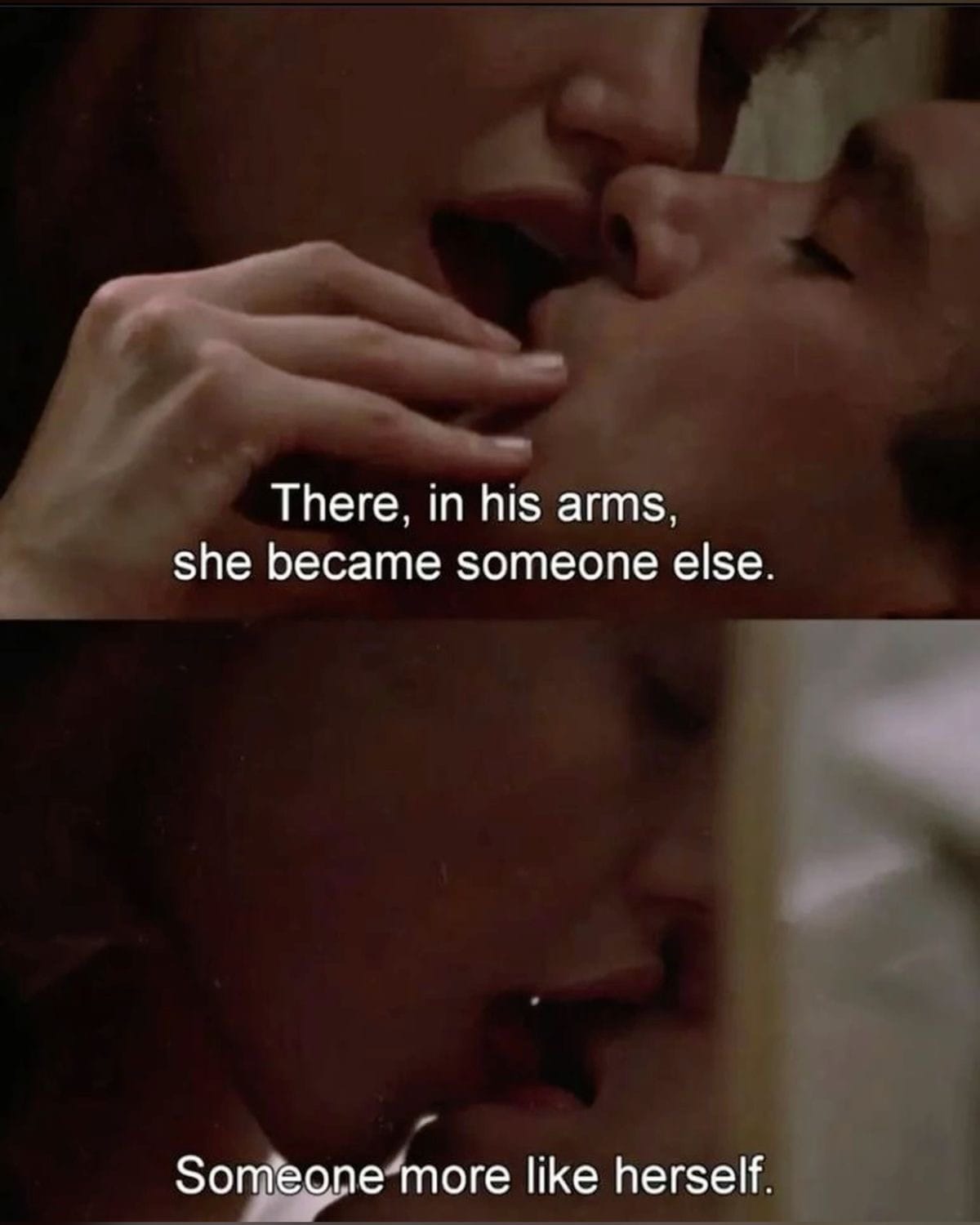
And that is the ultimate paradox. Female desire is intense, but the female desiring subject herself still partly disappears. Under current Female Gaze discourse, it is admitted that she wants, yes, but in a way that reads as more visually palatable and socially acceptable.
Now, wanting complexity and depth itself is not the problem. Gentle desire is real, and yearning is real, and there is absolutely nothing wrong with wanting to be proposed to by a man walking toward you through a misty countryside field.
The problem begins when the Female Gaze is framed as an elevated alternative to the Male Gaze. Rather than women looking back with equal force, the discourse turns female desire into something more refined, more tasteful and less openly bodily.
But genuine agency includes the possibility of vulgarity, lust, dominance, fantasy, contradiction and morally inconvenient attraction that comes from a woman as subject toward a man as object. It includes being openly shallow, selfish, hungry, greedy, politically unflattering and occasionally completely deranged.
Yes, sometimes she wants a man to understand her inner world and brush his hand against her wrist. But other times, in absolutely equal measure, she wants to fuck him senseless and disappear into the night without so much as asking his name.
by Barbara Dolg