Curating Reconnection: Ana Mendieta at Tate Modern
Ana Mendieta’s art was rooted in presence and absence, body and earth, exile and belonging. A major exhibition at Tate Modern brings these threads together, transforming fragments of her ephemeral practice into a vivid encounter with one of the most singular artists of her generation.
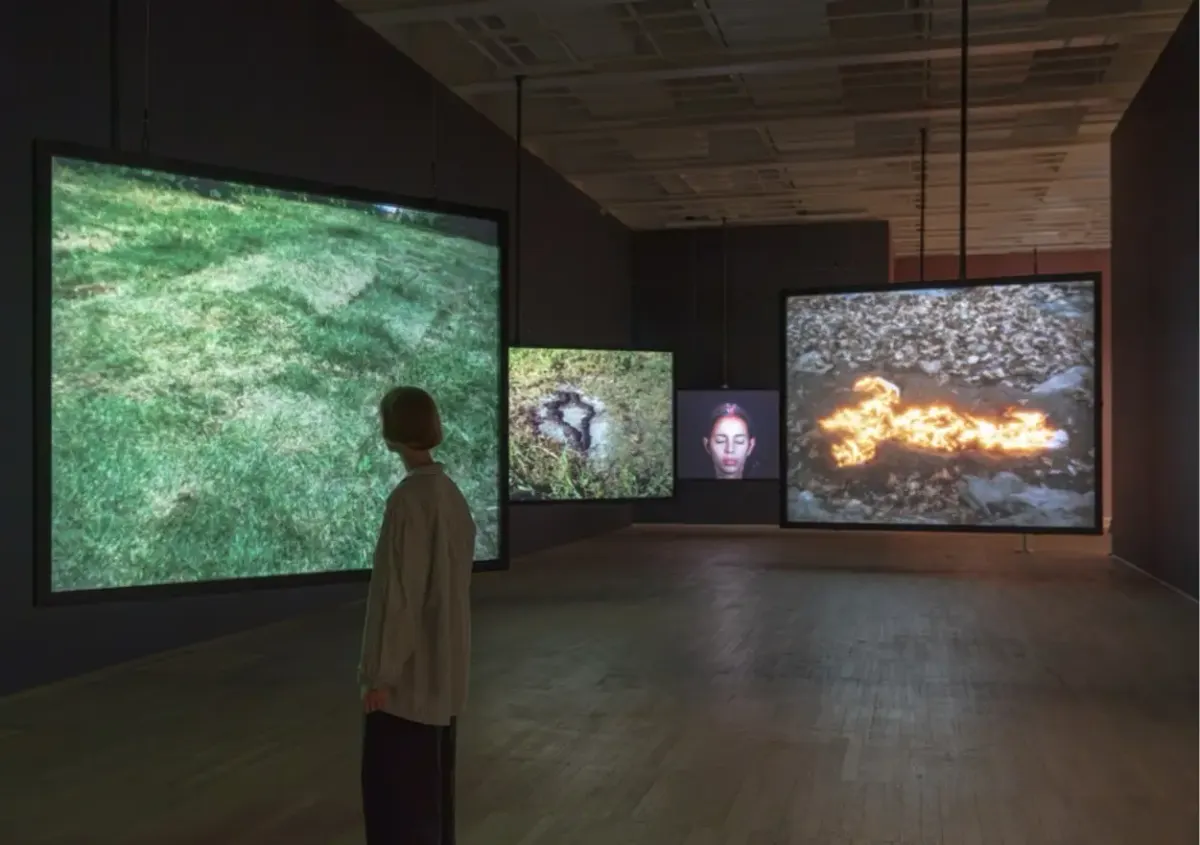
“As you step into this room, patches of sunlight seep through a mesh of concrete. Like a cave providing shade and shelter, it evokes the caverns and shores to which Mendieta often returned. ‘Having been torn from my homeland (Cuba) during my adolescence, I am overwhelmed by the feeling of being cast out from the womb (Nature). My art is the way I re-establish the bonds that unite me to the Universe.’”
So reads the opening placard of Ana Mendieta, one of this year’s major exhibition highlights at Tate Modern. It’s the first major exhibition of Mendieta’s work in the UK in over a decade, offering an unprecedented look at the Cuban-born artist (1948-1985), whose ephemeral work on the body in nature established her as one of the most ambitious and singular creative talents of her generation. Displaying her well-known Siluetas series - carvings and constructions of her silhouette within various natural landscapes - alongside her earlier paintings, films, photography, sketches and sculptural work, the exhibition is less a conventional retrospective than an exercise in reconnection, embodying the essence of Mendieta’s broader mythology within the fabric of the gallery space.
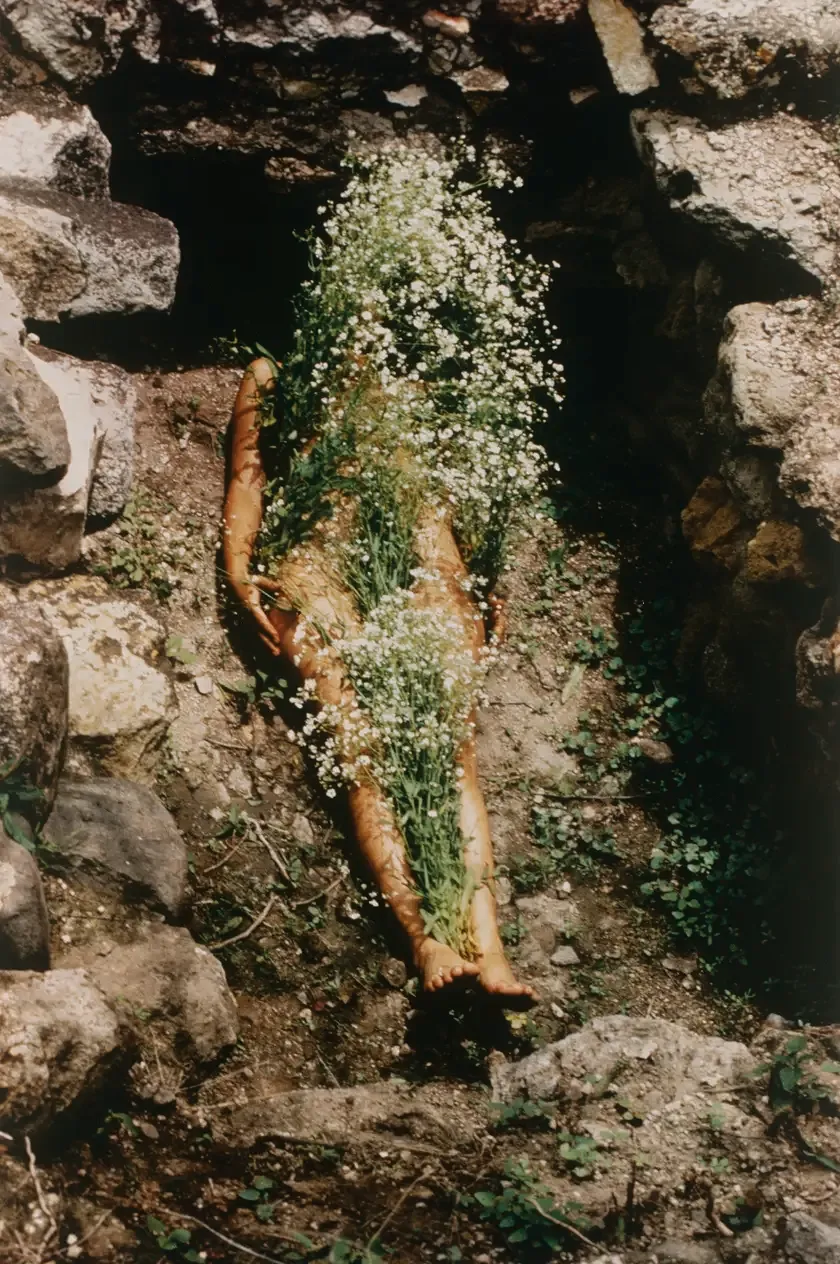
Focused on Mendieta’s earth-body sculptures, the first few rooms provide a cave-like shelter for her early experiments in bodily form. The sculptures present a set of repeated shapes: hollows, outlines, imprints and figures formed within the sand, stone and flowers of the natural landscape. Although simple and repetitive, these forms offer a clear introduction to the textural and visual language of Mendieta’s broader oeuvre. At once the trace of a former presence turned a signal of absence, they highlight a paradox which runs throughout the exhibition. From her own personal history of displacement, having been exiled from Cuba to the United States as young girl, Mendieta’s multidisciplinary work constitutes a similar attempt at reconnection with something lost, be that her homeland, her femininity, the rituals of her ancestors or the natural elements at our fingertips.
When confronting an artist whose work was fundamentally lived, ephemeral and performative, translating that work into the fixed and tangible landscape of the gallery can present considerable challenges. By necessity, many of Mendieta’s sculptural works are displayed here in photographic form, printed posters of works now lost to the natural world. The viewer is repeatedly confronted with these objects originating in and of the earth, but experienced indirectly here through reproductions, or in reconstructed forms.
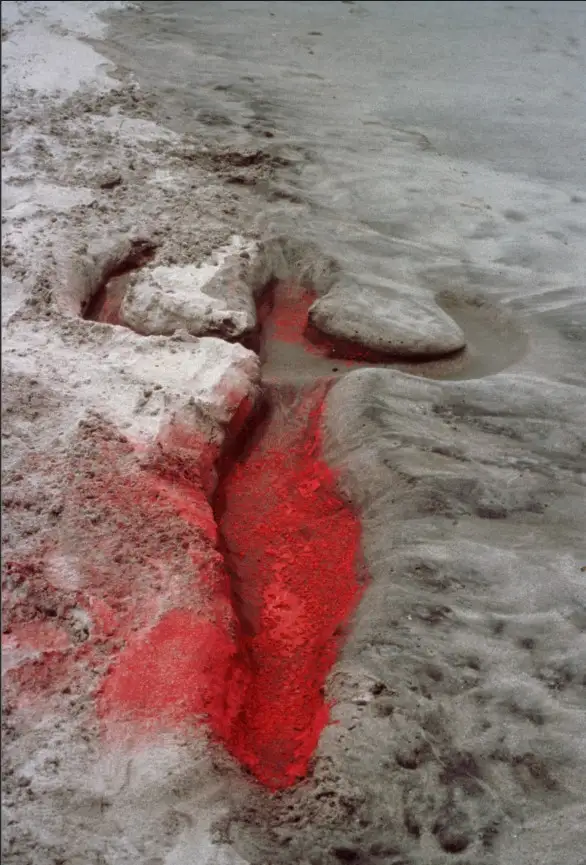
This makes the exhibition’s own act of reconnection particularly insightful. There is an unavoidable distance between the original works and their gallery counterparts, but rather than try to disguise that distance, the exhibition leverages it in favour of Mendieta’s own creative mythology. The photographs and films on display serve not only as records of works that once existed, but become integrated into their afterlife, preserving these ephemeral and temporary performances to be entered into, and enlivened once more by the viewer. In collecting these fragmented performances, drawn in from across time and space to sit alongside one another in the gallery space, the exhibition places value on the nature of their reconnection, rather than the distance from their original contexts.
From an initial cave-like haven, the exhibition opens out into the central hall. The shift feels bodily, as the space itself begins to echo the logic of Mendieta’s now-familiar forms. If viewed from above, the scaled, flowing quality of the viewer’s path would probably appear not too dissimilar to her earth-body symbols. Curves, voids and pathways recreate the organic movements of her Siluetas, directing the viewer between her earliest charcoal sketches, collections of experimental photography, and large sculptural installations - including Ñañigo Burial (1976) and Untitled: Silueta Series (1978) - recreated at the Tate by Mendieta’s niece and estate.
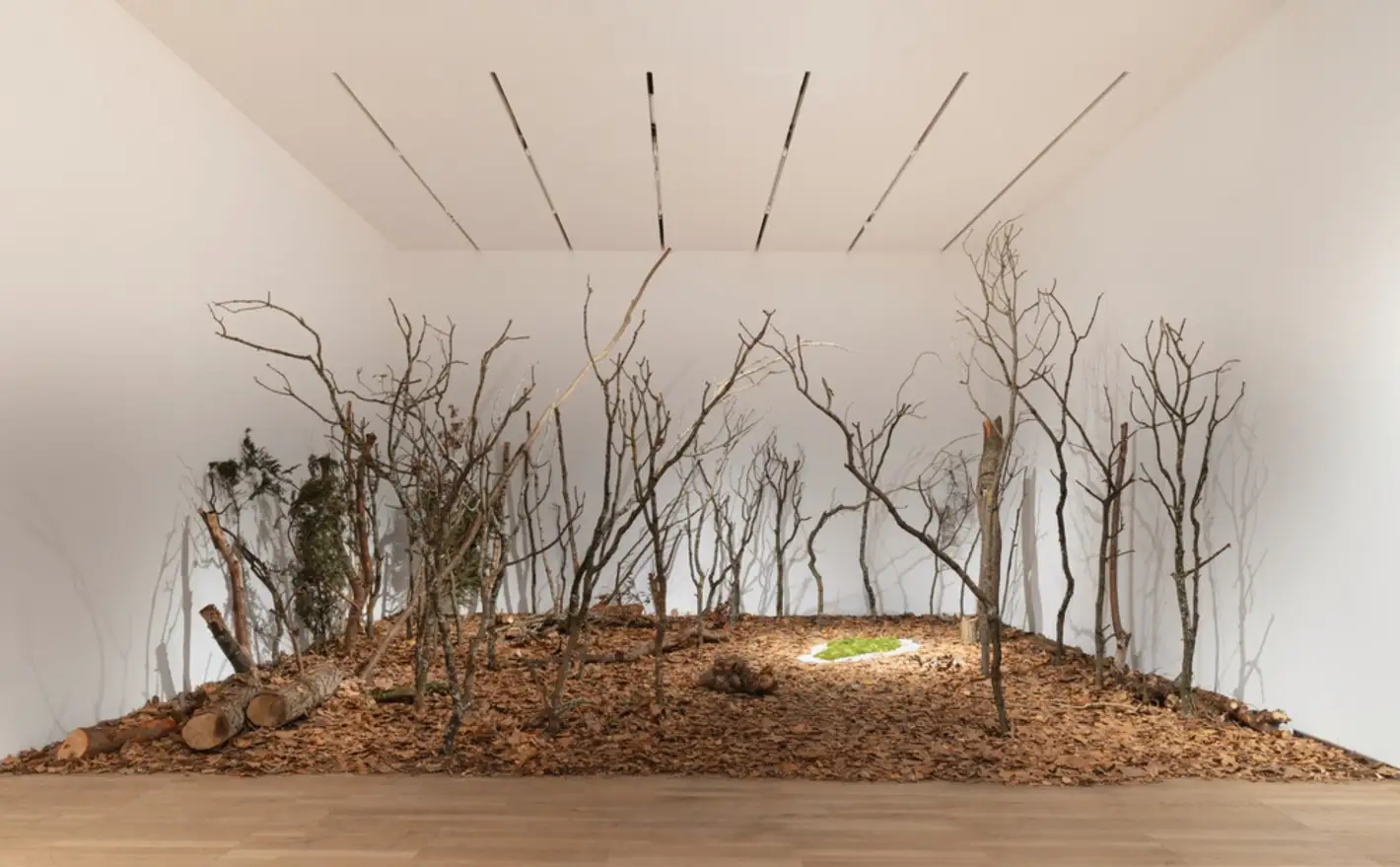
Again, the exhibition does not merely depict Mendieta’s relationship with presence, but asks the viewer to experience something akin to the spatial attention from which her work grew. The exhibition does an excellent job of giving Mendieta and her work the space to breathe: there is a slowness to the best pockets of the space, while small prints and sketches displayed at a distance demand that you enter into them imperceptibly close. The sparse forms of much of Mendieta’s work allows the surrounding space to become a part of the experience, focusing the viewer’s attention on less, but with a greater care. As a result, some of the most affecting moments are arguably the least monumental: granular textures, simple bodily movements, fragments of a voice.
In its focus on presence, form and reconnection, the exhibition preserves something crucial to Mendieta’s work: the sense of a living person within it. In the darkened viewing spaces, mesmerising images of Mendieta breathing and shifting with the landscape are a bittersweet reminder of the early loss of a profound artistic talent. In this sense, the exhibition succeeds because its form mirrors that of its subject, reconnecting fragments of body and earth, death and rebirth, past and present. Mendieta described her practise as the means of re-establishing her connection to the universe. Here, Tate Modern presents not simply a glance back at an artist lost too soon, but the sheer vitality of a creative voice who infuses that absence with so much presence.
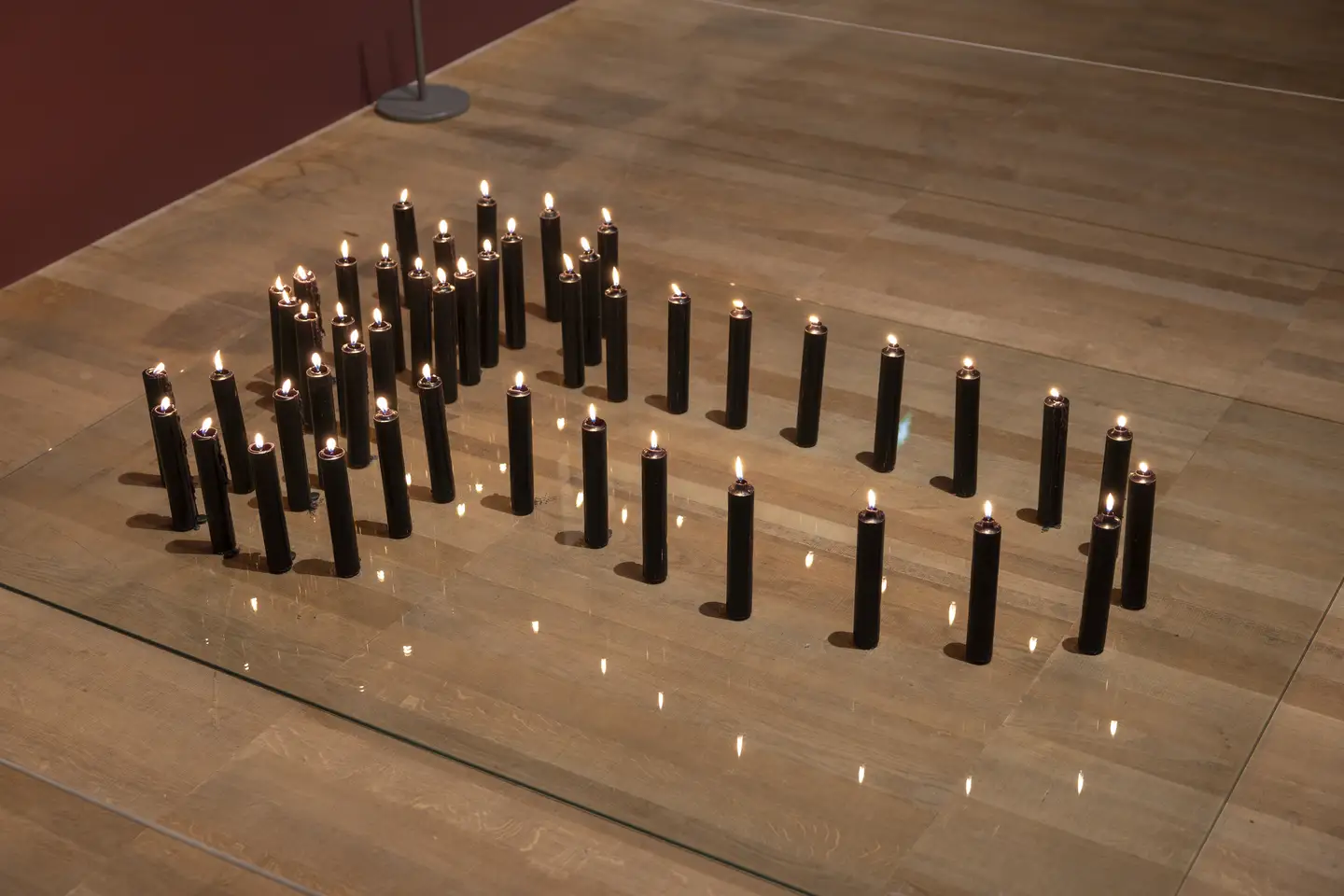
The Ana Mendieta exhibition is currently housed in the Tate Modern, and runs until January 17th, 2027.
Photos: Tate Modern
By Becky Cain-Renshaw