The Last Lipstick: the rituals that help us remain ourselves
For Marie Curie and Superdrug’s *The Last Lipstick* campaign, Anita, Pavla and Sarah share personal stories of beauty, care and memory — and how small rituals, from applying lipstick to skincare, can help preserve identity, dignity and a sense of self through serious illness and at the end of life.
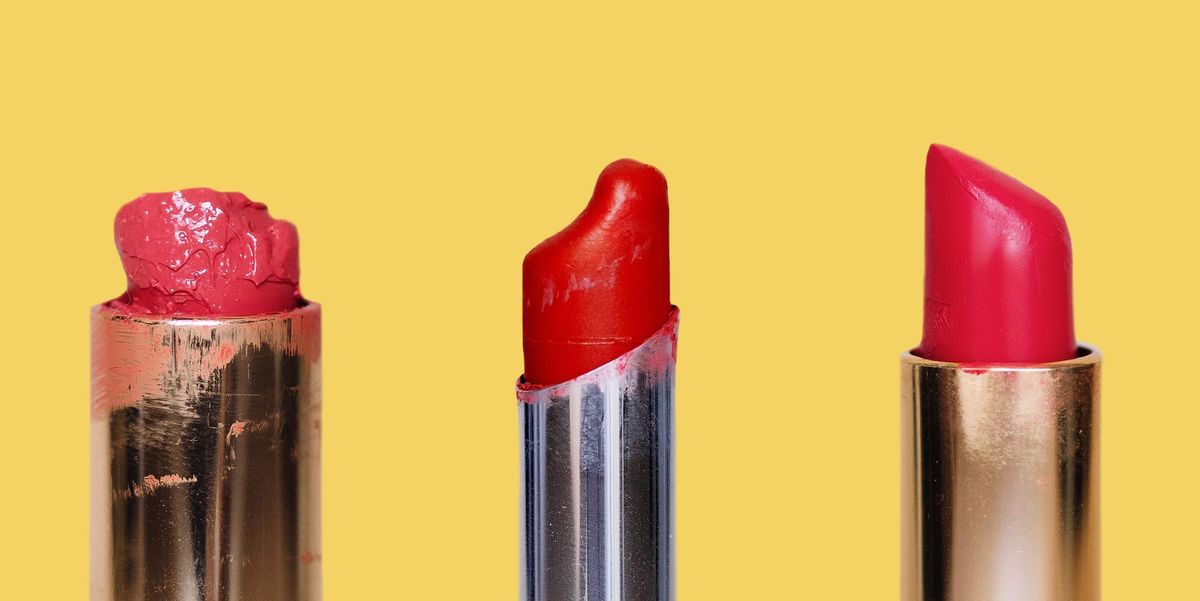
Anita, who is living with a rare lymphoma, explains how skincare, perfume and her signature lipstick helped her reclaim a sense of herself after months in hospital and the loss of much of her independence. Marie Curie Healthcare Assistant Pavla remembers her mother, Dagmar, through the lipstick she left behind, reflecting on the small acts of care that can help people retain dignity and choice at the end of life. And Sarah shares the story of her mother Carol, whose beloved bright lipstick became so much a part of her identity that it remains a treasured connection to her after her death.
ANITA
1. Could you tell us a little about yourself and your experience of living with lymphoma?
I'm 66 years old, and I used to work as a civil servant and then later as a counsellor. I'm mum to Hannah, my daughter who's 30, and my beloved cat Luna, and partner to Clive. I enjoy gardening and cooking, and I love anything creative and crafty like knitting and decoupage.
My lymphoma is a cancer of the central nervous system, called Bing Neel – it has caused deafness, vertigo, and significant balance and mobility problems. The impact of the symptoms has meant that I have lost most of my independence and need support or a carer when I go anywhere.
2. How did your relationship with beauty and self-care change after your diagnosis?
My diagnosis took 3-4 years from my first symptoms. When I was finally diagnosed, I was admitted to hospital, where I spent three months having treatment.
Makeup and skincare in general were huge for me when I came out of hospital because I couldn't look after myself for three months. I had chemo, and I couldn't walk unaided. The nurses couldn’t come in and give me a facial every morning; it was a bit of soap and a flannel. My partner, Clive, couldn't find the products I wanted at home, so I remember rubbing hand cream into my face.
Not being able to look after myself when I was in hospital had a massive impact on me. When I came home, I went on a bit of a spending spree. My skincare routine was ramped back up, big style, and I got my skin back to a point where I was happy with it.
3. Were there particular products, rituals or moments that helped you feel most like yourself during treatment?
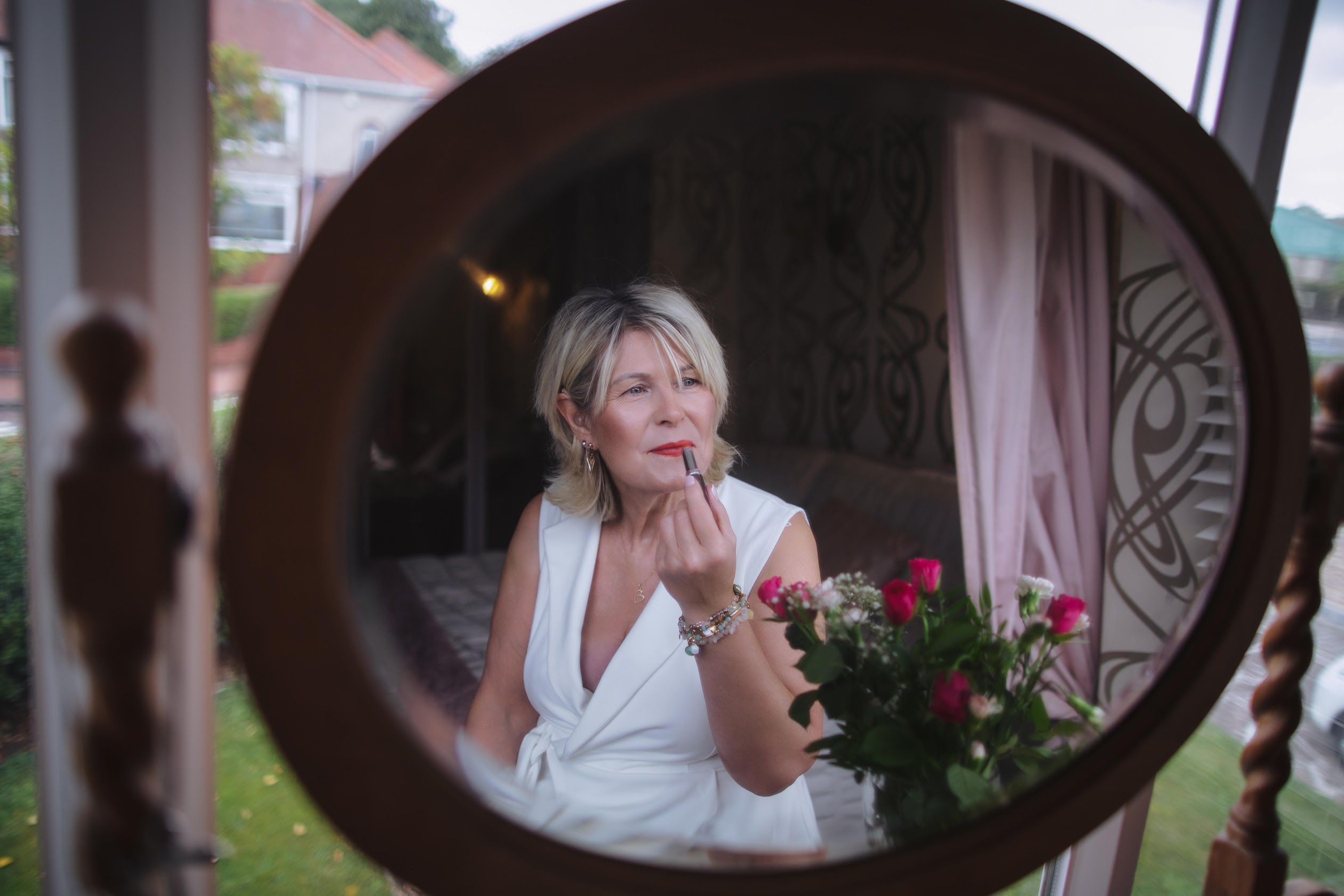
Regardless of if I've just got my pyjamas on, my face is cleansed, toned and moisturised to within an inch of its life. And then I put a bit of a lippy on, a bit of blusher, even if I'm not going out, so I can look in the mirror and go, ‘yes, that's me’.
My number one beauty ritual is that every morning, without fail, I always wash my face and moisturise, and at night, even if I haven't got any makeup on, I use a cleanser. It's like a religious ritual to me, looking after my skin. And that goes for my body as well - I use a moisturiser on my body.
The other ritual, which is huge for me, is perfume. I like to smell nice, and I always have some kind of perfume, even if it's just a cheap everyday one. I can't always smell it because the disease affected my sense of smell, but it's important to me to make that effort for myself rather than sinking into apathy.
4. You have spoken about glamour helping you reclaim your identity. What did that mean to you in practice?
Comparing where I was in hospital to where I am now, where I can actually celebrate and showcase my lipstick and my face, it’s a big deal for me. The Last Lipstick campaign with Superdrug came up when I was in therapy with Marie Curie, as the manager always commented that I never turned up without my lipstick. When I was invited to take part, I thought it is so up my street. I accepted with both hands when I was invited to take part, and I think it’s a fantastic campaign.
5. Why do you think seemingly small choices around appearance can become so important when so much else feels beyond a person’s control?
My beauty rituals make me feel like I'm getting back to normal, that I have some control over my life, and that I’m looking after myself.
Lipstick is such an empowering thing to put on your face. I always admire women who go without makeup and still look fabulous, but I like to wear my lip colour. My lipstick makes me feel like I can face the world. And for me, that is what makes me feel glamorous, that I feel I can project that out to the world even when I'm having a bad day.
6. What would you like people to understand about dignity, identity, and self-expression while living with a serious illness?
The one thing I want people to know from my story is to always show up and glow up. And always remember you don't know what’s around the corner. Grab life while you can because things can change in an instant.
I’m trying to make meaning out of my illness now. I have had to make a ‘new normal’ and accept the difficulties which my illness has left me with. I am still a work in progress with this transition. I can get up and walk after being told I couldn’t. I always try to big up and encourage others to make the best of everything that they have – to celebrate themselves even when things feel hopeless.
I want people to know they’re worth taking care of themselves. It’s not indulgence; it’s necessary for their self-worth.
PAVLA
- Could you tell us about your mother, Dagmar, and the role beauty or lipstick played in her life?
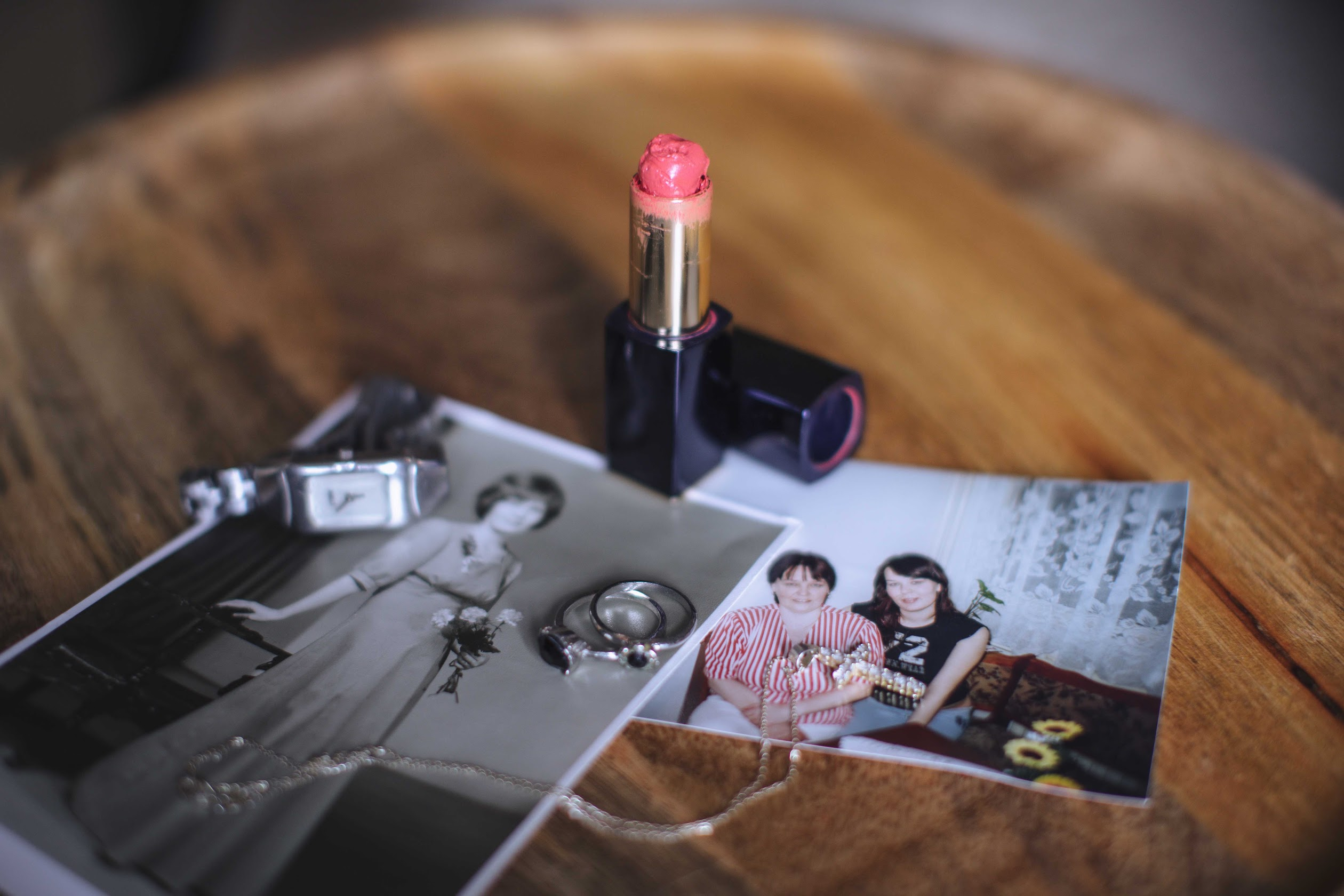
My mum, Dagmar, was a beautiful woman who died far too young. She was bright and warm and beautiful, just like her favourite lipstick. Her lipstick symbolises her beauty, her smile, and the wonderful person she was.
I chose to work for Marie Curie as a Healthcare Assistant after the death of my mother. When I lost my mum, I decided I wanted to support people at the end of life, and that's how I became part of the Marie Curie family. It's a great privilege to care for people at the end of life.
When I look at mum's lipstick, I think about her. It reminds me of her personality, her beauty, and the little everyday things that made her who she was. Keeping her lipstick is like keeping a little piece of her with me. For me, her lipstick represents love, memories, family and the special bond between mum and daughter. These memories will always remain with me.
- What memories come back to you when you look at her lipstick?
I remember times when I would do my mum’s make-up just for fun, helping her get ready for a special occasion or simply enjoying the little moments together. Some moments that seemed ordinary are now the ones I treasure the most.
Mum's lipstick reminds me most of her beautiful smile; it has become a precious keepsake. Lipstick also reminds me of the other women in the family - my sister, my grandmother, my niece.
- As a Marie Curie Healthcare Assistant, what have you observed about the importance of familiar beauty and self-care rituals for people approaching the end of life?
If I am caring for someone who enjoys wearing lipstick or likes to feel a bit more glamorous, I might help them with that. It could be lipstick or tinted lip balm - it can be a simple moment of self-care and a chance for them to feel a bit special.
Sometimes it doesn’t take much to brighten someone’s day. A kind word, smile or little touch of colour can remind someone that they are still themselves, still beautiful and still deserving of those special moments.
- How can these personal rituals help someone retain a sense of identity, choice and dignity?
Illness does not define a person’s beauty, and it should never take away their right to feel beautiful and wear their favourite lipstick for the rest of their days, if they wish. Putting a favourite lipstick on can give someone a sense of happiness and a bit of normality. Even during the hardest moments, everyone deserves to feel beautiful and cared for.
- Has your professional experience changed the way you understand your own memories of caring for your mother?
Throughout my journey in care, I have learned that caring for someone is much more than just physical needs. Sometimes the smallest things can make a person feel happier and more themselves.
- What do you wish more people understood about the emotional and personal dimensions of end-of-life care?
End-of-life care is not only about managing physical symptoms or medical treatment, but it’s also very important to recognise the person behind the illness, their wishes, hopes, fears, the things they like, their memories and relationships.
End of life can be an extremely emotional experience for the person who is dying, and for the family and those who are caring for them.
There is a lot of fear, anxiety and sadness, but also moments of peace and acceptance - even laughter when sharing happy memories. Everyone is completely different, and I always treat every patient as an individual. There is no single ‘right’ way to cope with end-of-life care.
It’s important to me to listen and let my patients express themselves in ways that matter to them. If using lipstick to brighten their day is one of those things, I will always support my patients in any way possible to help them feel comfortable and happy, even when their illness is taking over.
Maintaining dignity, privacy, independence and personal identity is always my priority. I also consider family members, as they often need support too.
To provide good end-of-life care, I always treat the whole person, not just their illness. I always try my best so my patients feel heard, supported, respected and valued, while allowing them and their loved ones to have meaningful experiences during the time they have left together.
SARAH
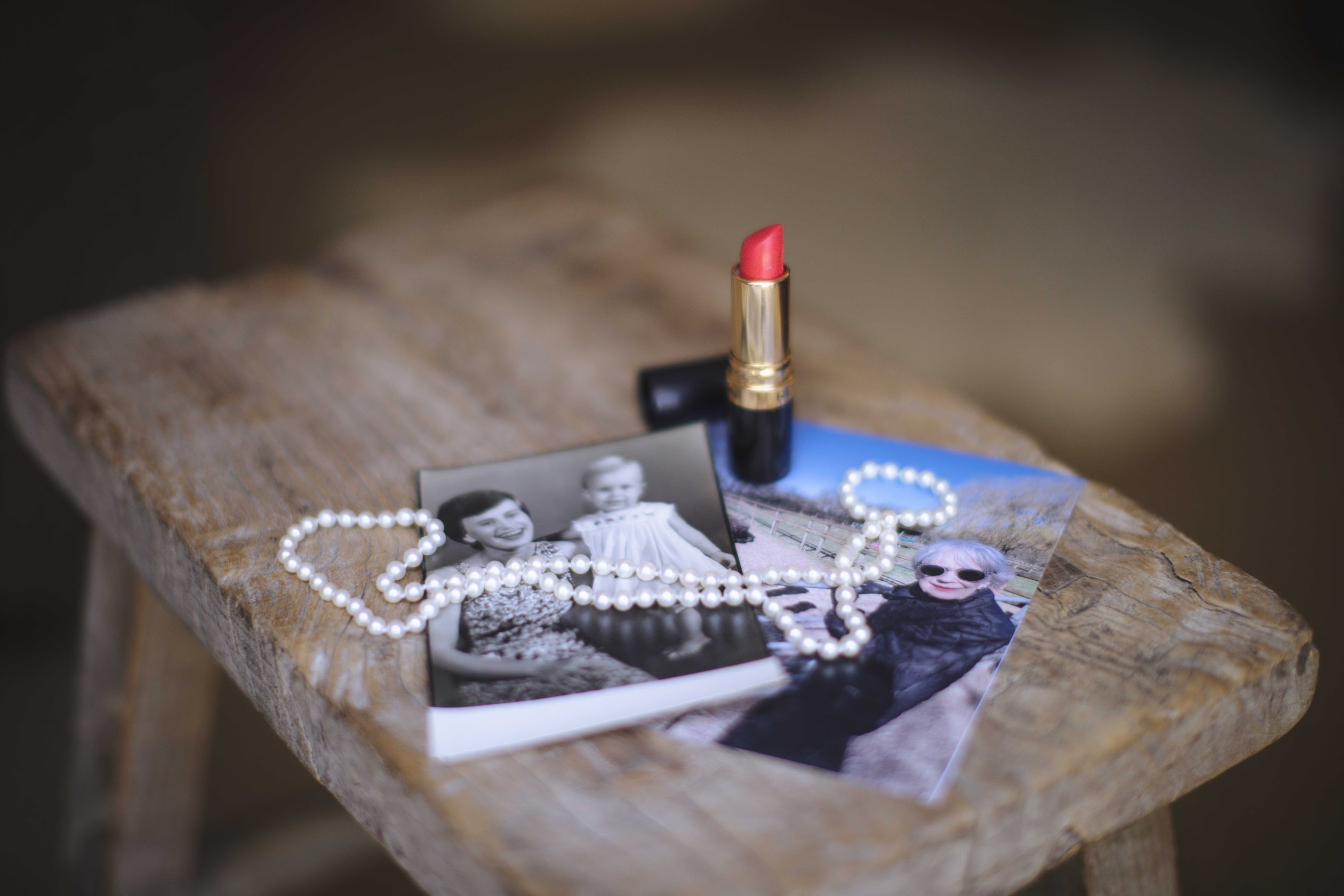
1. Could you tell us a little about your mother, Carol, and what she was like?
Mum was a wonderful, kind and vibrant person. Fiercely proud of her family and we all looked up to her. Everyone went to her for the best advice as she always knew exactly what to say.
She wore lipstick throughout her life because it made her feel like herself… I remember her looking particularly glamorous (wearing her lipstick, of course) the day we went to see the Consultant at the hospital, who then ironically delivered her the devastating news that nothing could be done for her and that the cancer she had was inoperable. I also remember his words to her that day: she looked wonderful, and she should take each day as it came.
2. What did lipstick or beauty rituals mean to her, particularly during her illness?
Mum constantly wore lipstick; it was rare to see her without it, even if she wasn’t wearing anything else on her face - it was always about the lipstick. Her signature colours were usually pinky reds and bright corals. And her favourite lipstick, the most loved and worn, was called “Love That Pink” by Revlon. It was as much a part of her as was her signature red handbag or a striped top. (And she had many!)
I remember my friends at school commenting on how glamorous Mum always looked with her lippie on, and they also loved seeing what she was wearing. Lipstick was part of how she carried herself and a big part of her identity.
Towards the very end, in her last week or so when so much was changing, she actually didn’t want to wear her lipstick anymore, and at first that felt so hard for us, but we came to understand that it just meant she was still entirely herself, on her own terms right to the end.
However, the beauty ritual she held onto right until her last day was that of cleansing and moisturising her face– when she couldn’t do that herself, we did that for her – I imagine she had never missed a day of skincare in her life!
3. Is there a particular memory connected to her lipstick that feels especially vivid or meaningful to you?
One story that particularly comes to mind about Mum’s lipstick was when Revlon stopped making (and she couldn’t find it anywhere in the UK) the lipstick “Love That Pink”. She was beside herself as it was her absolute favourite!! At the time, I was living in Australia for a few years, so I went from chemist to chemist, buying up all the stock I could find to get them back to her! I think I gathered over a dozen lipsticks altogether - she got through all but one, which is now the last one left and the one you see pictured as part of the Marie Curie and Superdrug Last Lipstick campaign.
4. How does keeping this object help you feel connected to her now?
I kept her lipstick because it felt like keeping a little piece of her. Knowing she held it so often is very poignant. It is such an ordinary object but carries so much of her and whenever I look at it, I think of her using it.
When I wear lipstick myself, I often see her looking back at me in the mirror and I remember all the times she would tell me that putting on a bit of lipstick might make me feel better - and she was completely right!!
It became a little iconic amongst her grandchildren and close family and friends; Carol’s red lipstick. And I know that all the family and, in particular, her grandchildren remember her that way.
5. What did you learn through your mother’s experience about the relationship between self-care, dignity and identity?
I learnt that Mum’s love of lipstick and wearing it daily was how she presented herself and how she wanted to be seen, and that she always took pride in her appearance. For me, this campaign is another wonderful way to remember and celebrate her; beyond being glamorous outwardly, she was also supportive, warm, and strong. That strength, and the way I still see her in the mirror when I choose to wear lipstick myself, will always live on.
6. What would you like readers who are supporting someone with a terminal illness — or grieving someone they love — to take from your story?
I would suggest that if they are supporting someone with a terminal illness, then it is so good to encourage all the little rituals and habits (especially those that enhance happiness of any kind or make that person feel more like themself). It could be wearing lipstick, a familiar beauty routine, hairstyling, or getting their nails done. It helps maintain a sense of identity and independence.
And for those grieving a loved one, holding onto a personal item they owned can often be both reassuring and comforting.