"London Is a Cinephile City" Interview with Grace Barber-Plentie
With the 70th BFI London Film Festival just around the corner, we spoke to Grace Barber-Plentie, one of the festival’s programmers, about what makes London audiences so passionate about cinema, how the LFF programme comes together and the new voices she hopes to bring to the screen.
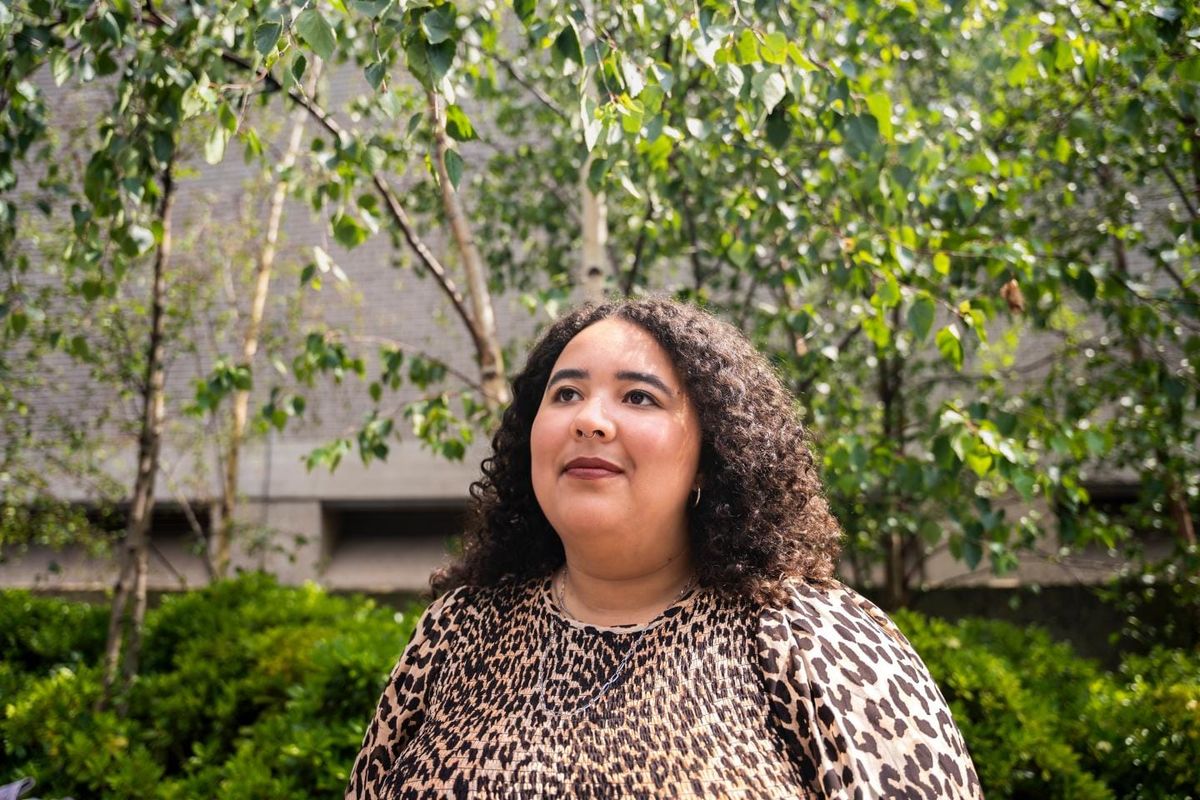
“London is a real cinephile city,” says Grace Barber-Plentie. “People want to see something they wouldn’t get to see every day.”
As one of the programmers behind the BFI London Film Festival, Barber-Plentie spends much of the year watching, debating and shaping films into a programme that can move from a Rwandan drama to Godzilla in the same afternoon. Ahead of the festival’s 70th edition, she spoke to Hyper Culture Collective about what programmers actually do, how emerging filmmakers reach LFF and the films she cannot stop thinking about.
For anyone who has never thought about it before, what does a film programmer actually do?
To put it simply, programmers are responsible for selecting the films for the festival. We travel to film festivals, research and watch films all the time. But there is much more to it than that. We have in-depth meetings and discussions, and we think about the thematic strands: is a film more of a Laugh title or a Love title? Which cinema would suit it best? Then, during the festival, we give introductions and host onstage Q&As with filmmakers. Lots of small things add up to the job — and, ultimately, to the festival we present to audiences.
It sounds like a dream job. Is it?
It has so many amazing parts, and I feel very lucky to do it. We can get a little square-eyed by the end of the year, though. From June to August, we are watching constantly, at all hours of the day, and the range is huge. The difficult part is that the festival has around 160 feature films, while we see many more that we cannot programme. Having to let very good films go can be sad.
How did you find your way into programming — and what would you recommend to someone trying to enter the field?
There are many different routes. Professionally, I worked in film distribution and marketing while programming in a grassroots, freelance capacity in my spare time. Understanding how the industry works and how films are selected helped me move into programming full-time.
For people starting out, the Independent Cinema Office has excellent opportunities and a very useful jobs newsletter. The Barbican also runs a Young Programmers scheme. Watching lots of films helps, of course, but so does knowing what is happening in the global film industry: what is screening at different festivals, which trends are emerging and which directors are coming through. Everyone I work with is a film nerd in a slightly different way. We are passionate about cinema and always paying attention to what is changing around it.
How many films do you watch in a year?
I work across two festivals: LFF and BFI Flare, our LGBTQIA+ film festival. For LFF alone, I watch somewhere between 200 and 250 films, with more on top of that for Flare. Next year I am determined to keep a proper count for both festivals so I can finally give an official total.
Can film still feel like entertainment when watching it is your job?
Definitely — although there are periods when I do not want to watch anything at home because I am so busy. Going to the cinema still feels separate. Perhaps 80 per cent of the films we consider for the festival are watched on a screen at home, whether that is a television or a computer. The cinema is a full, immersive experience.
When I am deep in programming, I might go to more retrospective screenings. Then, when the intense period ends, I suddenly rediscover my love of cinema and think, ‘Oh my God, films exist!’ It is also wonderful to see a film we programmed finally reach cinemas. Sometimes I realise I first watched it a year earlier and want to experience it again with an audience. My favourite cinema is Peckhamplex. I will go and see whatever is on because it is always fun with a big crowd.
The festival contains such different films. How do you make the programme feel coherent?
It is entirely a team effort. We are all watching different films, but we spend so much time discussing them that we begin to understand how they speak to one another. A film from Thailand might connect beautifully with a British film because they approach the same subject from different angles. In a strand like Thrill, the relationship might be more about how two films use the language of the thriller.
We want many voices telling many kinds of stories. What holds the programme together, paradoxically, is how different those voices are. We are also an audience-facing festival: we programme films we know London wants to see, but we also want to introduce audiences to something they have never heard of and might be completely blown away by.
What does a London festival audience want now?
Every year surprises us. The galas naturally attract films that already have momentum: titles that generated conversation at other festivals, performances entering awards-season discussions, or filmmakers and actors people are excited to see.
But London is a real cinephile city. People also want a film they would not encounter every day. They might choose a difficult work from Rwanda, a new Godzilla film, or three completely different films in three different cinemas on the same day. We are trying to serve the breadth of cinema. London audiences are adventurous and willing to take a chance.
If I were a filmmaker, what would it take for my work to reach LFF? How much comes down to a programmer’s personal taste?
It is probably fifty-fifty. Personal taste inevitably plays a part: if I love a film, I will want it in the festival. But every year there are films I love that do not make the final programme. The decision depends on what else is in the mix, what the team believes is right for the festival, what we are seeing too much of and what is missing.
For UK-based filmmakers, we have open submissions, and some brilliant films — both in previous years and this year — have reached us that way. It is a valuable route for emerging talent. There are other journeys too. This year, several filmmakers are arriving at LFF with their first features after previously showing shorts at BFI Flare. We see LFF and Flare as sister festivals, and it is exciting to watch those careers develop.
What makes a film stand out to you?
I look for something new: something I have not seen before, or a familiar form — perhaps a coming-of-age story — made culturally specific and deeply personal to the director. I want a film to say something new, exciting or important.
That does not mean every film needs to be shot on 70mm or look flawlessly polished. I will happily champion something shot on a phone or a camcorder if the story is there and I can feel the director’s passion. I simply want a film to excite me in some way.
Can you give an example of a film that gave you that feeling?
Dao, by Alain Gomis, is a wonderful example. A film longer than three hours and spanning two countries, structured around a wedding and a funeral, can sound daunting. But it is gorgeous and very self-reflexive. Gomis worked with many non-professional or less experienced actors, and there are moments when they break the fourth wall, speak directly to the camera or appear auditioning before we see them inside the film.
Anyone from a diaspora or immigrant background can relate to it. I am not from the African diaspora; I am from the Caribbean diaspora. Yet I saw so much of my own family and relationships in it. It is both universal and intensely personal to the director. I was lucky enough to see it in a cinema, and I immediately felt that it was something special.
Are audiences becoming more open to films that deal with difficult or sensitive subjects?
I think so. Josephine, which screened at Sundance and Berlin, is based on the director’s experience of a young girl witnessing a sexual assault and trying to process it. The film does not shy away from that, but there is honesty in how the story is told. It makes no pretence that this will be easy viewing, yet it never feels exploitative. When audiences understand that a difficult subject is being represented with care, they are ready to sit with it and have that conversation.
Other films approach sensitive ideas through implication and context. The Dreamed Adventure follows a middle-aged woman trying to reconnect with a friend who disappears, before becoming entangled with small-town gangsters. Much of what it says about women’s roles in that society remains subtextual. Both films are important, but they speak in very different ways. Because both are directed by women, they are also able to capture particular nuances.
What would you most like to change about the wider film industry?
The difficulty for programmers is that we cannot programme films that do not exist. Every year, there are regions of the world we wish we were seeing more work from. But film industries depend on funding, and without it those stories cannot be made. I would love to see a healthier worldwide industry producing a more genuinely diverse range of films.
On a personal level, I also want a more intersectional industry. Every so often a film arrives that reminds you what is possible — such as Mask, about a young Black, queer, autistic man navigating all the intersecting parts of his life. I would simply love to see more films like that.
Which films from this year’s festival would you particularly recommend?
One is the documentary Once Upon a Time in Harlem. William Greaves began it in the 1970s, when he brought together surviving figures of the Harlem Renaissance for what was essentially a party. The film was never finished and remained on the shelf until his son, who had been a camera operator there, returned to it around fifty years later. Greaves’s granddaughter then joined as a producer. It is very simple — people talking together at a party — but also incredibly beautiful. There is something powerful about completing a parent’s work across generations.
For a completely different experience, the family programme includes Julián from Cartoon Saloon, the Irish animation studio behind Song of the Sea and Wolfwalkers. Set in Brooklyn, it follows a young boy who realises he wants to be a mermaid. It is vibrantly animated and tells a very sweet story about love, acceptance and being yourself.
And what was the last film you watched purely for pleasure?
My colleague Isabel recently programmed a BFI screening of the documentary Wildwood, New Jersey, which I had wanted to see for years. It is set on the boardwalk and built around interviews with women of different ages talking about love, sex, dating and everyday life. Finally seeing it in a cinema was wonderful. I loved it.