
Rough Trade at 50
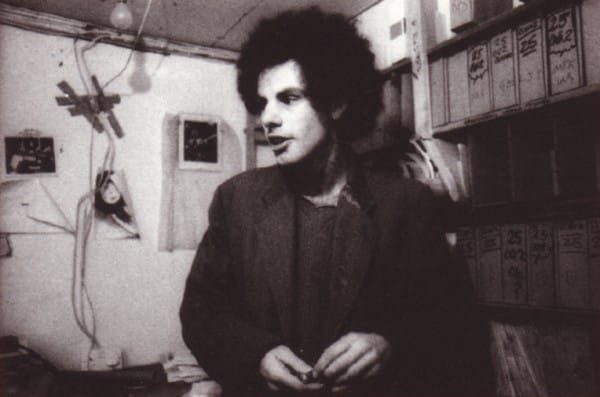
London, February 1976. Former drama teacher Geoff Travis had left his job, weary of a life spent encouraging students to pretend they were trees and speak from the diaphragm. The UK music charts were boring. Country and western yodeller Slim Whitman’s collection, ‘The Very Best of Slim Whitman’, was number one in the album charts. The Four Seasons had the number one single, with ‘December ’63 (Oh What A Night)’. But there was hope. A freewheeling disregard for conformity was emerging in the UK music scene. The Sex Pistols were touring the country, following their first, shambolic gig the previous year at St Martin’s School of Art. American Bands like The Ramones and Talking Heads were shouting out brief, invigoratingly fuzzy tunes and angular art-rock. An avowed music fan, Travis bought into the scene. He dug deep, coming across bands like Canadian proto-punks, Rough Trade, in his investigations. His academic career firmly behind him, Travis was keen to become a part of what was happening. He came up with a plan: he would open a record shop.
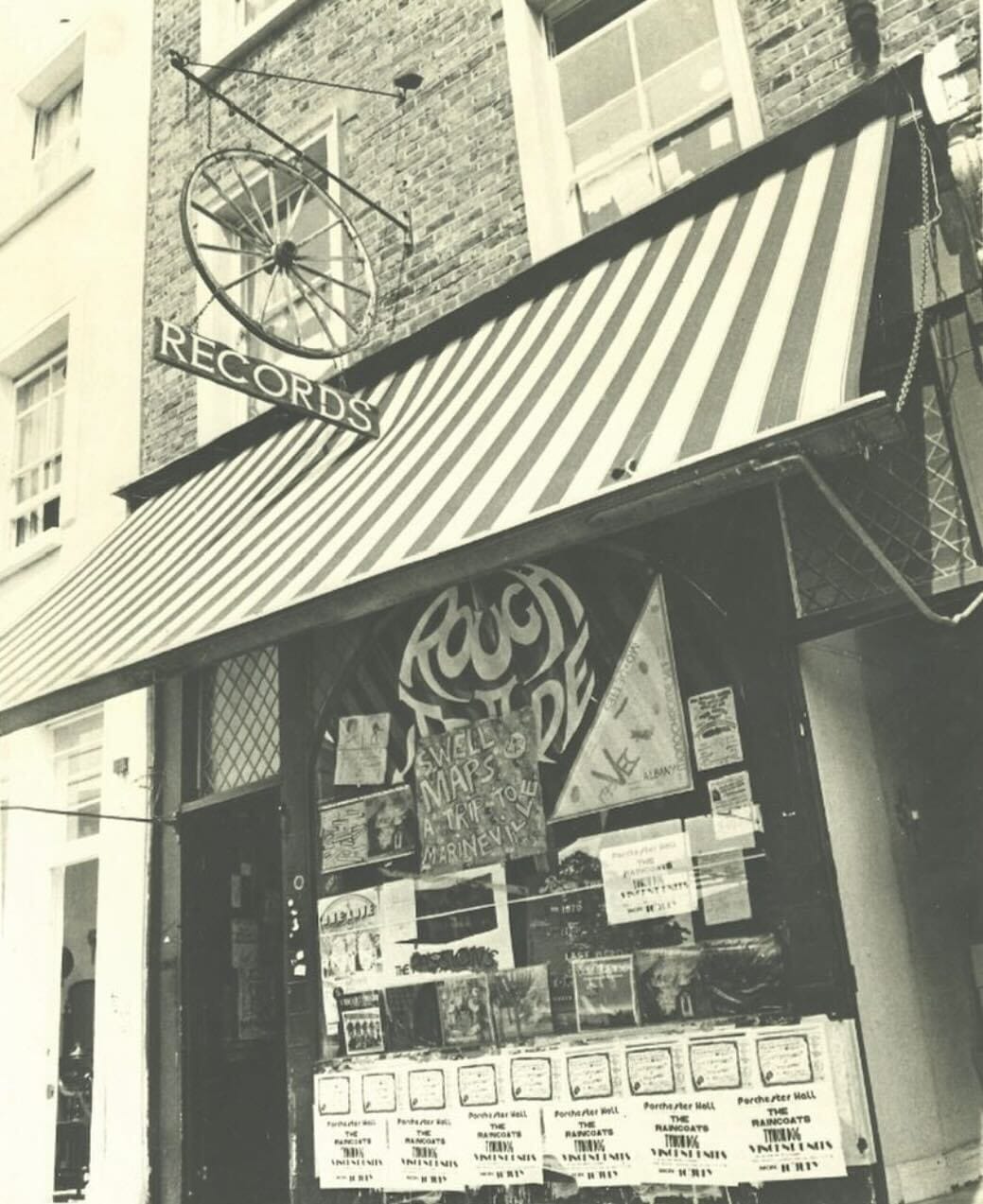
Legend has it Travis chose his first shop’s location on Kensington Park Road in London’s Ladbroke Grove area because it was just around the corner from where his favourite film, ‘Performance’, was shot. As for what to call the business, why not name it after his favourite Canadian punks? So, on February 23rd, 1976, Travis flung open the doors to the Rough Trade record shop. Fifty years on, Rough Trade is a byword for cool, independent record stores, and Travis oversees an empire that includes Rough Trade branches across the UK as well as in Berlin and New York, and the kind of record label (also called Rough Trade) that prospective music entrepreneurs can only dream about. Quite rightly, Rough Trade are using 2026 as a lap of honour. Geoff Travis’s vision was to create a shop for people to hang out in, as well as somewhere that would stock the kind of releases other high street record chains would avoid. Choosing Beat poet Lawrence Ferlinghetti’s City Lights bookstore in San Francisco as his inspiration after a visit to America, Travis’s timing could not have been better. As punk rock began to envelop British culture, Ladbroke Grove locals The Clash were building a following. The band’s frontman, Joe Strummer, became an early Rough Trade regular, bringing with him his on-off friend, Sex Pistols singer Johnny Rotten.
Alongside Vivienne Westwood’s SEX clothing store on the King’s Road, Rough Trade quickly became one of London’s key punk hubs. News spread overseas. The Ramones swung by on a trip to the capital and Talking Heads played their first-ever instore gig at Rough Trade. Photographer Mick Rock dropped off a selection of his iconic images featuring David Bowie, Iggy Pop and Lou Reed for Travis to hang on the shop’s walls. Plus, the Rough Trade shop’s position in the heart of one of London’s largest West Indian communities was bearing fruit. Punk rock and reggae music were naturally rebellious bedfellows, and the shop started to import Jamaican dub, early dancehall and roots reggae to satisfy the needs of their local record-buyers.
The following year, Travis agreed to stock Manchester new wave prime movers, Buzzcocks, self-funded debut E.P., ‘Spiral Scratch’. This open-handed approach to supporting DIY-driven acts gave Travis an idea. With exciting, inventive artists knocking on his door, it would make sense to build them a home. So, in 1978, Rough Trade Records was born, the label that has boosted bands like The Smiths, Arcade Fire, The Strokes and Sleaford Mods over time. In 1982, the original Rough Trade shop relocated to Talbot Road – where it has remained ever since – and, in 1988, Travis branched out with another store, this time in Covent Garden. As with the rest of the international music industry, the Rough Trade record shops have had their ups and downs. Travis opened branches in Paris, Tokyo and his beloved San Francisco in the 1990s, but the growth in online music retail scuppered the projects.
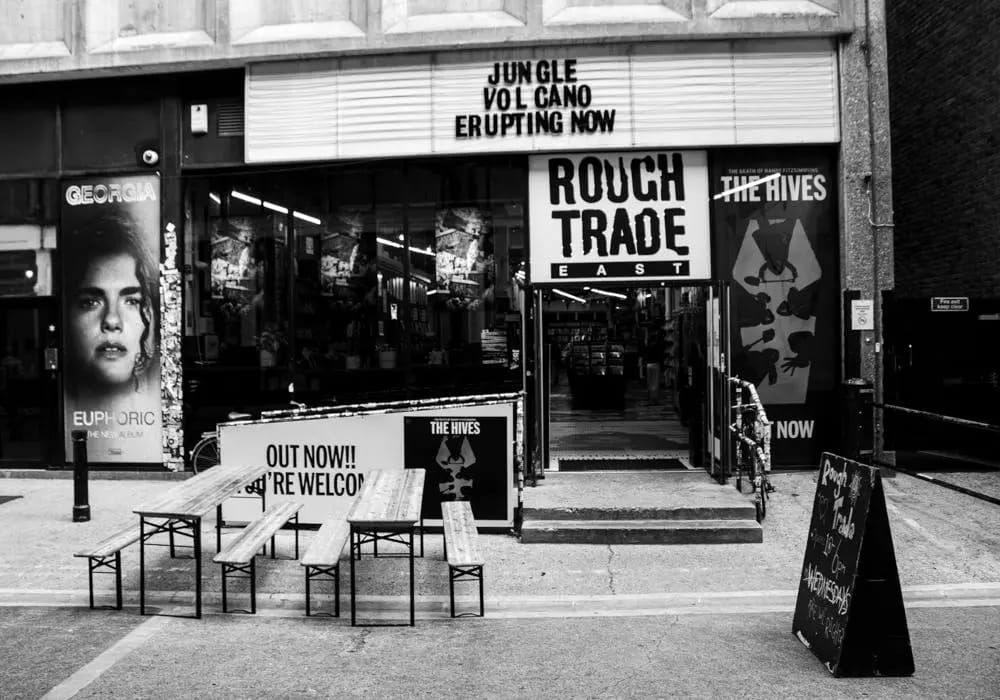
In 2007, however, Rough Trade fought back, opening a new shop just off Brick Lane in London’s East End. Expanding on Travis’s San Franciscan inclusivity concept, the shop includes a stage for live performances and talks, a photo booth, bar and a bulging book section (fuelled, in part, by offshoot publishing arm, Rough Trade Books) amongst the vinyl and CD racks and walls crammed with posters and gig fliers. Add to that the UK Rough Trade record shops located outside London and stores in Berlin and New York. There is even a bijoux Rough Trade concession in London’s Barbican arts centre.
Fittingly, Rough Trade’s fiftieth anniversary celebrations meld the shops, label and publishing arm together. In July, the Southbank Centre will host a series of events that cover the musical and literary side of things. Released last year, Pulp’s ‘More’ album was the band’s first release on Rough Trade Records (although Jarvis Cocker has put out solo work on the imprint), and they will be performing the set in full alongside evenings with other artists on the label. ‘An Evening with Rough Trade Books’ will match Rough Trade authors with musicians to add a fresh spin to their writing, and a performance of Hannah Patterson’s book-turned-play, ‘Ungone’, is set to feature Ana da Silva from The Raincoats, one of the first bands to sign to Rough Trade Records. In stores, the Rough Trade product team have scheduled a series of special edition albums on vinyl, including Nirvana’s ‘Nevermind’, ‘Ethiopia’ by Patti Smith, The Clash’s self-titled debut (of course) and more. There will be fifty releases in total, one for each year of Rough Trade’s existence.

Perhaps most importantly of all, Rough Trade changed the game in 1976. By tuning into the seismic effects of punk’s cultural revolution and its attitude to embracing all creeds and backgrounds, Geoff Travis gave spaces and voices to those existing outside the mainstream. And so the Rough Trade story continues, with the music world looking on in admiration.
Simon Coates is a London-based writer, artist and producer.