
Going once, going twice: tales from the auctions
Auctions come in all flavours, from the classic open English auctions, where everyone eagerly watches as bids fly higher and higher, to the secretive closed, first-and second-price auctions where you might feel like a spy deciphering top-secret bids. Then there are the Dutch auctions, which defy gravity by starting at the stratosphere and crashing to more wallet-friendly altitudes. And remember those industry-specific oddities, including everything from loans-for-shares and tourism to radio wave auctions. While art might get the glamour spotlight, you can just as easily find yourself bidding on a chunk of space rock or the latest sneaker drop. Let’s embark on a world tour of ten wildly diverse auctions, showcasing everything the auction world has for grabs, from the everyday to the out-of-this-world.
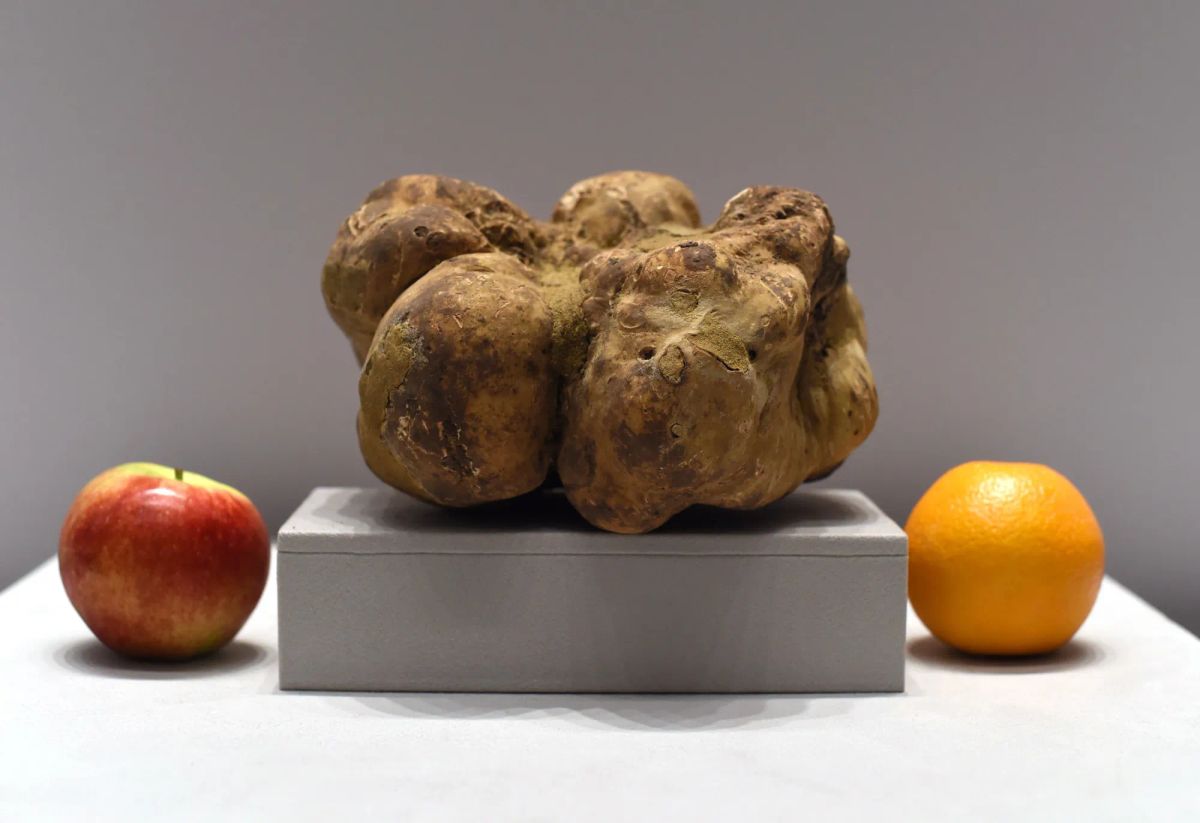
Some of the world's most ancient auctions are where cattle are bartered. These global events showcase prized breeds like Angus and Hereford. For those new to the scene, a pro tip is to tune into an auctioneer's chant—a mesmerising, rapid-fire mix of numbers and filler words that's almost musical. There are even competitions for this art form! And let's not limit ourselves to livestock; the auction world also offers more gourmet stakes. Think truffle auctions, where a single white truffle, not even tipping the scales at a kilogram, can fetch upwards of $100,000. Or head to the docks for fish auctions, where the day's catch goes to the highest bidder in a flurry of spirited bidding.
It’s hardly a shock that wine and spirits find their way to the auction block, fetching prices with quite a few zeroes. Yet, there's an even more niche auction market: grapevines. Some of the world's priciest wines come from grapes cultivated on specific plots of land, and these vine auctions aren't just selling grapes; they're offering the rights to cultivate particular parcels. The stakes? Some lots command prices in the millions
Sotheby's, a titan in the auction world, orchestrates thousands of auctions annually, making headlines with the sale of rare and costly treasures—beyond the typical fare of paintings and sculptures. For instance, in 2018, Sotheby's ventured into the absurd by auctioning blank sheets of paper. Despite being essentially devoid of content, one of these sheets fetched a staggering $1.5 million, proving that sometimes the value of nothing can be quite something.
Auctions aren't just for art and antiques; personal items are hot commodities, too. Take 2001 at Sotheby’s, a banner year marked by the sale of the intimate wardrobe of the famed Roman courtesan Margherita de Leva. Corsets, bras, and lingerie fetched unexpectedly high prices, turning this into one of Sotheby’s most lucrative auctions ever. Memorabilia and personal belongings of celebrities are hugely popular, spanning eBay to specialist collectors. You can snag anything from used handkerchiefs to celebrity socks, including items from Russian pop icons like the lead singer of “Руки Вверх” or a tablecloth from Natasha Koroleva.
The stars align in the world of auctions, too. In 2019, Sotheby’s auctioned three vintage NASA spacesuits, each fetching millions. In 2011, to commemorate the first human-crewed space flight anniversary, the Vostok ZKA-2 capsule sold for nearly three million dollars. The relationship between auctions and space exploration doesn’t stop at memorabilia. In 2013, astronaut Luca Parmitano orchestrated the first-ever space auction aboard the International Space Station, offering items from the station’s daily life. Later, in 2017, Bonham stepped in to sell a collection of astronaut suits worn during various missions, with one suit alone bringing in $200,000.
Christie's, always eager to outdo its rivals, pulled off a head-turner in 2016 with a single lot auction that racked up a million dollars for just one malachite box. You could grab this box alone for a cool million or splurge $30 million to snag all 99 items on offer. Pushing the envelope further in 2020, Christie's sold an invisible painting by Mark Shapiro for $18.3 thousand—a piece that exists solely in the imagination of its owner, literally monetising the air.
Christie's hasn't just stopped at the traditional; it's ventured into the realm of “collectables” with flair. Teaming up with streetwear giant Highsnobiety, they launched Department X, a curated auction platform celebrating the swank of sneakers and streetwear. This fusion of high art and high tops includes everything from exclusive musician memorabilia to rare kicks, video games, and more. This foray into street culture follows Sotheby's dive into the scene, auctioning off intimate memorabilia from icons like Tupac Shakur and Notorious B.I.G. They even offered experiences like wine tasting with hip-hop royalty Big Daddy Kane.
In 2013, an auction in Switzerland made headlines for selling abandoned bank safes filled with forgotten treasures—jewellery, cash, and documents. The mystery of their contents drove prices sky-high. Similarly, airlines like Lufthansa often auction off unclaimed luggage, turning forgotten items into sought-after lots.
Auctions also serve as the final stage for rare and prestigious musical instruments. Iconic Stradivarius violins and vintage Fender guitars can command prices in the millions. A standout sale was Nirvana frontman Kurt Cobain's guitar from the "Smells Like Teen Spirit" video, which fetched $4.5 million at Julien’s Auctions.
Historically, even cities and nations have gone under the hammer. The Roman Empire itself was auctioned in an infamous episode from 193 AD. Senator Didius Julianus won the empire with a bid of 6,250 drachmas, but his reign lasted just three months—a stark reminder of the volatile nature of such acquisitions.
Auctions prove that almost anything can find a new lease on life in the right, such as a forgotten safe, a legendary guitar, or an entire empire. So, next time you hear the auctioneer's call, remember—you might just be bidding on a piece of history.