When artists take on the world of jewellery: 7 examples
Collaborations between brands and artists have become so popular that if you type “collaboration”, you can see dozens of publications every hour, and it seems that this stream will never stop.
What is the reason for such a fashion for modern projects with artists? On the one hand, this allows brands to strengthen their cultural and aesthetic image. Consumers can purchase not just a product but also an object of art, which becomes a collectable. On the other hand, for artists, this is a chance to present their work in nature, to go beyond galleries and exhibitions, and to receive a fee.
It is worth admitting the current crisis is the overproduction of collaborations. Quality and originality fade into the background, and commerce is ahead. But among the examples given, you can also find those examples in which collaborations create unique things that develop products that benefit the brand. Let’s look at a few examples related to the world of jewellery:
Opting for a paid subscription is essentially your way of saying, "Go on, buy that outrageous piece of jewellery you won't stop talking about." Your financial endorsement keeps In White Cube’s creative wheels turning and directly contributes to my growing obsession with art-infused bling.
Cy Twombly and Graff
Who: Cy Twombly, American abstract artist and master of intuitive calligraphy.
Why love him: for his unique approach to abstract art and his ability to transform simple shapes into meaningful symbols.
Why Graff loved him: For his ornate images, which became the basis for creating an innovative jewellery collection.
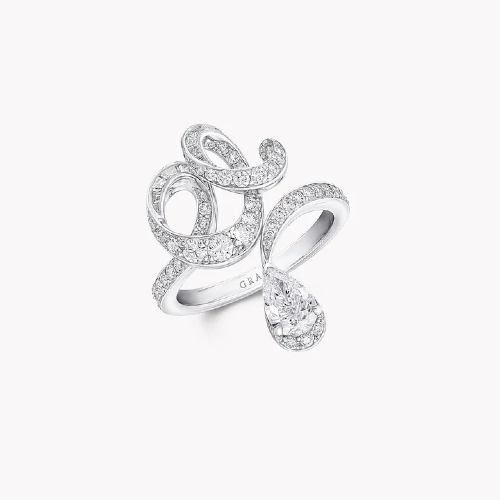
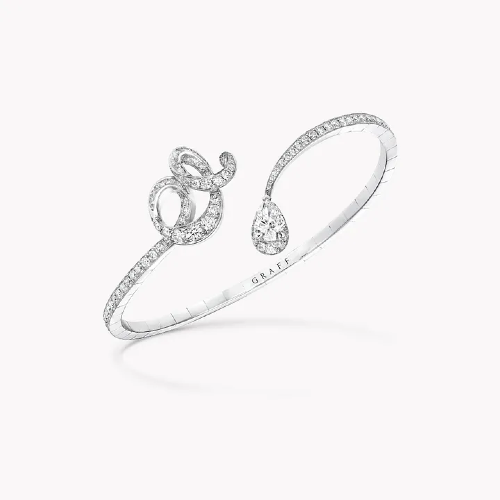
For Graff, jewelry-making is an art form. In 202, the British jewellery brand released a collection inspired by the American abstract artist Cy Twombly, known for his canvases with ornate inscriptions, lines and even scratches. It was these calligraphic spirals that became the basis of the Inspired by Twombly collection, which included earrings in the form of long curls with suspended drops of emeralds and sapphires, an open diamond bracelet and a ring in the form of a cluster of sparkling loops. Thanks to the installation of stones on jewellery using the “invisible setting” method, they appear airy, just like an artist’s painting. By the way, the founder of Graff, jeweller Lawrence Graff, was an art collector; for example, his collection includes works by Andy Warhol, Keith Haring and Jean-Michel Basquiat.
Alexander Calder and Cartier
Who: Alexander Calder, American sculptor and mobile inventor, innovator of abstract art
Why we love it: Its revolutionary approach to 3D form and kinetic art.
Why Cartier loved him: For the unique combination of sophistication and innovation in its jewellery.
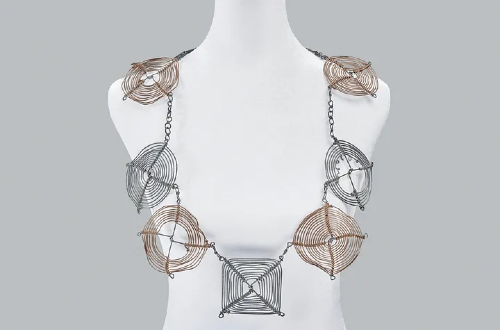
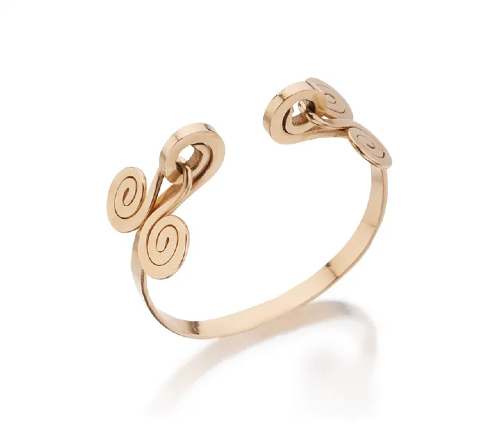
Alexander Calder went down in history as a great modernist and author of large-scale structures, but the plasticity of metal was his constant passion. Unsurprisingly, his intricate wire figures and kinetic sculptures attracted the attention of jewellers. During his life, the artist created more than one and a half thousand pieces of jewellery. The Metropolitan Museum of Art in New York hosted an exhibition of jewellery he made, including works with funny titles “Jealous Husband” or “Down with the Mediterranean Sea.” Most jewellery is not wearable due to its heaviness. Many of them were not sold but given to close friends, such as gallery owner Peggy Guggenheim. The artist also collaborated with big brands. Thus, in the 1940s, Calder created a series of jewellery for the famous jewellery house Cartier, which included rings, bracelets and earrings decorated with his famous mobiles.
Anish Kapoor and Bulgari
Who: Anish Kapoor, British-Indian sculptor and pioneer of modern public sculpture.
Why we love it: For powerful and innovative installations that transform spaces and change our experience.
Why Bulgari loved him: because of his forming monumental ideas into minor detail.
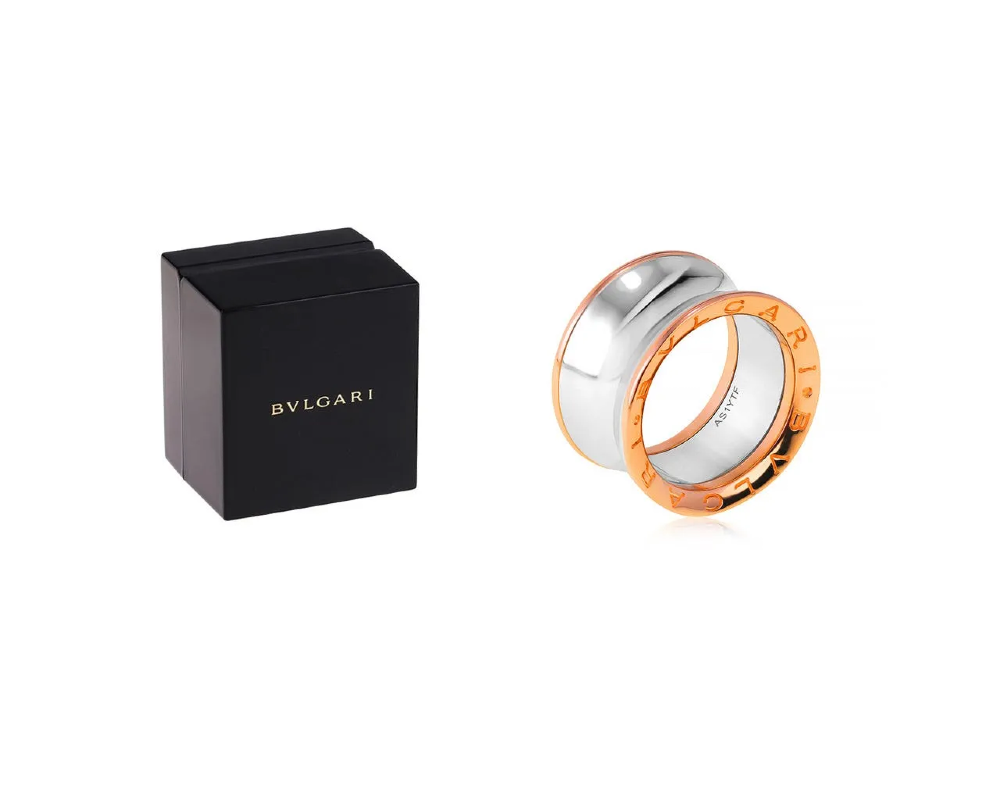
British-Indian sculptor Anish Kapoor is known for his monumental sculptures and installations. His grandiose public sculptures can be seen in some of the world’s most famous places, such as the Sky Mirror in Rockefeller Center in New York and the Cloud Gate in Chicago’s Millennium Park. It’s no surprise that significant brands are working. For example, for the 10th anniversary of the legendary B.zero1 ring, the jewellery company Bulgari invited the artist to reimagine it. “I am interested in things that are not what they seem at first glance,” explains the author, “reflective surfaces directly attract people, uniting the object, the viewer and the environment into one physical, ever-changing form.” For Bulgari, Kapoor brings his signature style of curved, reflective metals to a rose gold and steel ring, turning “a gorgeous classic design on its head and creating something visually new and intriguing.” “I’ve been making jewellery for many years — it’s a way of creating small objects like sculptures on the body.” — says Anish Kapoor.
Ai Weiwei and Elisabetta Cipriani.
Who: Ai Weiwei, a contemporary Chinese artist and social activist known for his provocative practices.
Why we love him: his promising exploration of social and political issues and his desire to raise awareness of social problems.
Why Elisabetta Cipriani loved him: For its ability to transform reinforced iron, a material associated with construction and destruction, into delicate and refined jewellery.
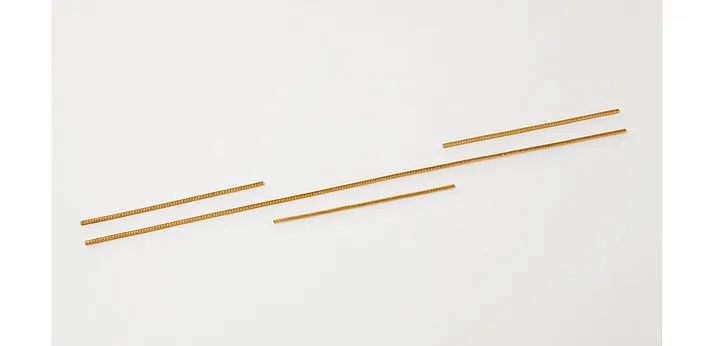
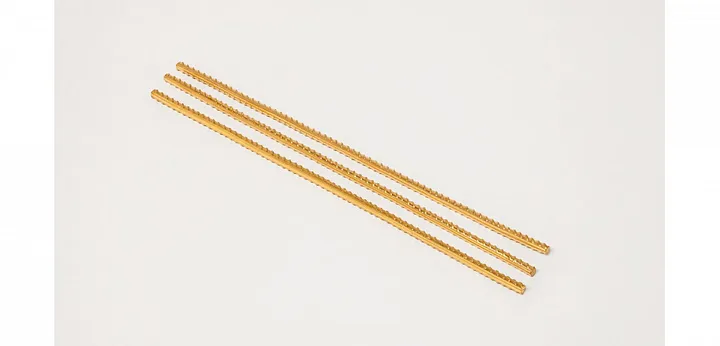
Ai Weiwei, a contemporary Chinese artist known for his activist work and installations on an epic scale (such as works made from 99 tons of steel or 8 million porcelain sunflower seeds), has also created a jewellery collection. Partnering with London-based jewellery gallery Elisabetta Cipriani, which specialises in creating “wearable art”, Weiwei has developed “wearable sculptures” that look like rebar used in construction. His political activism inspired the design, with Weiwei’s studio painstakingly straightening each rod and stacking them one on top of the other to raise awareness of the deaths in China due to unscrupulous construction. “Rebar in Gold” consists of two 24-karat gold strips, each 20 and 60 cm long, soft enough to be turned into a bracelet by the wearer.
Jeff Koons and Stella McCartney
Who: Jeff Koons, whose “Rabbit” sculpture the whole world wears in critical chains, is worth millions.
Why we “love” him: His fantastic ability to turn everyday objects into “high art” and convince us to buy them.
Why Stella McCartney “loved” him: Well, who else would you team up with to create jewellery that would sell for the price of a spaceship?
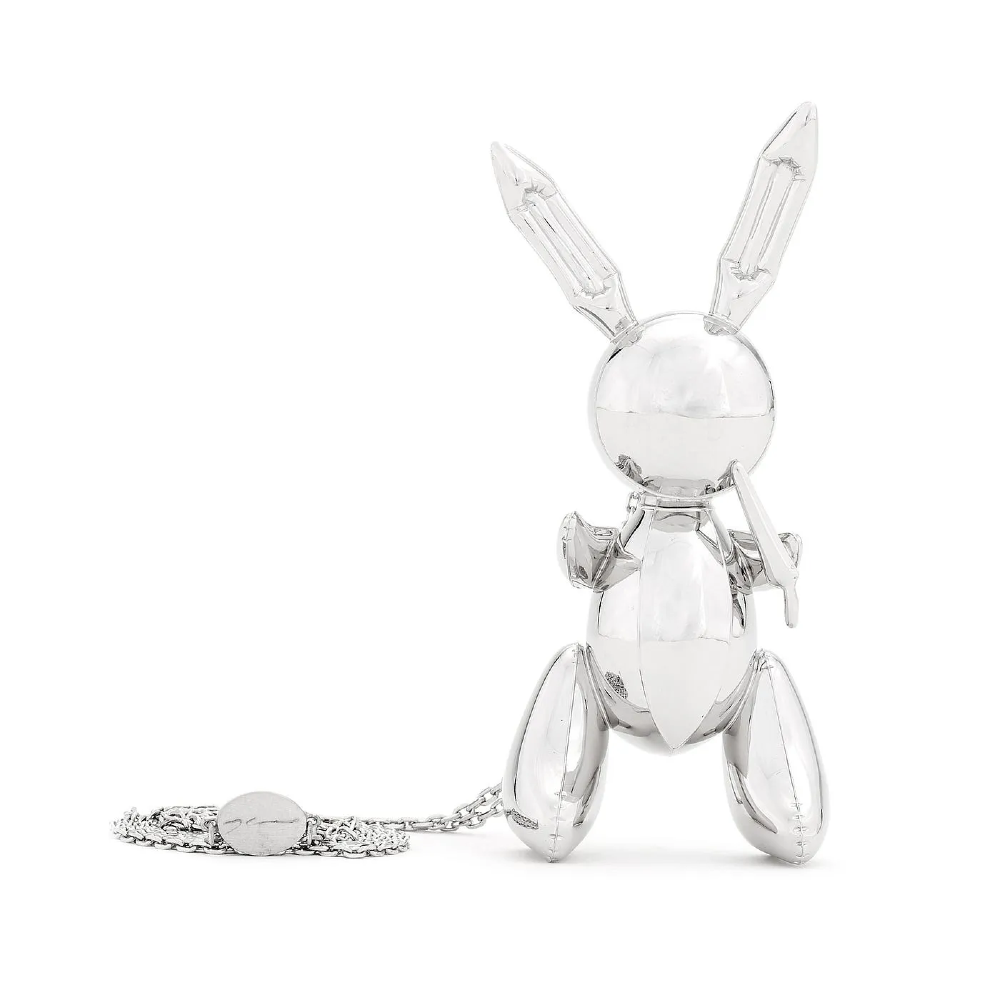
In 2012, the ubiquitous Jeff Koons created a limited-edition collection of jewellery for the Stella McCartney brand, which included a platinum pendant and a bracelet with charms in the form of the iconic “Rabbit” sculpture made of stainless steel. Also, in one of the shows, prints were used on floor-length silk chiffon evening dresses, and the artist took pride in the front row at the collection show in Paris. Appropriating such images was a cunning move on the part of the designer: more than any other artist, Koons embodies the confidence of the late 80s and early 90s, which were then relevant to fashion. Furthermore, proof that a connection with art does not elevate only a symbolic price: now, on Sotheby’s auction house website, the product costs $60,000. Nothing elevates your brand like a well-thought-out art promotion, significantly when you can add a couple of zeros to the auction price of the item.
Cindy Sherman and LIZWORKS
Who: Cindy Sherman is an American photographer and filmmaker who embodies her vision of femininity and cultural stereotypes through self-portraits.
Why we love her: Her sincere commitment to exploring images of women in different cultural contexts and her ability to approach the issue from unexpected angles.
Why LIZWORKS loved her: For its unique vision of classic carved cameo and ancient carving art combined with modern digital images.
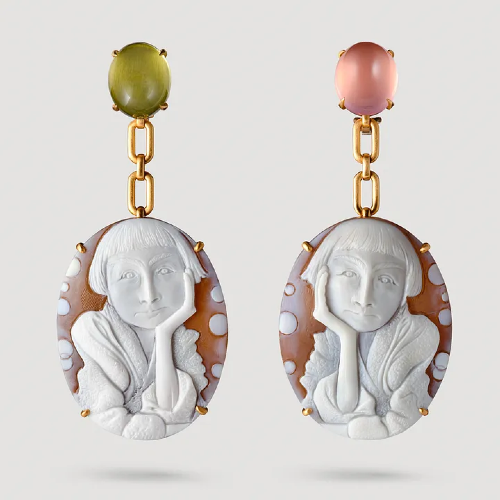
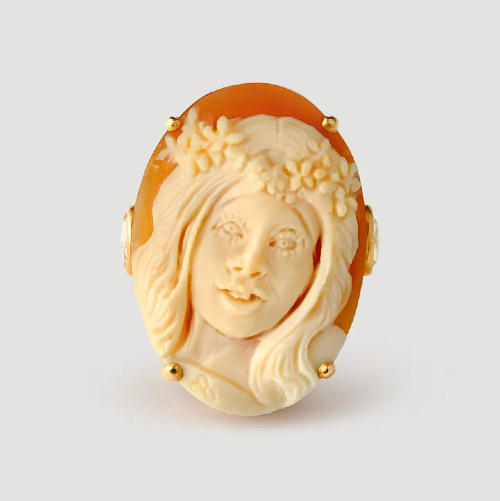
Cindy Sherman is an American photographer and filmmaker whose self-portraits are associated with issues of femininity, addressing stereotypes about women in films, magazines, television and in culture in general. The combination of traditional historical and contemporary art resulted in a partnership with the LIZWORKS gallery (another “wearable” art) specifically for the Venice Biennale: a reimagining of the classic carved cameo. The works find themselves at the crossroads of digital imagery, which Sherman has been exploring in recent years, and the ancient art of carving used by southern Italian jewellers: “I love cameos and the idea of tiny objects being art. This is a great project to use my Instagram images* since the files are too large to be blown up in a photo. Wearing a piece of art is always more fun!” — says the artist. On the gallery’s website, you can also find pieces of jewellery from Robert Longo, Barbara Kruger, and Rashid Johnson.
Tracey Emin and Stephen Webster
Who: Tracey Emin is a Young British Artist known for her provocative work exploring complex aspects of the human experience.
Why we love her: for her uncompromising self-expression and ability to bear her soul.
Why Stephen Webster loved her: For its creative spirit and fearlessness. And they were also friends.
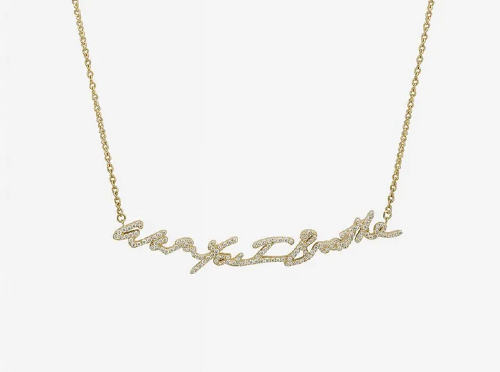
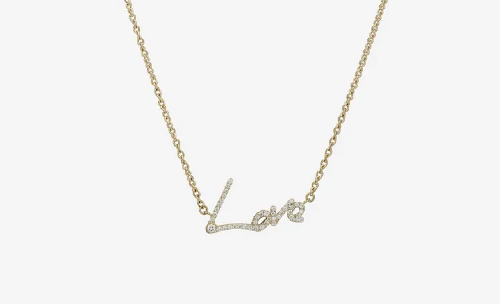
One of the most famous representatives of the “Young British Artists” Tracey Emin, and her long-time friend, British jeweller Stephen Webster, also joined forces to create a unique collection of jewellery under the romantic name “I Promise to Love You”, consisting of rings, earrings, bracelets, tie pins and cufflinks The idea began when Emin created one of her signature neon signs for Webster’s Beverly Hills flagship store in 2010. “Tracy celebrated my 56th birthday this way; we’ve known each other for almost 40 years,” says Webster, commenting on their work together. “She always felt that this job should be in a jewellery store where people buy engagement rings and the rest are romantic trinkets.” The collection not only includes words written in Emin’s signature font (“love”, “more passion”, and “with you, I breathe”) in simple gold rings and bracelets and interspersed with diamonds. , but also a series of amulets based on sketches of forest creatures — toads, hares and owls.