The art of clothes in Poor Things: How do movies influence fashion?
As designers continue revisit historical silhouettes and reinterpret them for contemporary wardrobes, Yorgos Lanthimos’s Poor Things (2023) remains a particularly fascinating example of fashion existing between past and present.
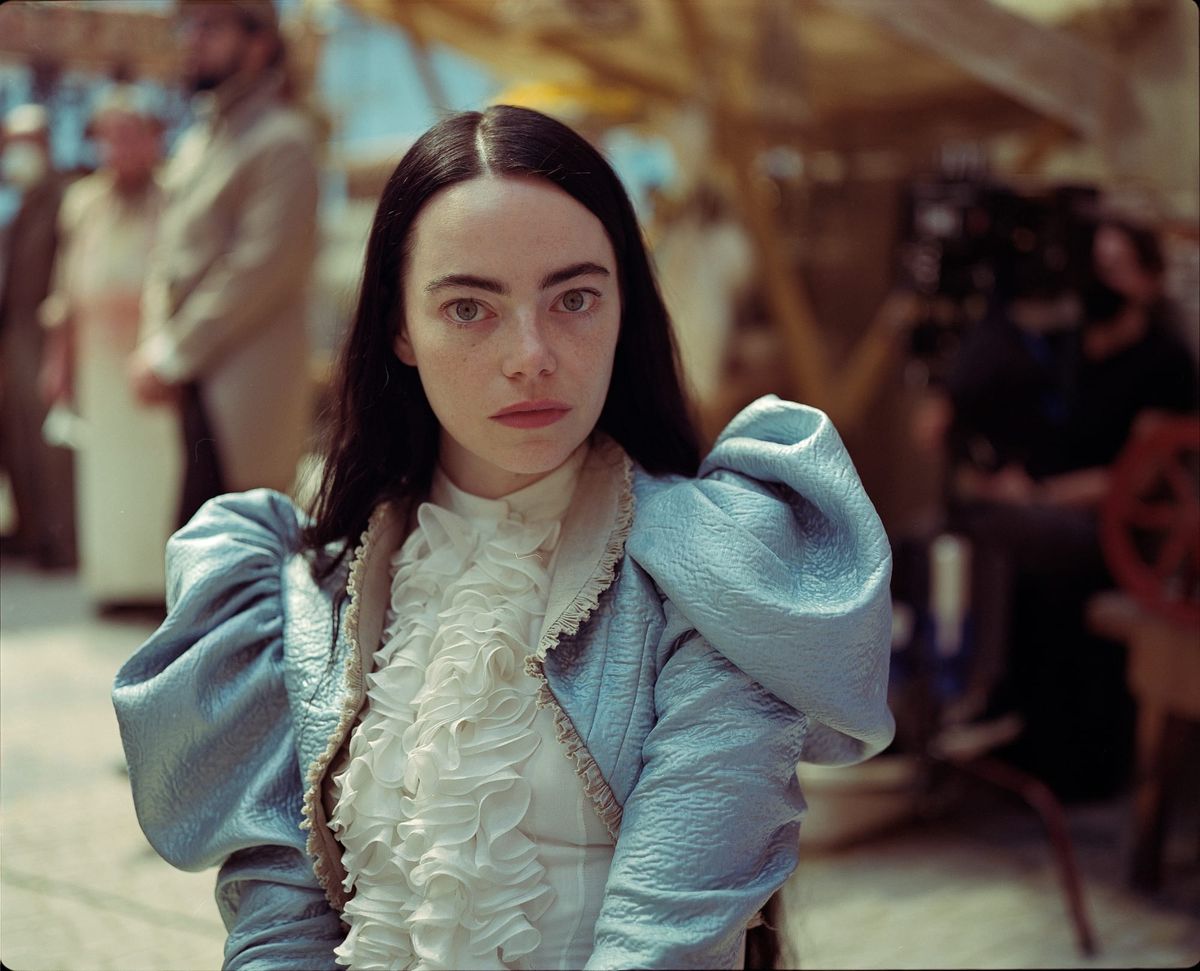
Yorgos Lanthimos’s Poor Things (2023) is a film that unexpectedly won over both critics and audiences. It was praised not only for its story but also for its visual elements: special effects, landscapes, and, of course, the stunning costumes designed by Holly Waddington, who had previously worked on The Great. The film convincingly recreates the atmosphere of the Victorian era while having almost no direct connection to it: its images read on an emotional and metaphorical level rather than as straightforward visual references. The costumes, which have attracted considerable attention from fashion experts and magazines, play a particularly important role in creating this unique atmosphere. In this article, we explore why Bella Baxter (Emma Stone) wears costumes with such exaggerated shoulders, where the designer drew inspiration for the characters’ looks, and how Bella Baxter’s wardrobe changes as the story develops.
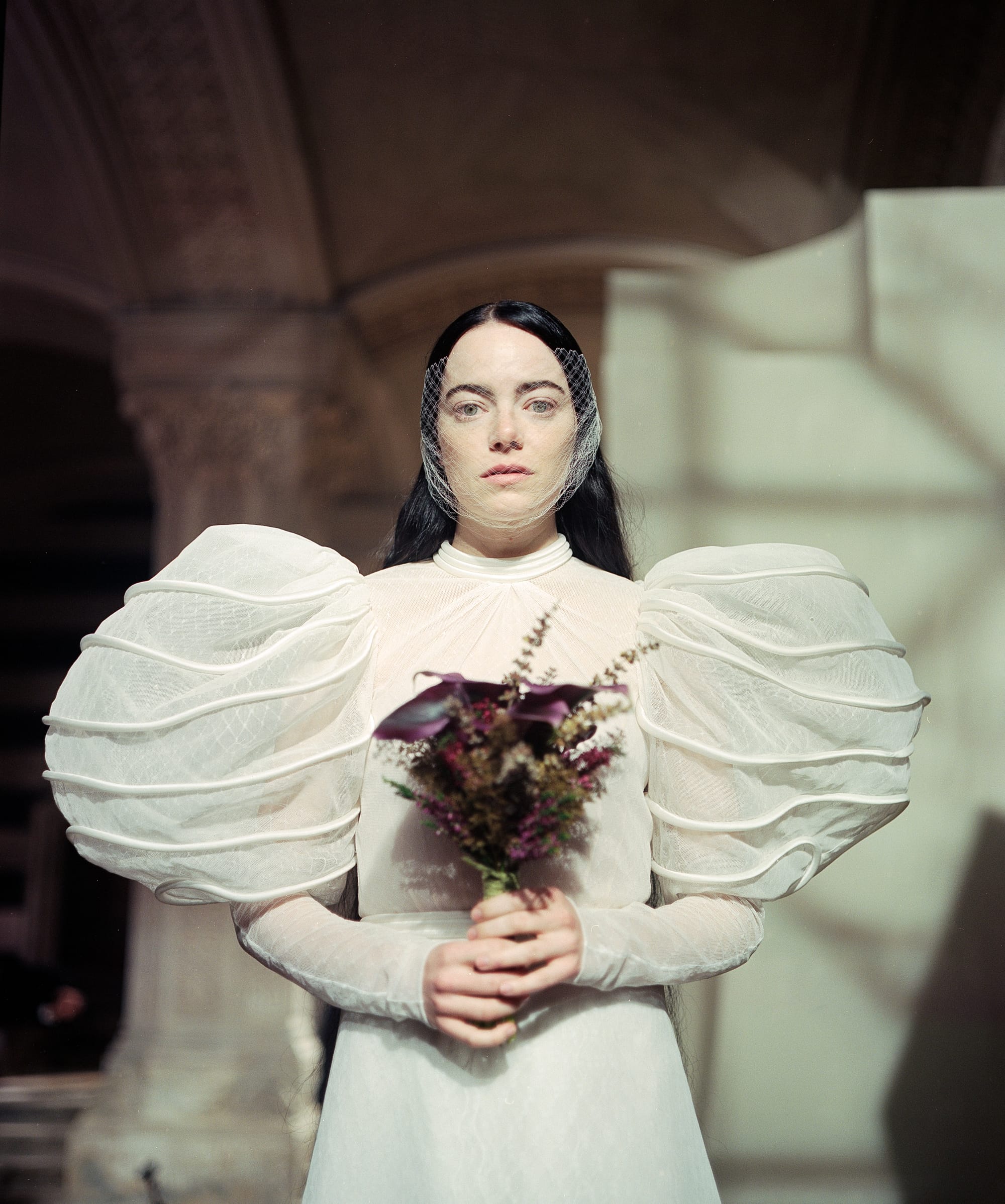
Through the recurring motif of Bella changing clothes, Lanthimos clearly sought to emphasize her ambition and unusual nature in comparison with the other characters, giving her a distinct visual code. Bella’s costumes cannot be confused with anyone else’s: they are extravagant, bright, sometimes absurd, but always catch the viewer’s attention and invite close examination.
When we hear the phrase “Victorian fashion,” we primarily imagine refinement and elegance, an abundance of lace and corsets. Clothing of the period was delicate and sophisticated, with a separate outfit for virtually every occasion. The bodices used in Bella’s costumes are all based on authentic Victorian patterns: although the costumes look distinctly contemporary, their construction is rooted in historically accurate cuts.
According to the plot, Bella Baxter is the result of an experiment: the brain of an unborn child is transplanted into the body of a woman who has committed suicide, in an attempt to create a new human being. This premise inevitably reminds Russian-speaking audiences of Mikhail Bulgakov’s Heart of a Dog. That is why, when we first see Bella on screen, she behaves like an infant who has not yet learned to make sense of the world. Her costumes reflect this as well: at the beginning of her journey, the girl wears slightly rumpled clothing. Her outfits always seem to be missing something: she walks barefoot, wears children’s bloomers, and has no skirt at all. The designer explained this choice, noting that children constantly try to take things off and sometimes simply lose parts of their clothing.
All the fabrics selected for Bella’s “childlike” costumes are deliberately unusual: they feature ruffles, mesh, patterns, and plastic inserts. Some of the blouses even imitate parts of the female body and genitalia, since much of the film is devoted to Bella’s exploration of herself. What seems shameful to an adult can seem interesting and completely unembarrassing to a child, which is precisely why the heroine looks the way she does at the beginning of the film.
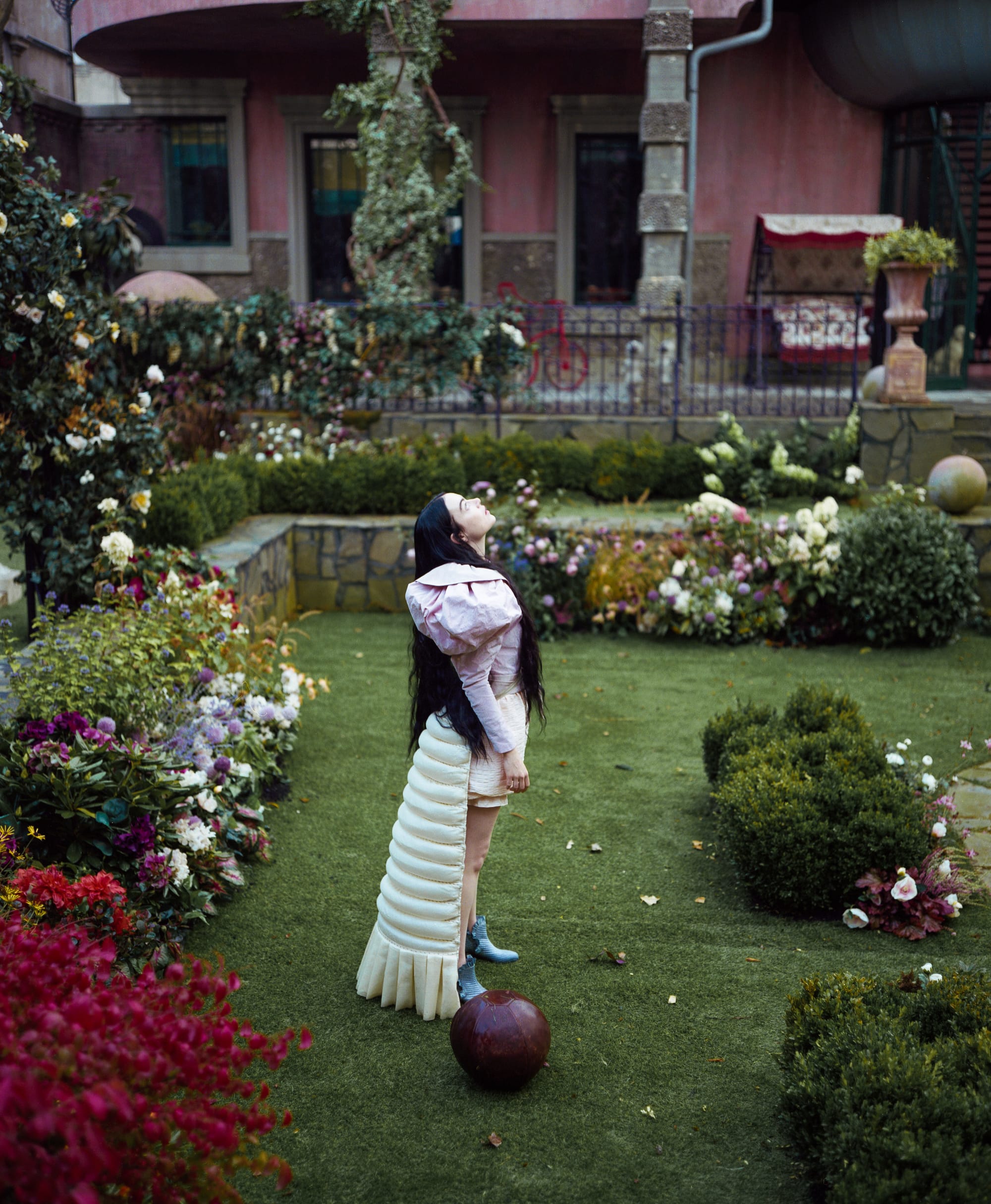
Of course, Bella does not remain a child forever. As she enters adolescence and puberty, her wardrobe “grows up” and changes along with her. After Bella leaves home, her nanny no longer dresses her, meaning that the creation of her appearance becomes her own responsibility entirely. Bella wears classic Victorian blouses as cropped tops, combining them with different colors and unusual pieces: yellow skirts reminiscent of underwear, blue jackets, and other deliberately eccentric combinations.
Later, we once again encounter deliberately sexualized costumes. As Waddington herself explains, for example, Bella’s yellow raincoat is called a “condom-coat.” Yet despite this name, its color is anything but sexualized or vulgar. Yellow is not a color normally associated with promiscuity, which is why the brothel scenes contrast the overall palette with soft, nude shades. Bella does not resemble the women who are in the brothel because they need money. For the most part, she is there because she is searching for herself, trying new things, and attempting to understand the world through other people. Throughout her sexual encounters in the brothel, she wears neither corsets nor other similar elements whose lacing at the back might evoke handcuffs, imprisonment, or slavery.
The final stage of Bella’s coming of age is marked in her wardrobe by the color black. Her clothes begin to lose their distinctive appearance and blend in with the costumes of the intellectuals and pseudo-intellectuals around her. The fabrics also grow heavier and more traditionally “masculine” in texture; for Bella’s later costumes, the designer drew inspiration from mid-twentieth-century Beatnik clothing. Yet even in this form, Bella remains different from everyone else. The superficial resemblance to the serious men in suits disappears the moment she stands up, and we see her full figure. Her bare legs in Victorian boots and the absence of a skirt beneath her jacket immediately reveal who she is, allowing the viewer to recognize the familiar heroine through what might seem like a minor detail.
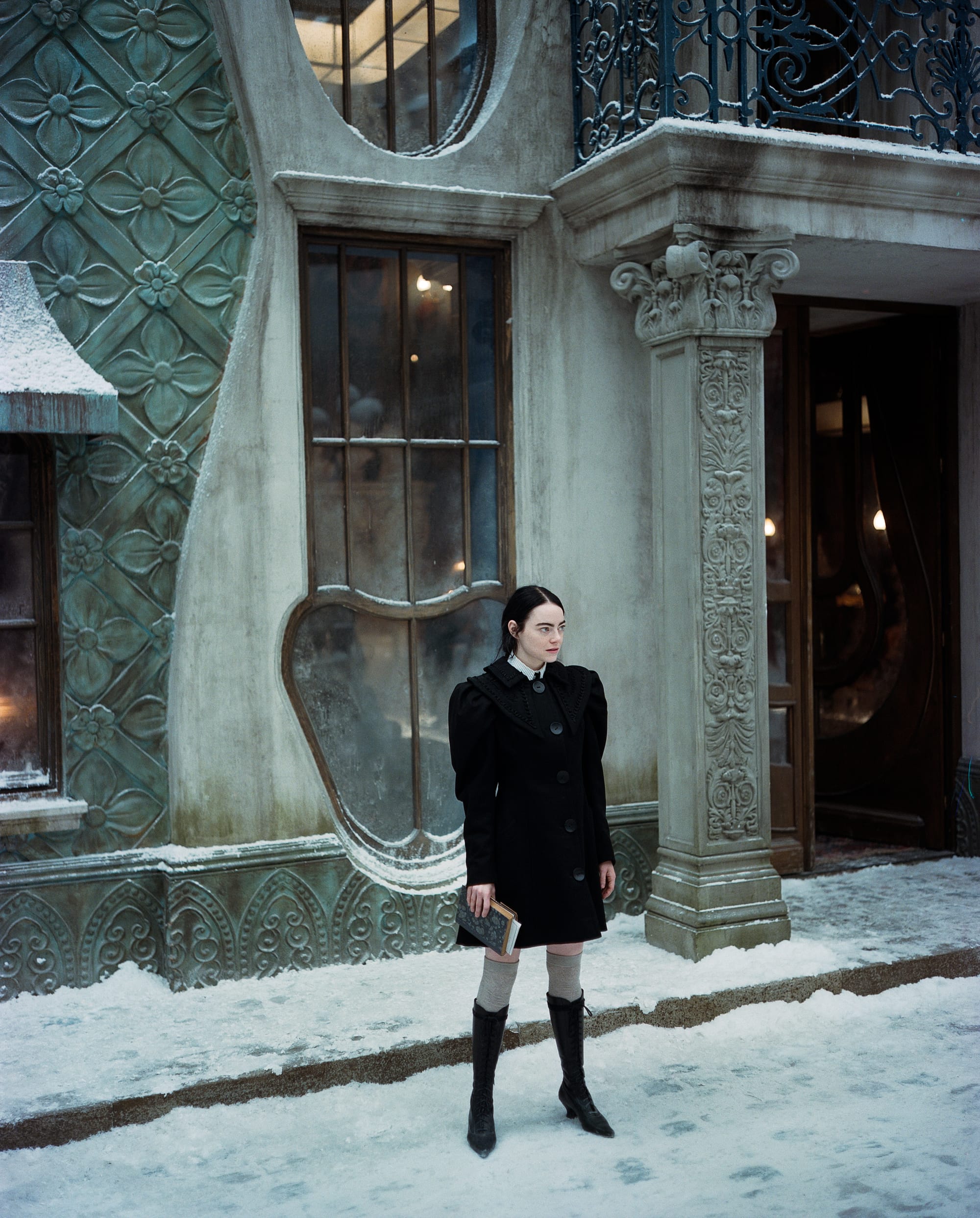
Perhaps the most striking and memorable element of Emma Stone’s character design is the exaggeratedly large shoulders, which give Bella a somewhat comic and grotesque appearance. This detail points to the heroine’s strength, visually elevating her above the other characters. The large, voluminous shoulders make her figure much more imposing, almost masculine. The seemingly fragile young woman possesses extraordinary inner strength, and this is reflected in her costumes: even her wedding dress is not without enormous puffed sleeves.
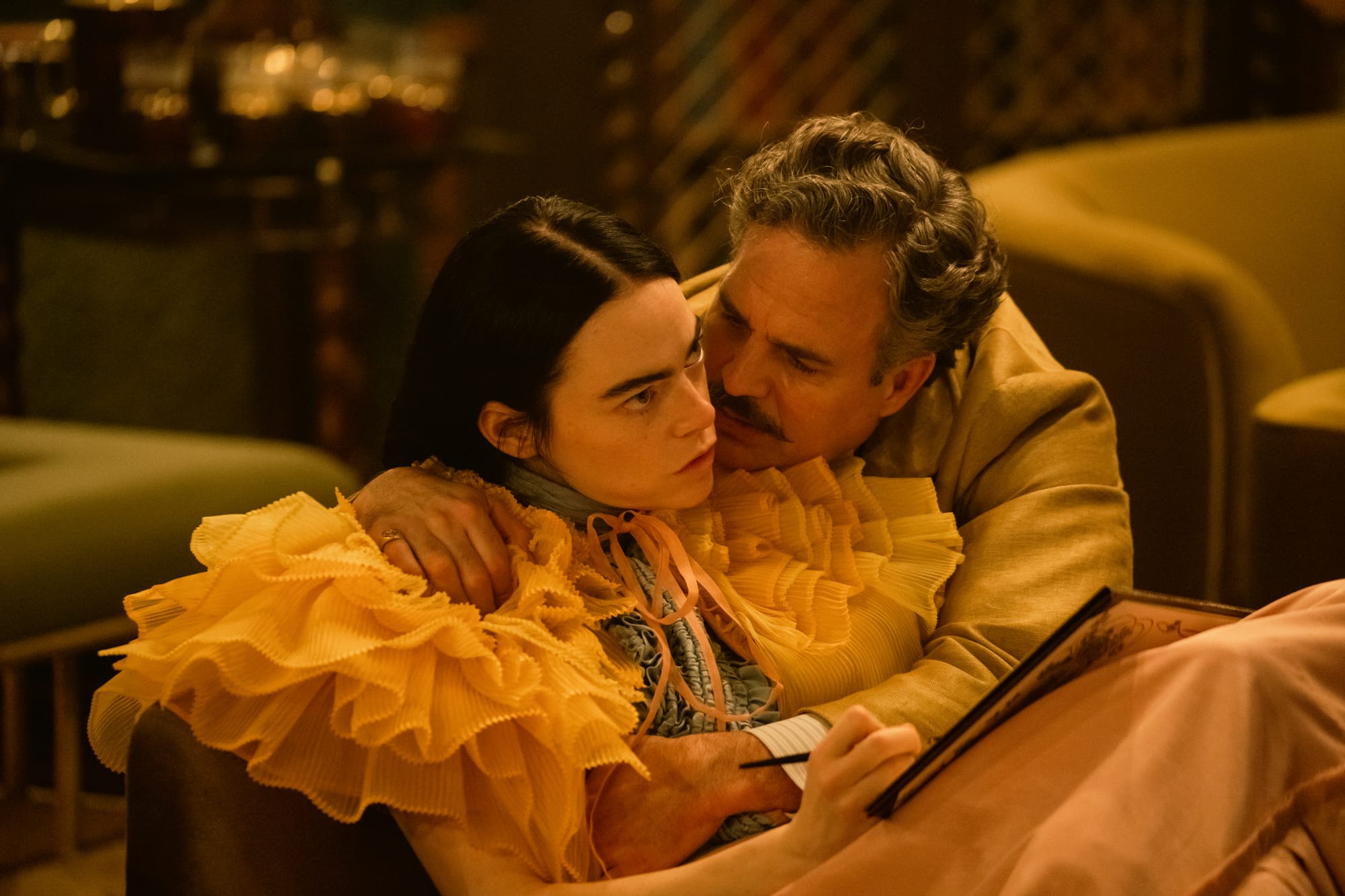
The other characters' costumes are equally noteworthy. To create the appearance of Duncan, played by Mark Ruffalo, Waddington drew on Victorian caricatures of men with exaggerated, swollen chests. In contrast to Bella, his shoulders appear very narrow while his chest seems disproportionately large, creating the image of a feminine and weak character. Willem Dafoe’s “Dr. Frankenstein,” by contrast, has a very neat and delicate appearance. He is progressive and handsome, which does not correspond to his face disfigured by surgical experiments, but perfectly reflects his inner nature and character.
The combination of contemporary elements and the past looks entirely natural in the film. Few viewers could remain indifferent to its costumes; even people with no particular interest in fashion have noticed the unconventional styling. Holly Waddington’s enormous amount of work is truly striking and seems to have gradually contributed to a trend toward oversized sleeves and the combination of seemingly incompatible elements in everyday fashion.