Reading the signals: Chanel SS27 and where fashion is heading
From reimagined tailoring to innovative fabrics designed for movement, Matthieu Blazy’s latest Chanel collection revisits the house’s heritage while challenging familiar ideas of femininity and identity. We take a closer look at the details that might signal where fashion is heading next.
Part three of a conversation
For Spring/Summer 2027, Matthieu Blazy opens the third chapter of La Conversation, his ongoing exchange with Gabrielle Chanel. This season, the subject is her many selves: the girl called Gabrielle and the woman who became Chanel. As Blazy puts it, "It's about the women within a woman."
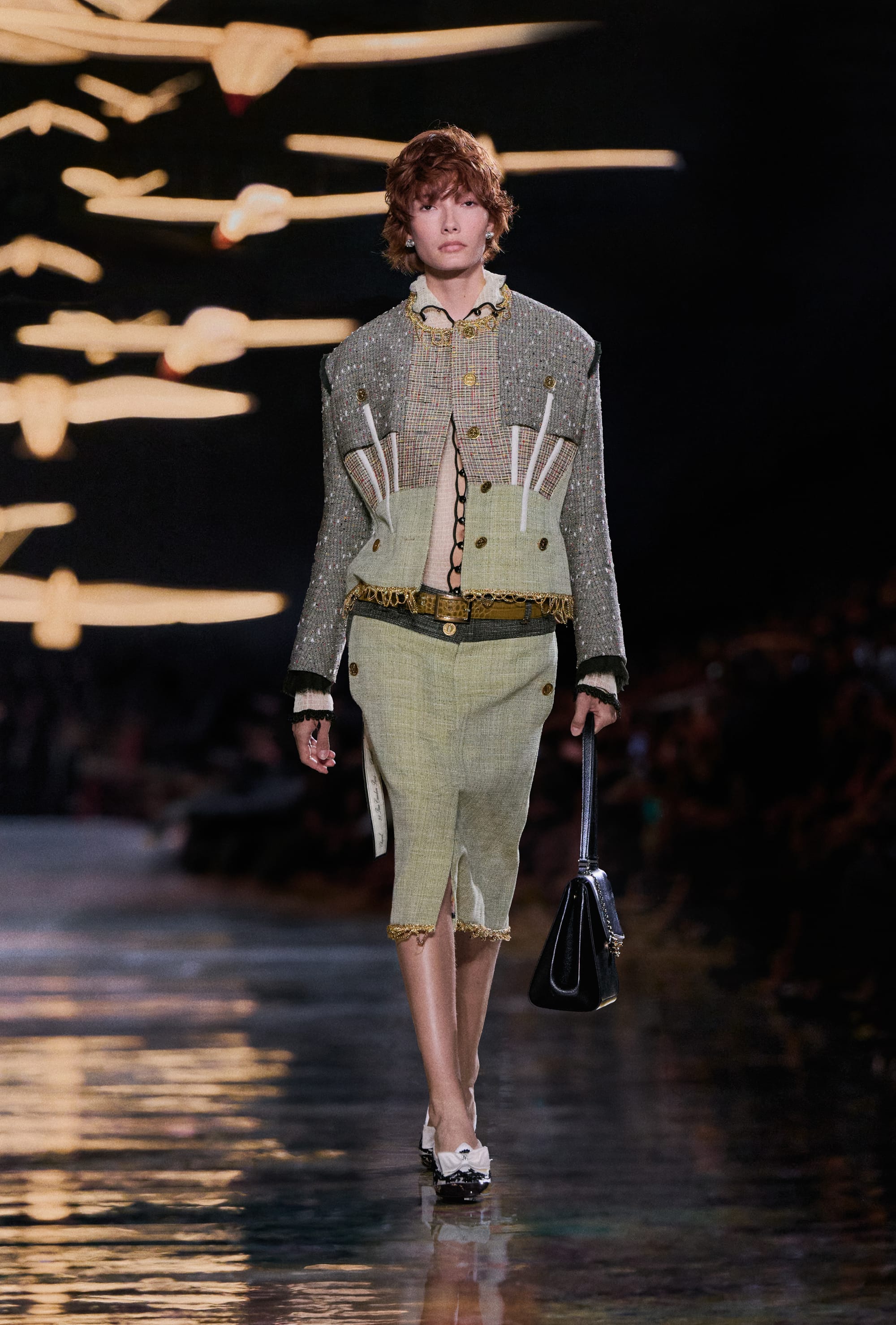
Blazy treats each stage of Chanel's life as something she tried on, kept, or threw away. Edwardian corsetry, the tailoring she rebelled against, the suits she invented later: they all appear here, often in a single look. Shadow boning, a peplum, a ruffled collar are left visible on purpose, like traces of earlier wardrobes.
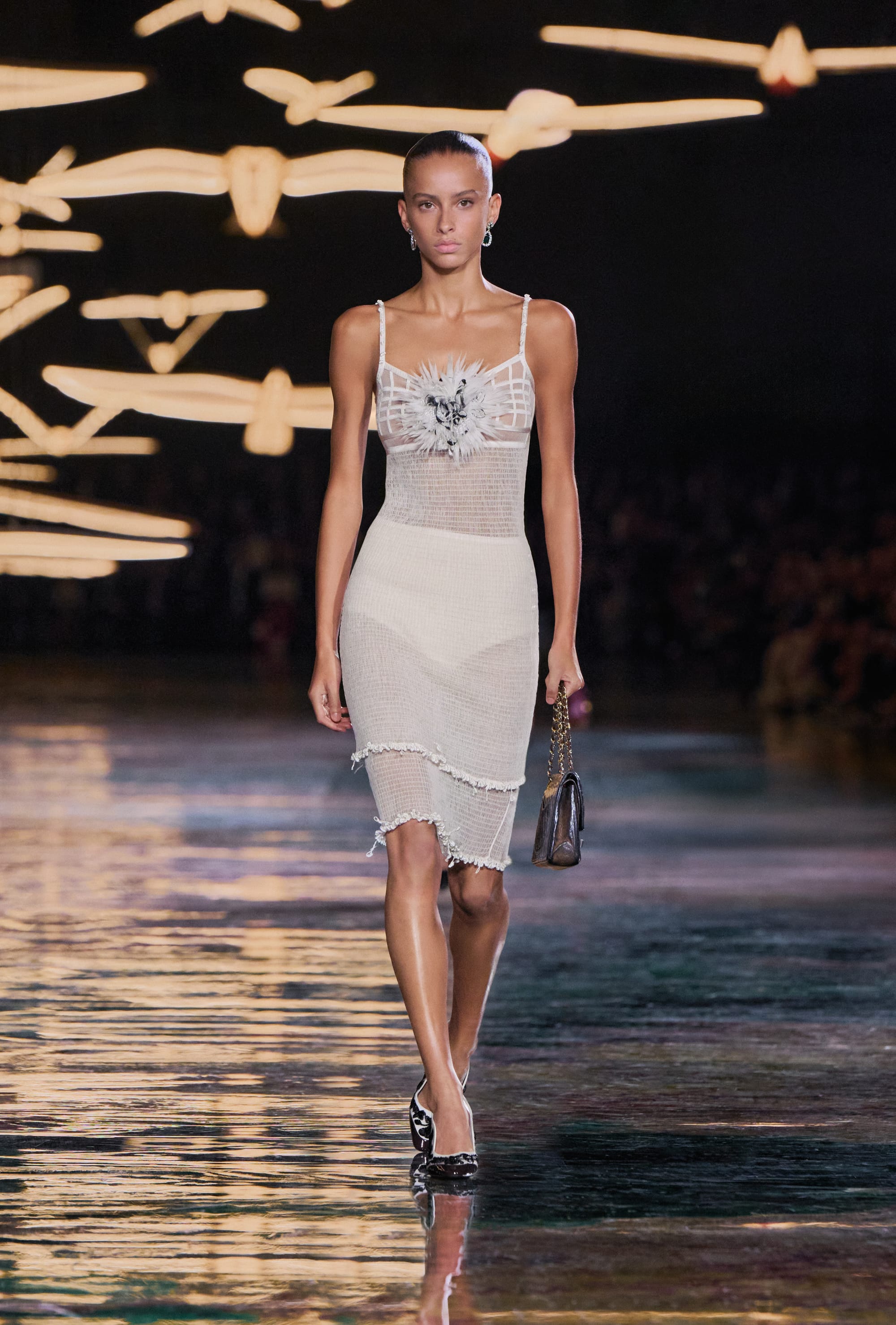
The show opens with jersey underwear, one of Chanel's earliest revelations. It moves toward her postwar suits, worn straight against bare skin with nothing in between. The first chapter of her story and the last turn out to mirror each other.
Men's formal day and evening dress comes back with raw edges. It is reworked into gilets, paired with trousers, or rebuilt as pencil-skirt suits. Then come thirties-style gowns, sequined, bias-cut, or knitted and beaded, yet meant to be pulled on as easily as a T-shirt.
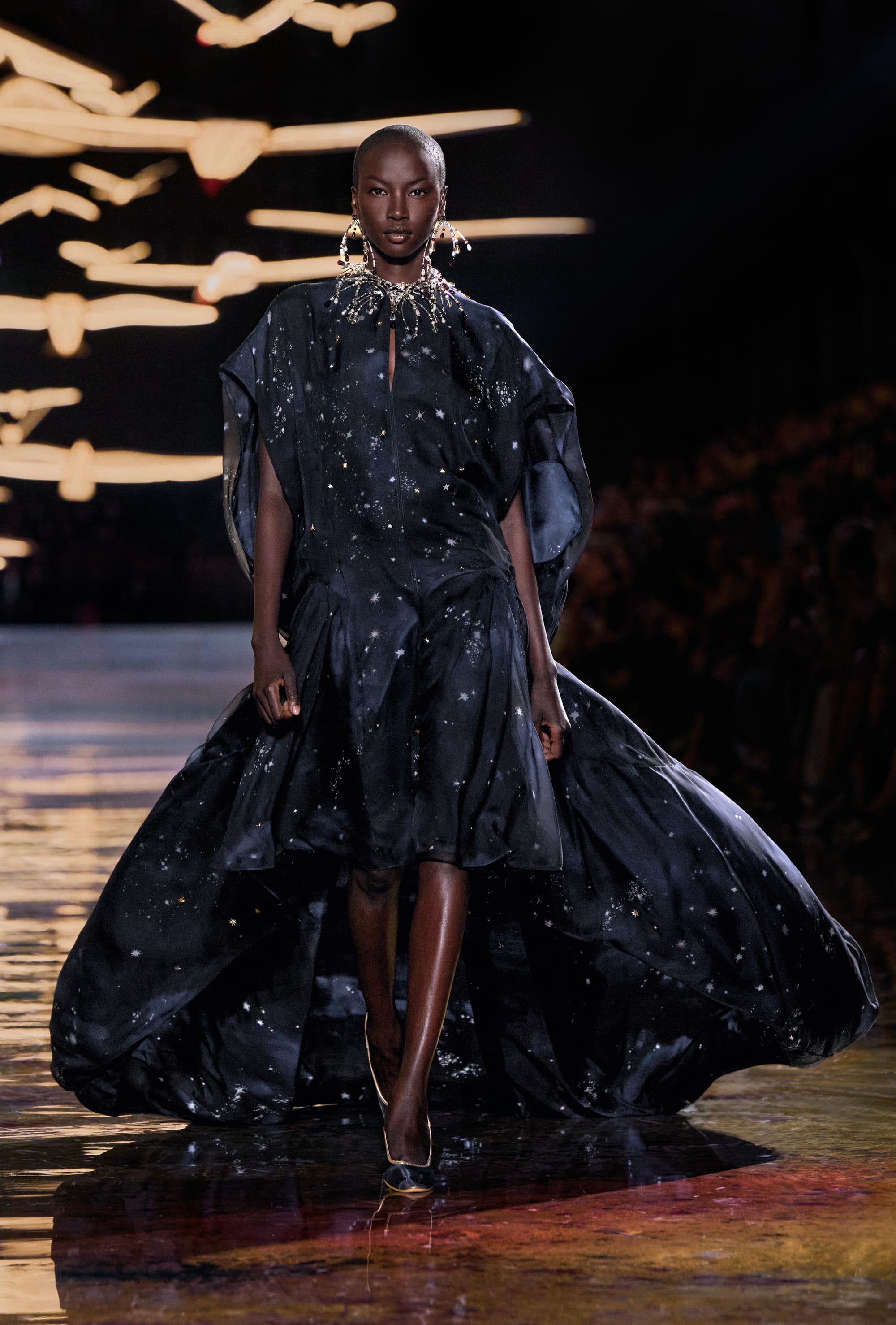
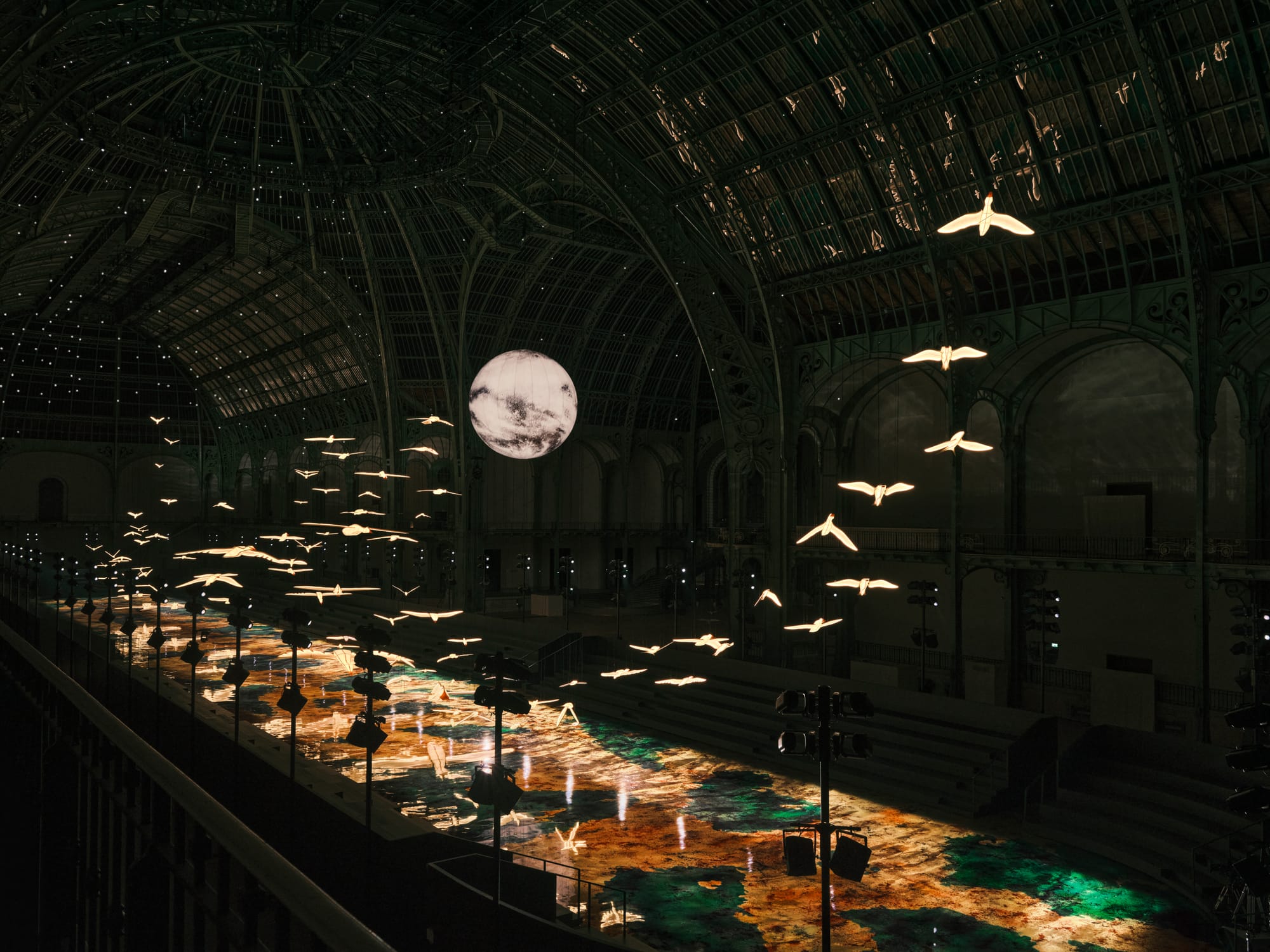
The most striking pieces imitate clouds drifting across a sky. Printed silk transparencies of different weights are layered to move from morning light to golden hour to nightfall. A whole day passes over one dress.
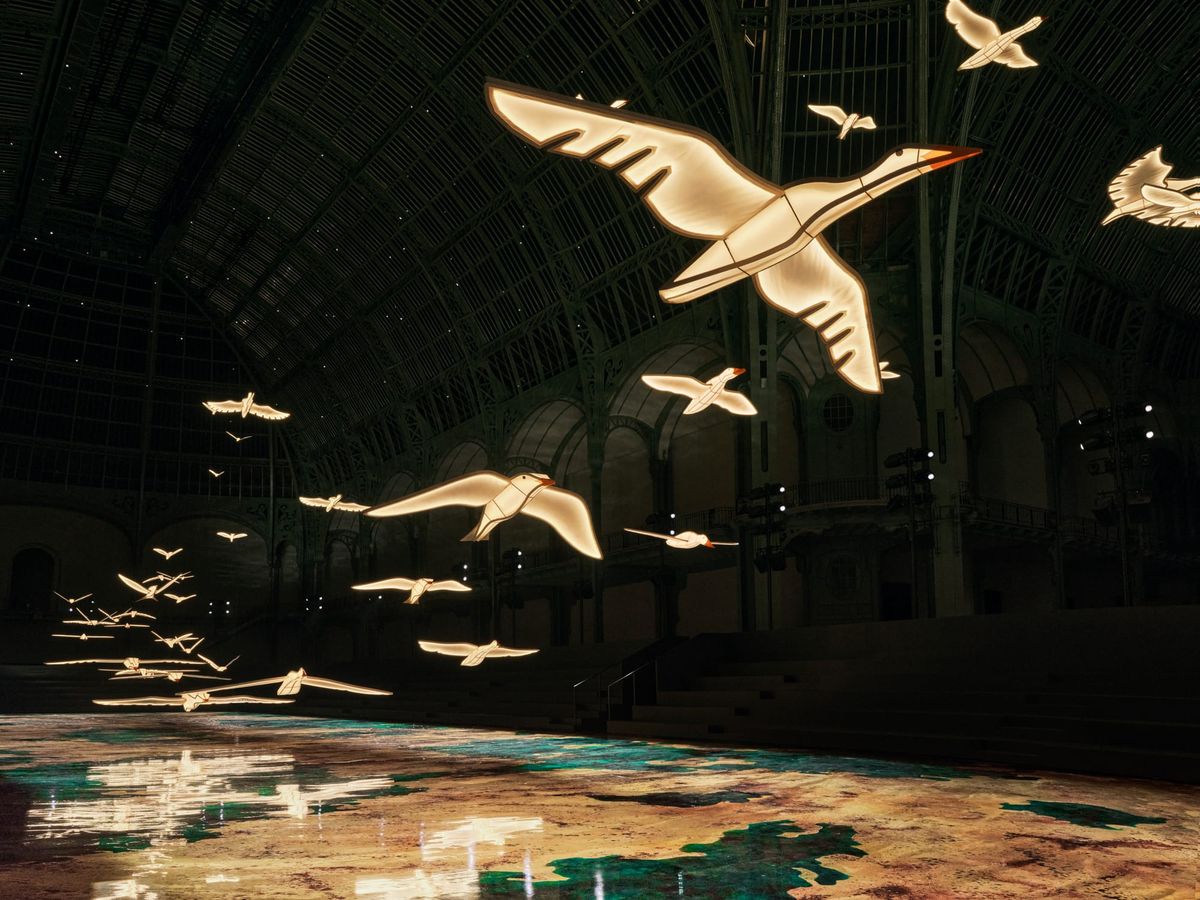
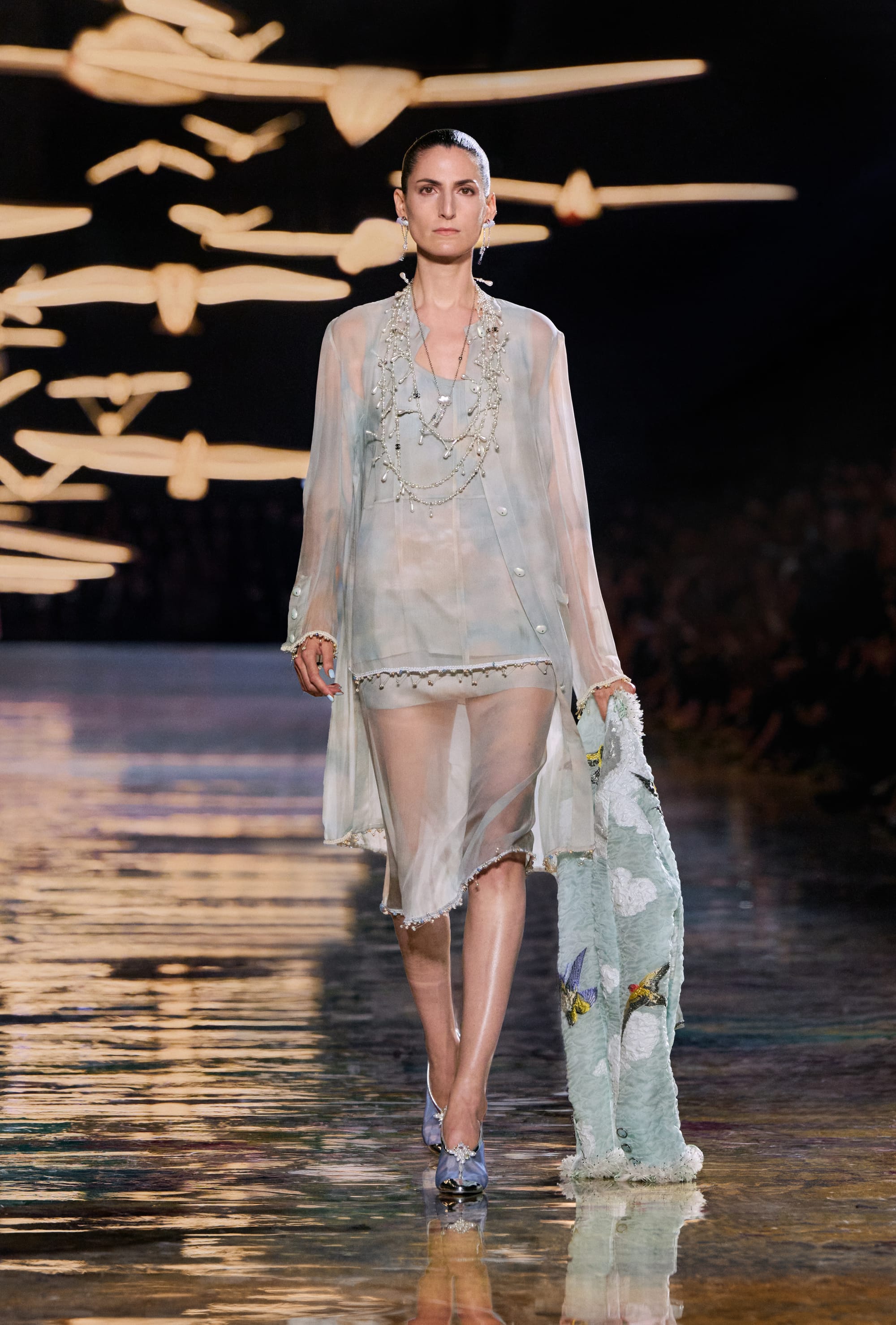
Swifts and swallows fly through the collection as buttons, jewellery and embroidery. The real lift, though, comes from the atelier's woven and knitted fabric developments, built for lightness and movement rather than display.
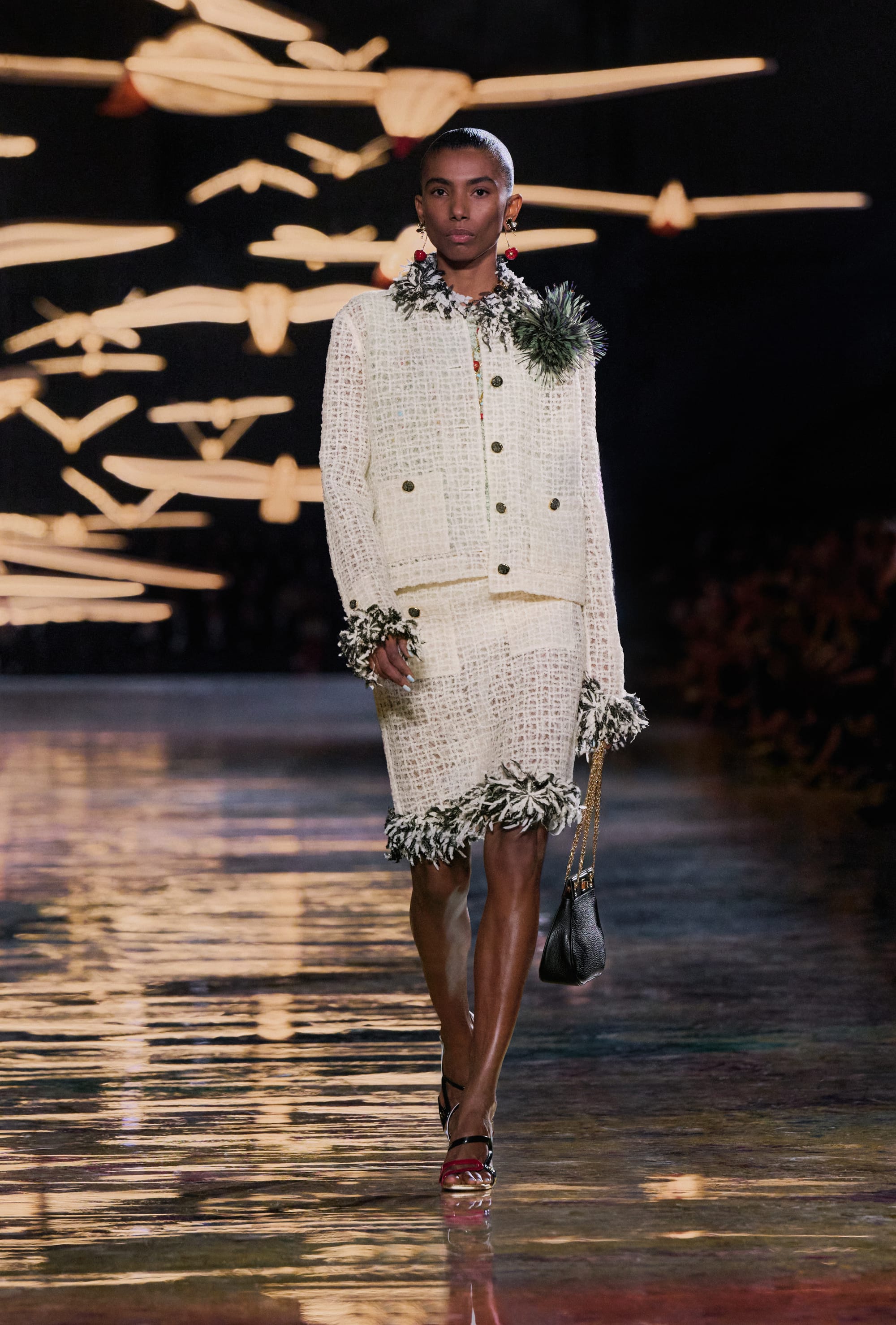
The finale introduces "smocked tweed": the house's signature fabric given stretch, so the suit moves with the body instead of holding it in place. Chanel describes it as a performance garment that only today's technology allows. It's the clearest hint of what comes next for tailoring.
Chanel's obsession with movement goes beyond the runway
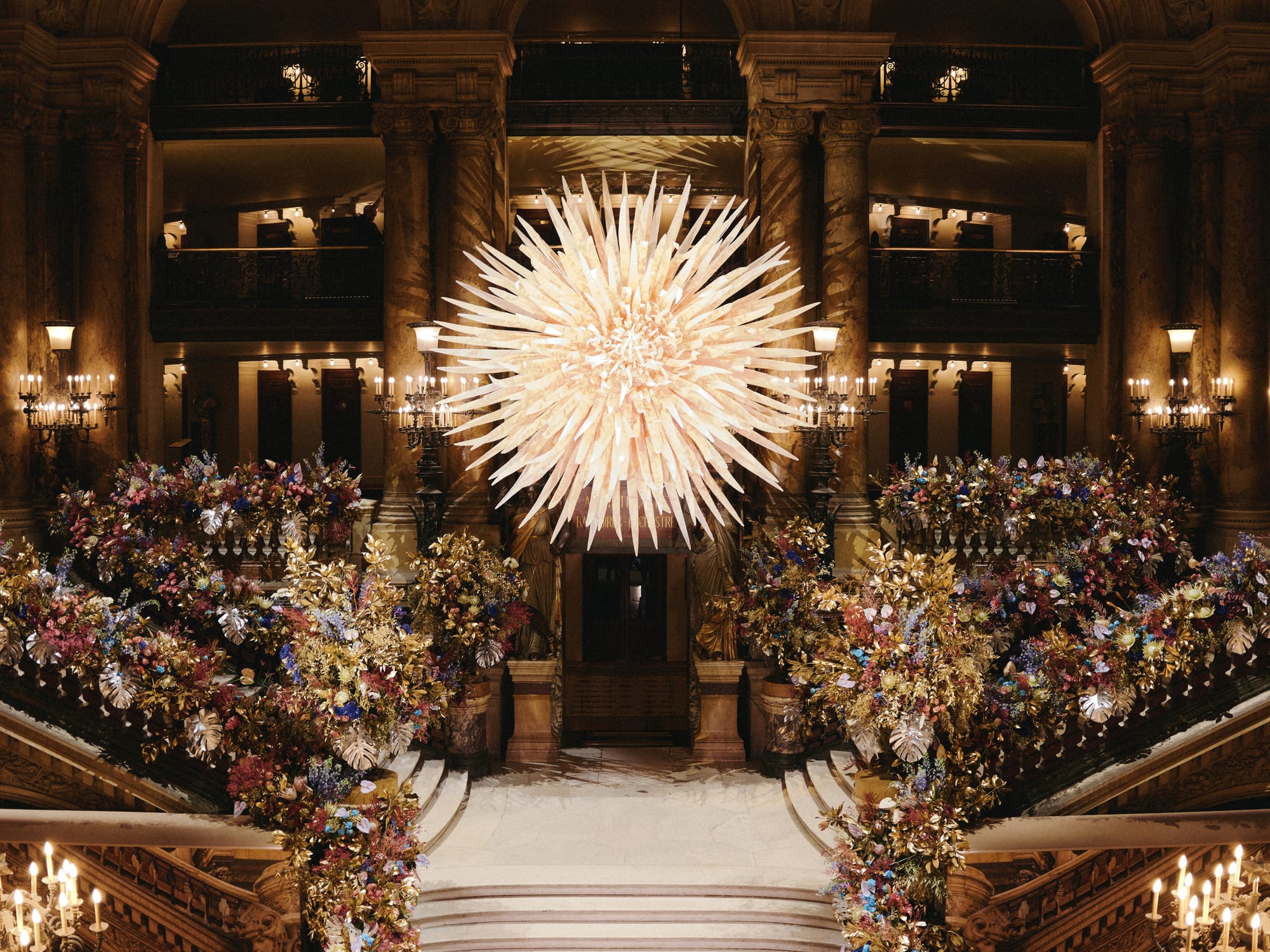
Gabrielle designed ballet costumes as early as 1924. A century later, the house is still dressing the Paris Opera.
This year the house designed costumes for "Rings of Saturn", a new ballet by Juliano Nuñes, and tutus for the Junior Ballet, the Opera's company of young dancers. It also made tutus and tiaras for the Étoiles in the Défilé du Ballet.
What it means
On the runway and on the stage, Blazy’s third chapter makes the same point: Chanel was made for a body in motion. Underwear, tweed, tutus are all designed to move.
Much of fashion still sells certainty: the right bag, the recognisable logo. SS27 offers the opposite. Here, identity is worn lightly and stays open to revision, the way it is on a stage, where one body plays many roles. It might be Chanel’s most modern idea, and it’s a hundred years old.