Inside the Worlds of Es Devlin: 10 Works That Defined Her Career
From monumental stage designs for Beyoncé to immersive installations at Tate Modern and the Venice Biennale, British artist Es Devlin has spent three decades transforming spaces into extraordinary visual experiences. We look at ten of her most significant projects and the ideas behind them.
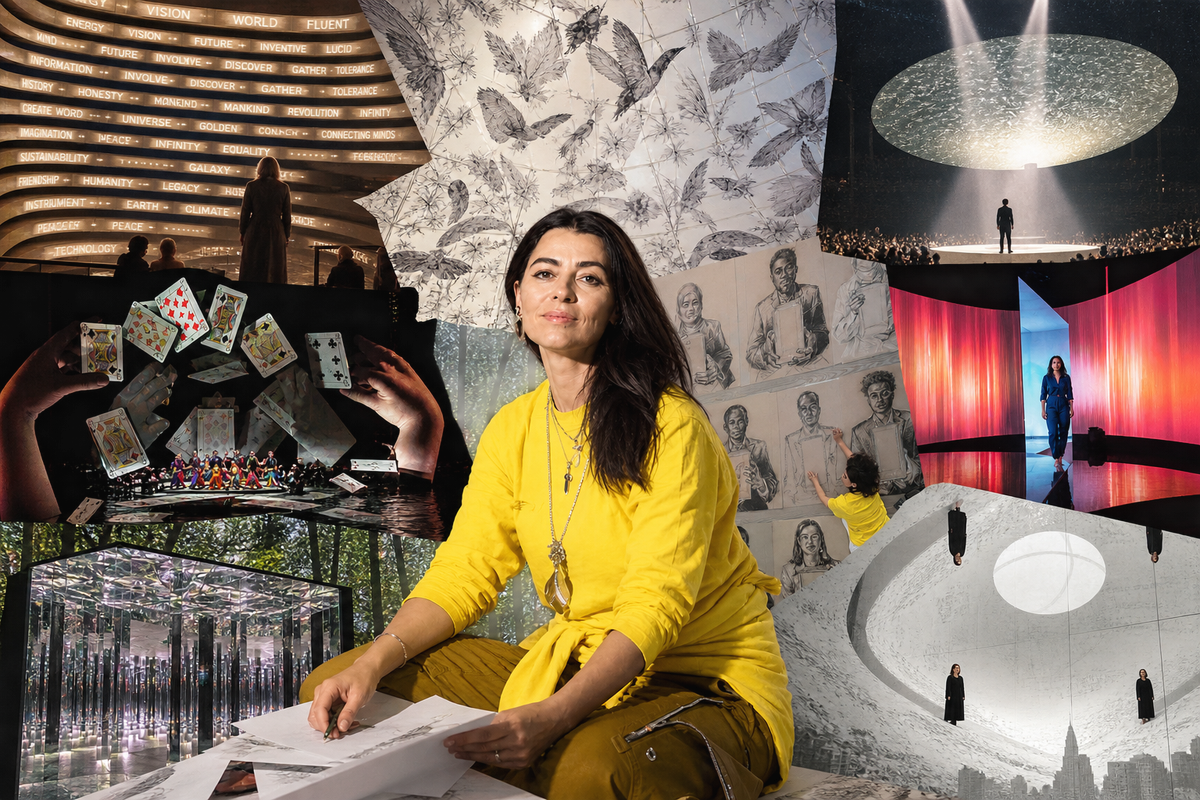
Few contemporary artists have moved between disciplines as effortlessly as Es Devlin. Working across sculpture, theatre, architecture, music and technology, she has developed a distinctive visual language built around light, movement, reflection and the relationship between audiences and their surroundings.
Born in London in 1971, Devlin began in theatre design before moving into large-scale concert productions, working with artists including Beyoncé, Kanye West, and Adele. Alongside her stage work, she has developed public installations that explore language, identity, memory, and the environment.
Her approach often transforms familiar spaces through mirrors, projections, and moving structures. Many of her installations are designed to be experienced from within, with visitors moving through and interacting with the work. Here are ten of Devlin’s most remarkable projects.
1. Kanye West – Yeezus Tour (2013)
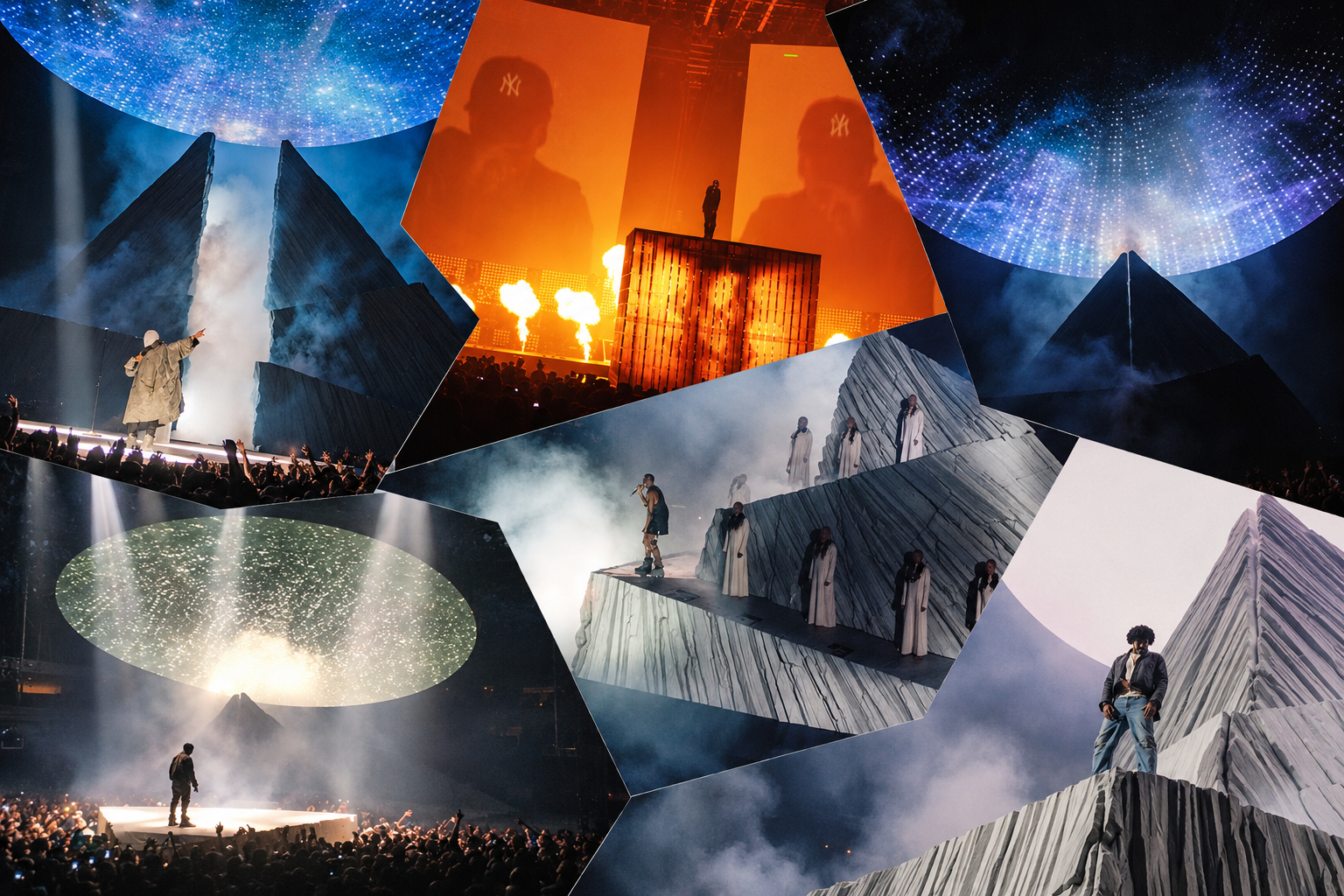
One of Devlin's defining music collaborations, Kanye West's Yeezus Tour transformed a conventional arena concert into a theatrical production. Its centrepiece was a monumental mountain that served as both stage and sculptural landscape.
Throughout the performance, the structure became a setting for shifting projections, dramatic lighting and choreographed movement. The show drew on religious imagery and the visual language of opera, with West's performance unfolding almost like a contemporary myth.
2. Beyoncé – Formation World Tour (2016)
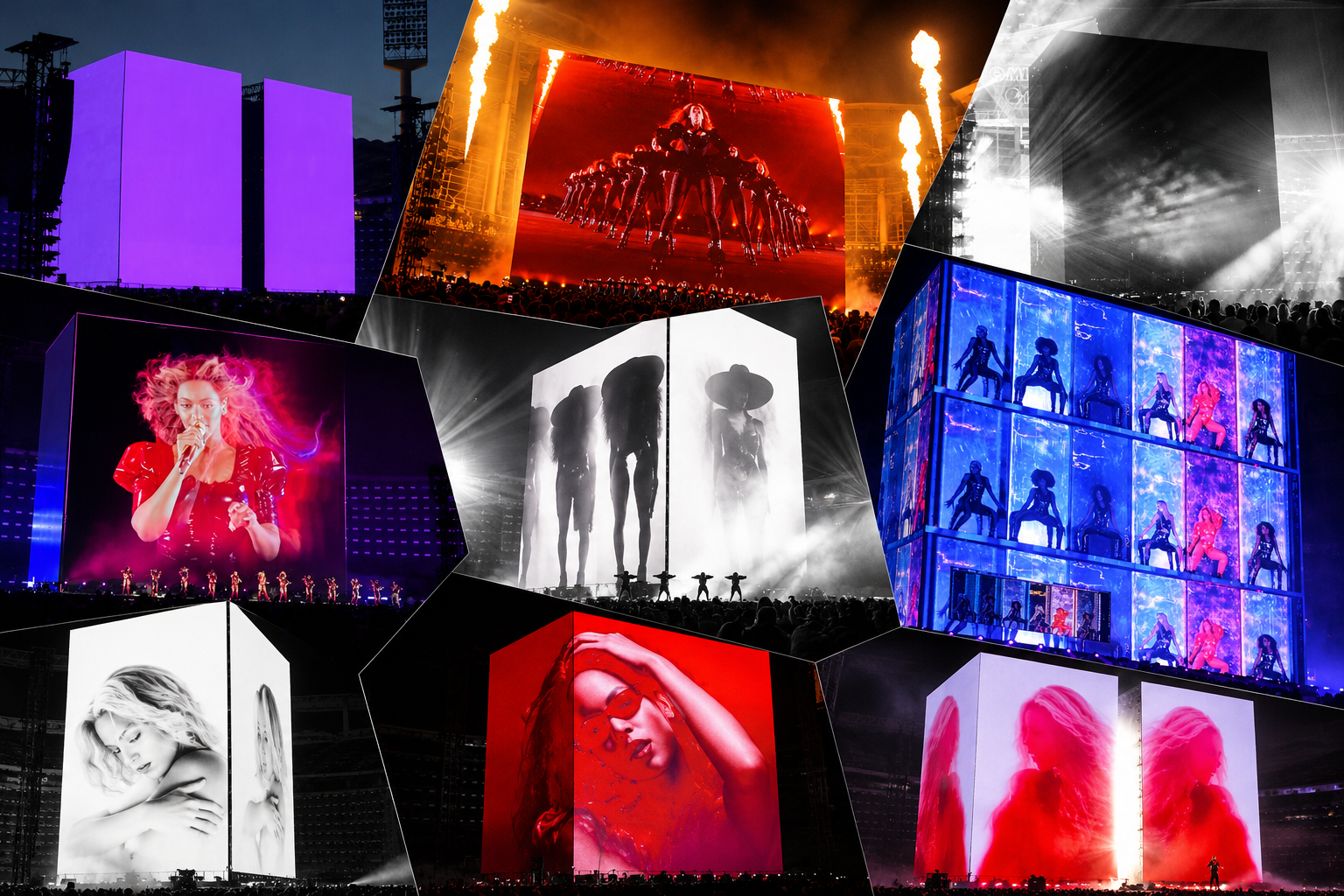
For Beyoncé's Formation World Tour, Devlin created one of the decade's most recognisable stage structures: a gigantic rotating LED cube known as the Monolith.
The structure displayed close-up portraits, abstract visuals and live footage. Its rotating surfaces allowed the stage to transform throughout the performance, while its scale made the production visible across entire stadiums. Architecture, video and choreography were combined into a single moving sculpture.
3. Mirror Maze (2016)
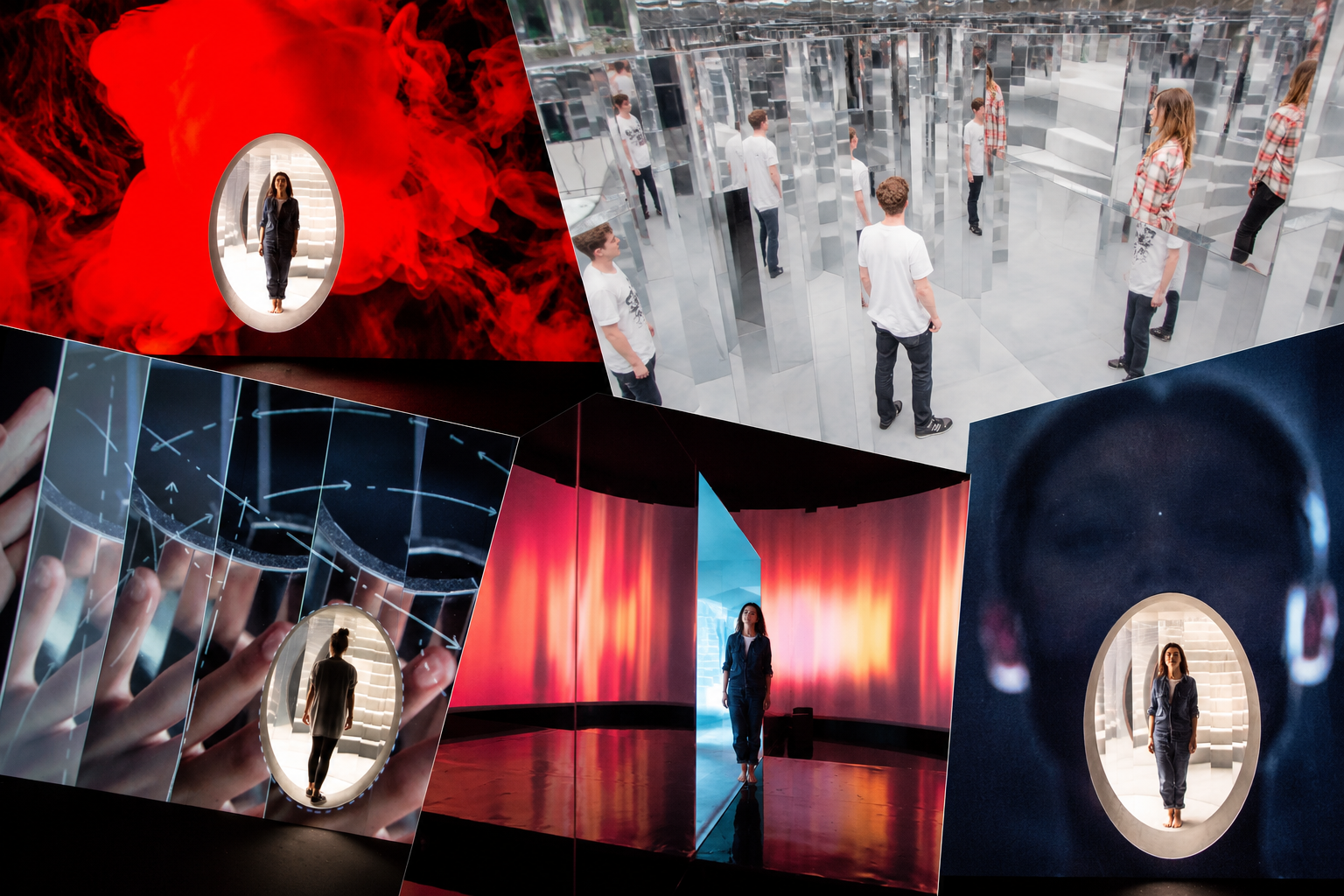
Created in Peckham, London, Mirror Maze marked an important development in Devlin's practice beyond conventional stage design.
The installation invited visitors to navigate a labyrinth of mirrored surfaces, projections and carefully controlled lighting. Reflections multiplied and fragmented the space, making it hard to distinguish physical structures from their mirrored counterparts.
The work explored memory, perception and identity, themes that would become increasingly central to Devlin's later installations. Instead of watching a performance, visitors experienced the work through their own movements and reflections.
4. Carmen – Bregenz Festival (2017)
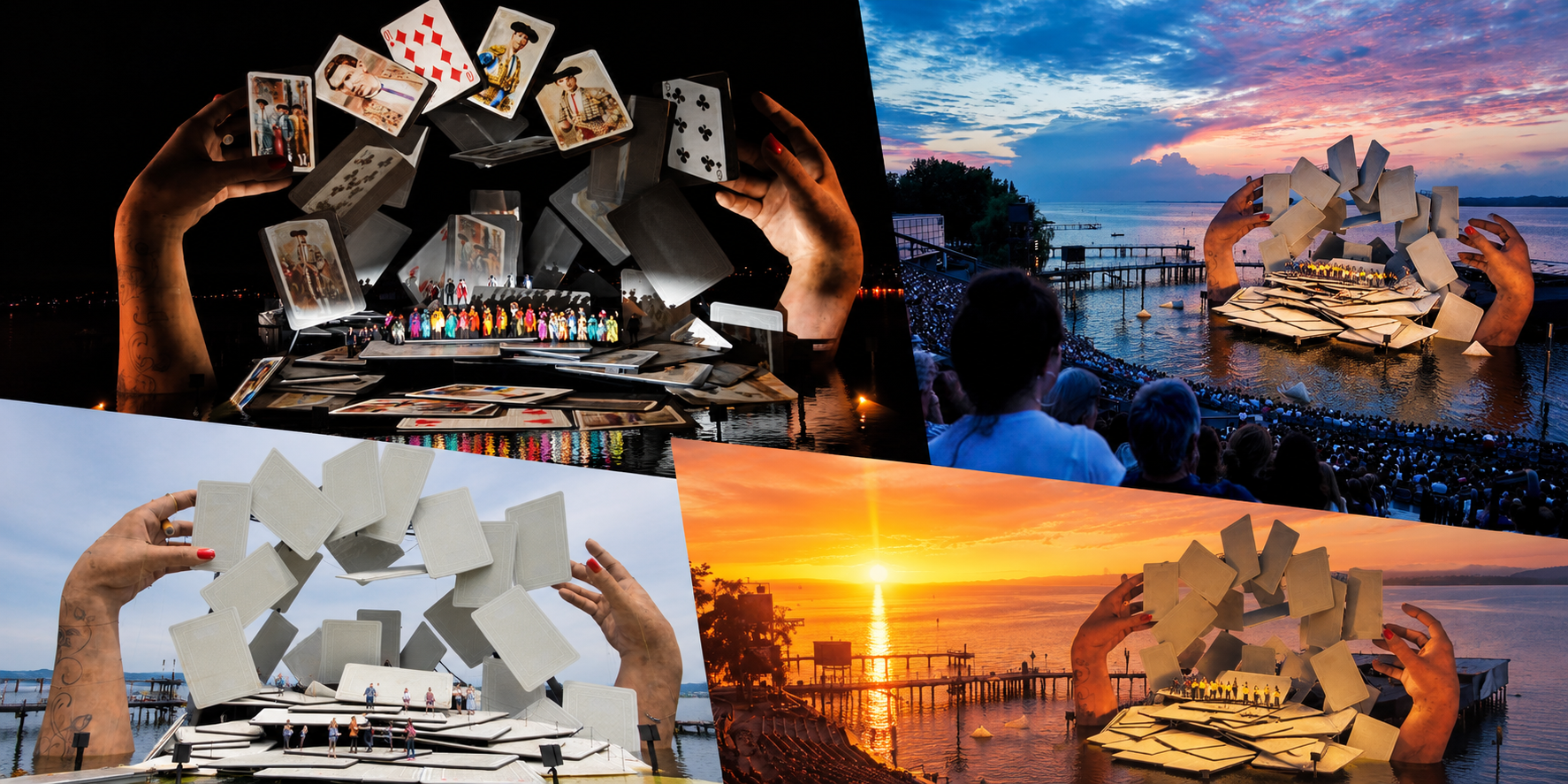
For the Bregenz Festival's production of Bizet's Carmen, Devlin designed a spectacular open-air stage on Lake Constance in Austria.
The 22-metre-tall sculpture depicted two enormous hands throwing a deck of playing cards into the air. The imagery referred to the opera's fortune-telling scene, while the cards themselves formed an architectural landscape for the performers.
Suspended above the lake, the giant hands created an instantly recognisable image that communicated the opera's central themes of fate and uncertainty.
5. Memory Palace (2019)
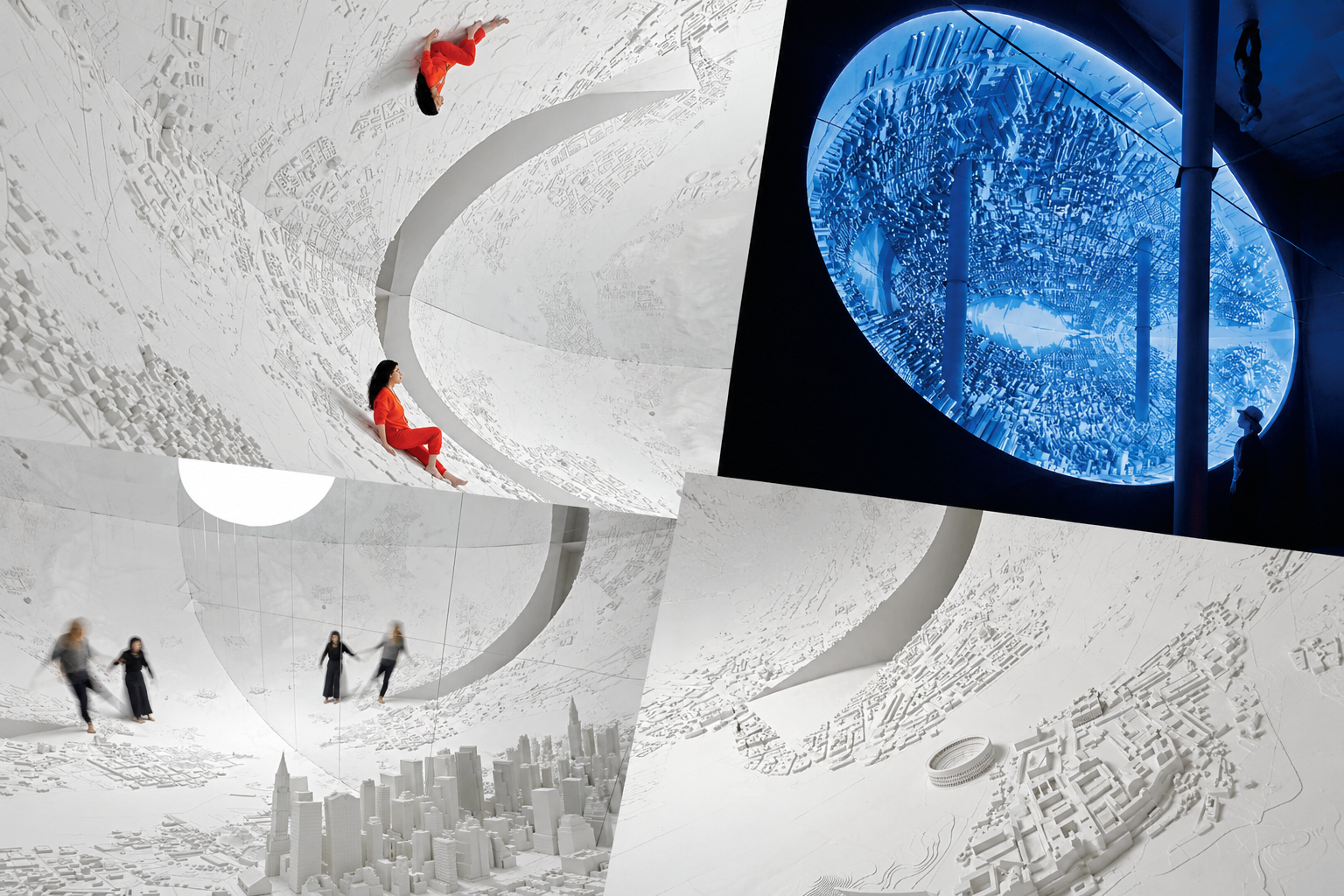
Presented at Pitzhanger Manor & Gallery in London, Memory Palace took visitors on a journey through 73,000 years of human history.
The immersive installation used a vast illuminated landscape to map significant moments in the development of human civilisation, from early forms of communication to scientific and technological breakthroughs. Visitors moved around the sculpture, encountering humanity's history through architecture, light, and geographical references.
Rather than presenting history as a fixed sequence of achievements, Devlin used the work to question how human perspectives have changed over time and how they might continue to evolve in response to environmental challenges.
6. Poem Pavilion – Expo 2020 Dubai (2021–2022)
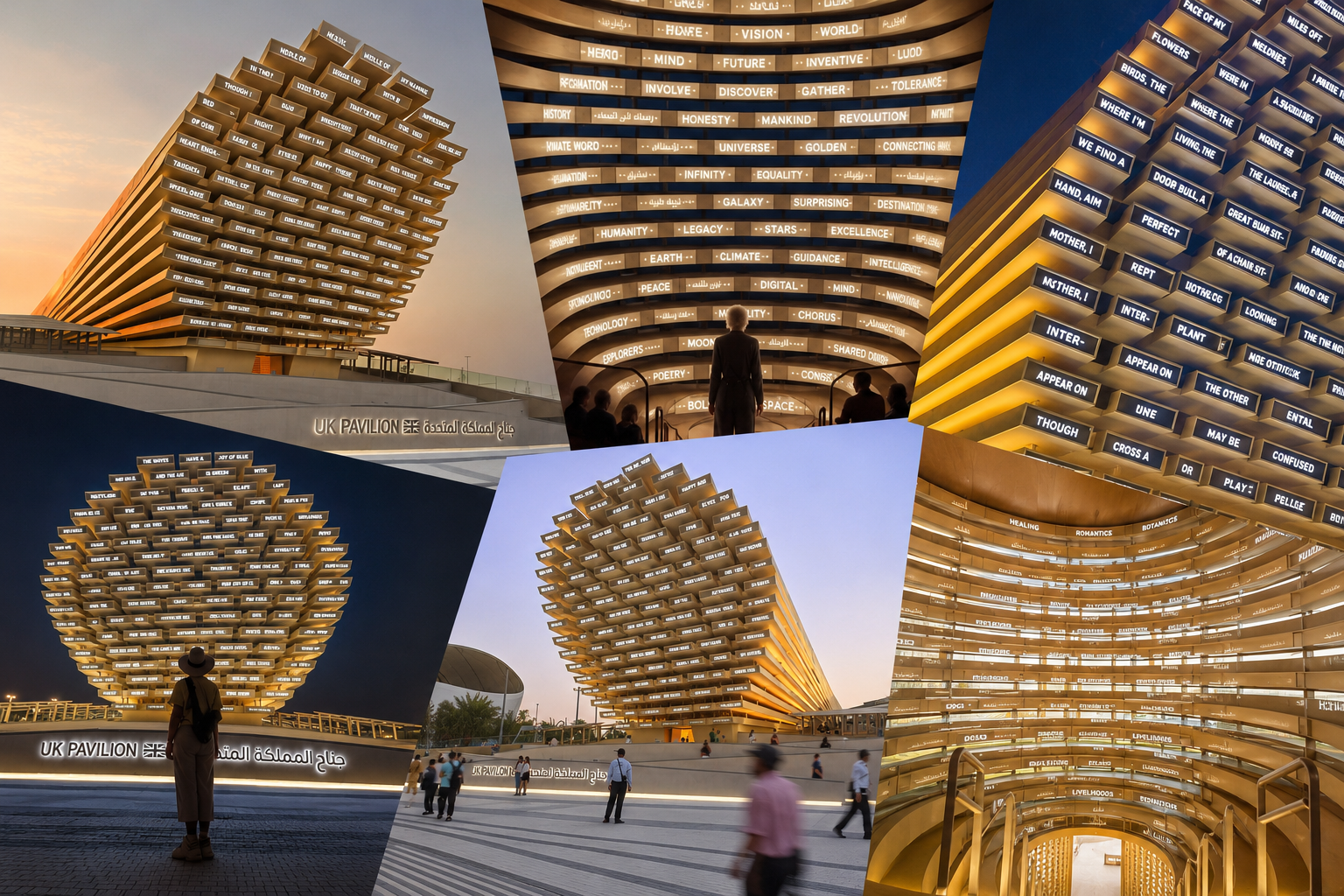
Devlin became the first woman to design the UK Pavilion at a World Expo with her Poem Pavilion, created for Expo 2020 in Dubai.
The building featured a circular facade composed of projecting architectural elements that displayed a constantly evolving collective poem. Visitors contributed words, which a machine-learning system incorporated into it. The pavilion invited people from different backgrounds to contribute to a shared work.
7. Forest of Us (2021)
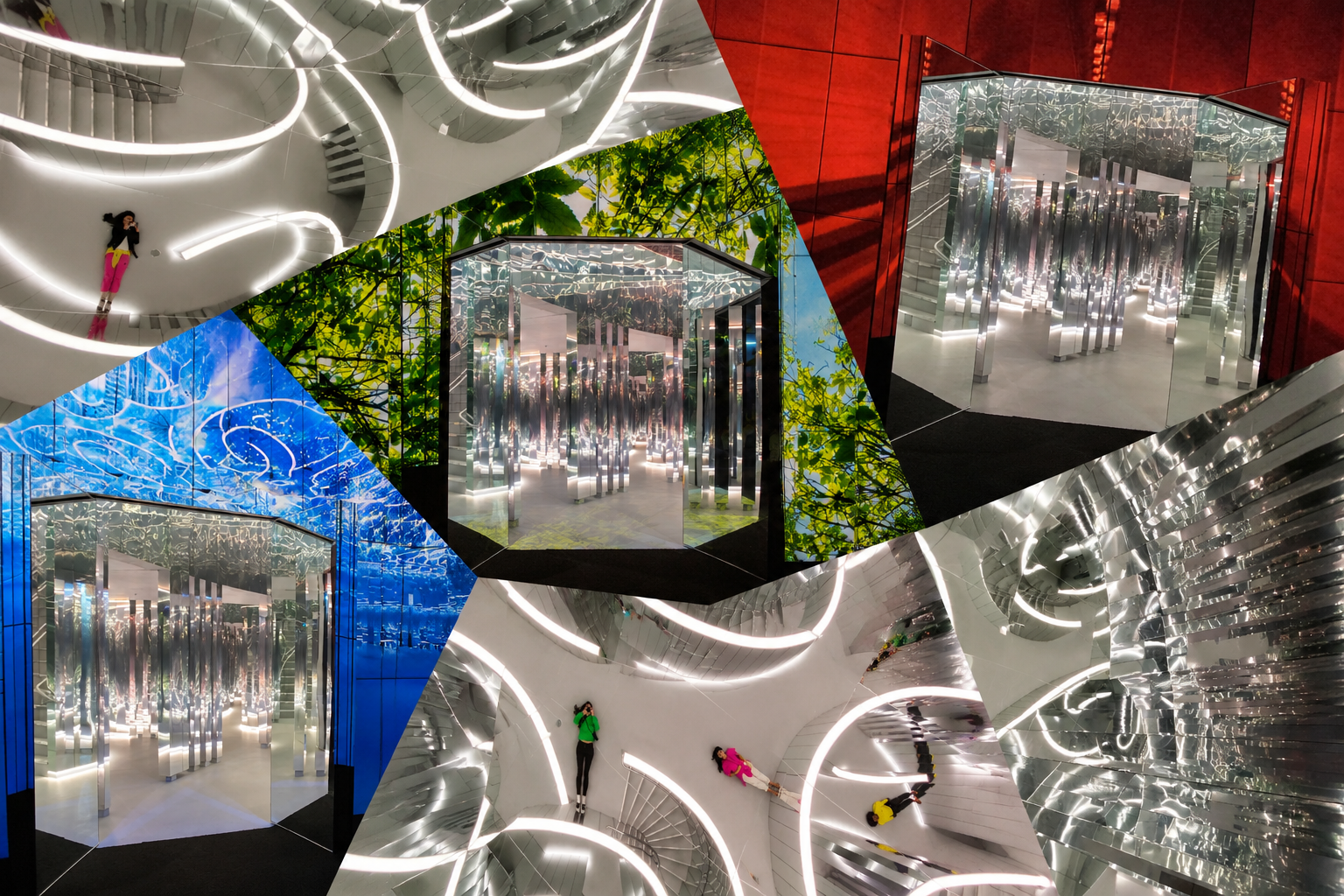
Created for Superblue Miami, Forest of Us is one of Devlin's most ambitious immersive installations.
The mirrored labyrinth explores the visual similarities between the branching structures of the human respiratory system and those found in nature, particularly trees and forests. Visitors navigate an environment of reflective surfaces and branching pathways, becoming physically immersed in a sculpture that connects the human body with the natural world.
8. Come Home Again – Tate Modern (2022)
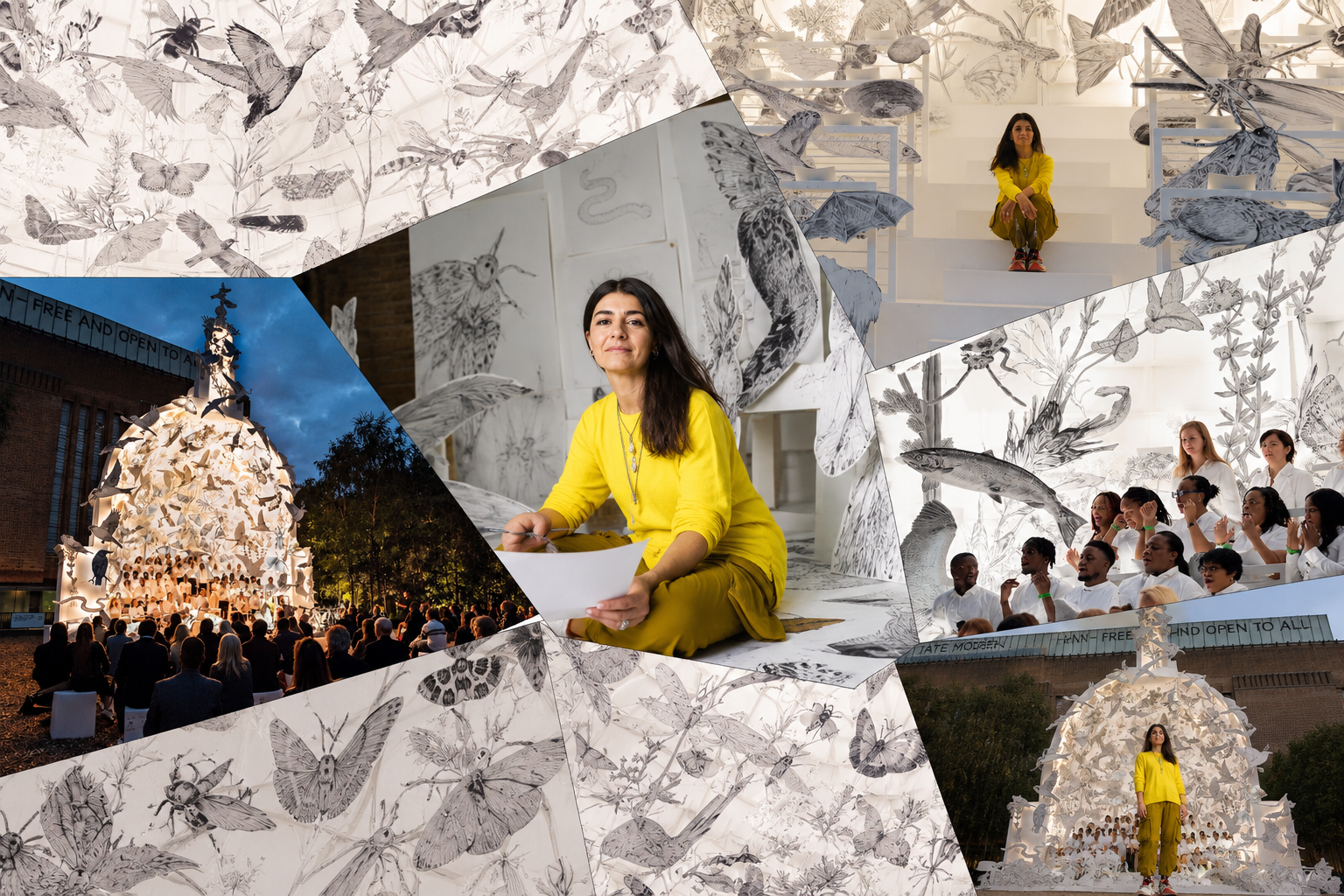
Installed outside Tate Modern, Come Home Again was a monumental illuminated sculpture dedicated to London's endangered wildlife.
The work featured Devlin's drawings of 243 at-risk species, highlighting the biodiversity often overlooked in the urban landscape. The installation also became a space for communal gathering, with choral performances accompanying the illuminated drawings.
9. Congregation (2024)
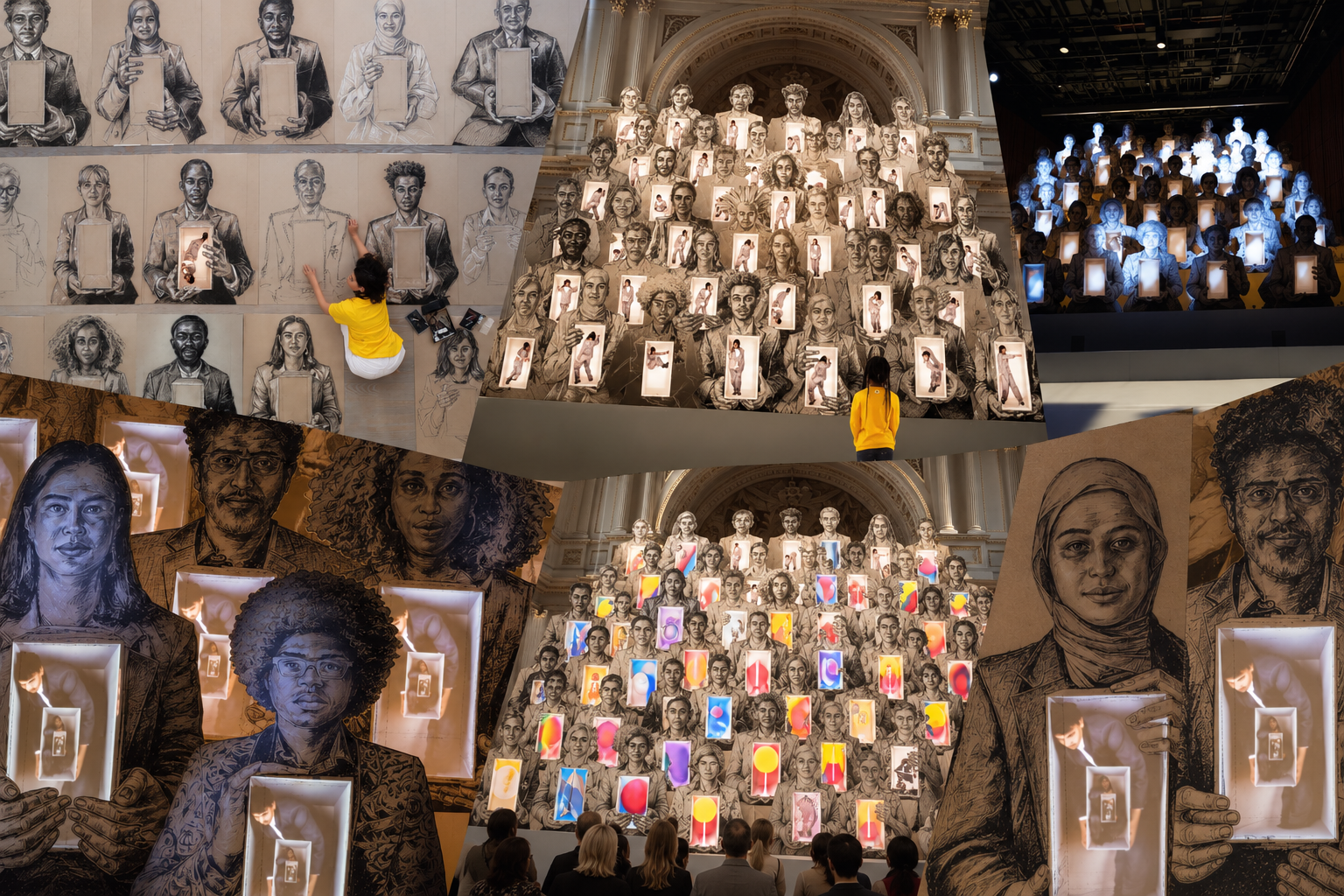
Presented at St Mary le Strand in London, Congregation brought together the stories of 50 Londoners who had experienced forced displacement.
Devlin created large-scale chalk and charcoal portraits of the participants, which were projected onto a tiered sculptural structure. The installation featured music, personal narratives, and public choral performances.
Developed in collaboration with UK for UNHCR, The Courtauld and King's College London, the project explored migration, belonging and the assumptions people make about strangers.
10. The Everythingists – V&A East Storehouse (2026)
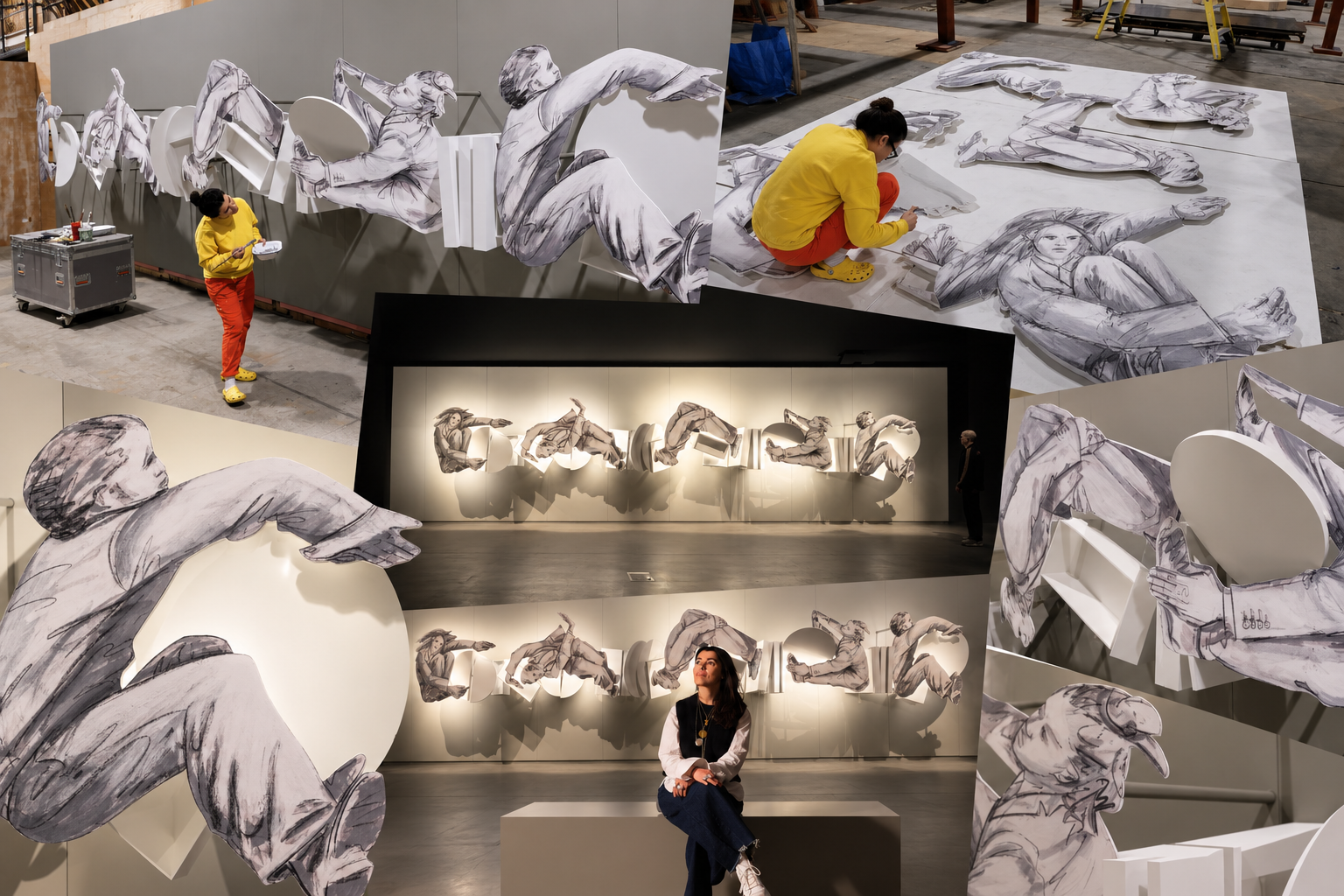
One of Devlin's most recent major commissions, The Everythingists is a 15-metre-wide illuminated sculpture created for V&A East Storehouse in London.
The installation combines dancing figures, architectural forms, sound, and light, inspired by Natalia Goncharova's theatrical backdrop for The Firebird, created for the Ballets Russes in 1926.
Devlin connects this historical reference to contemporary questions about technology, artificial intelligence and the relationship between humans and machines. The work reflects her longstanding interest in performance while examining how bodies, cities and technologies influence one another.
A World Beyond the Stage
Over the past three decades, Es Devlin has worked across stage design, contemporary art and architecture, creating everything from large-scale installations for stadium concerts to projects centred on the experiences of displaced Londoners. Despite their different settings and scales, many of her works share an interest in how people interact with the spaces around them.
For a closer look at Es Devlin’s work, read Anastasia Lander's article on Other Worlds, an exhibition that brings together her ideas on art, space and human connection. Discover more about the works on display and the stories behind them before the exhibition closes on 4 April.
 Anastasia Lander