Frida Kahlo, Overexplained
From self-portraits to socks, Tate Modern explores Kahlo’s afterlife as a feminist, queer, political and commercial icon.
At Tate Modern, you can now do a rather concentrated tour of female pain: Tracey Emin and Frida Kahlo on one floor. And if people seem to leave Emin’s exhibition in tears, the Kahlo show feels more like a project about how an artist became merchandise. It is not only painting that is on display here, but the process by which an artist became a logo and, quite simply, a product.
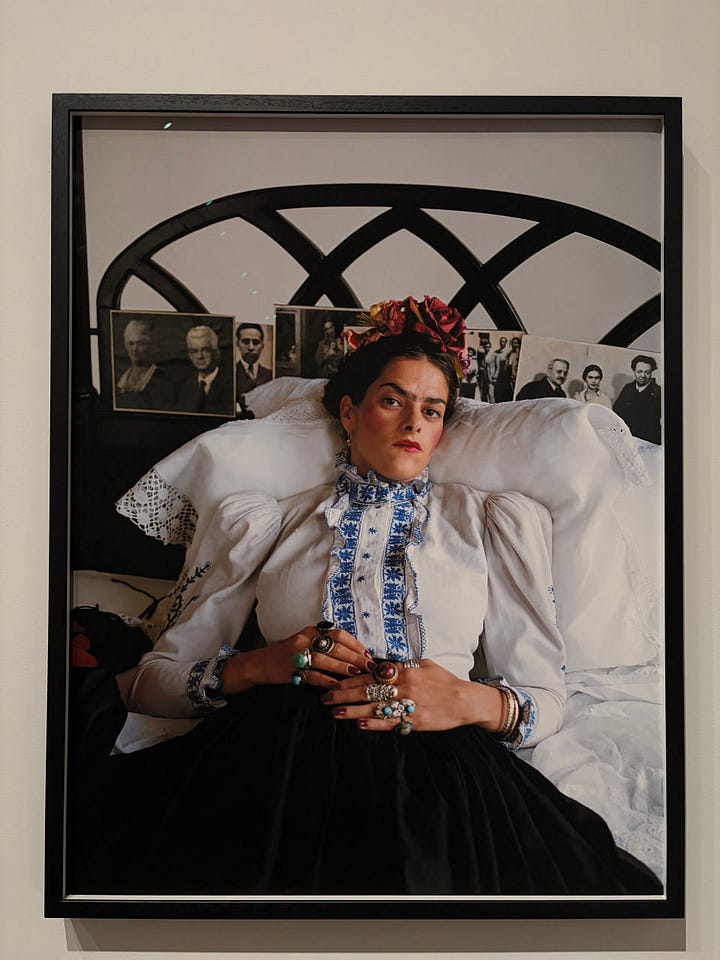
I am not Frida Kahlo’s greatest fan as a painter. I am, however, very much a fan of her husband, Diego Rivera — especially after visiting their museum in Mexico. Still, seeing so many of Kahlo’s works in one place is fascinating: not as a discovery, but as an encounter with a landmark figure you have already seen too many times before. A kind of pleasure of recognition. But that is exactly where the problem with the exhibition begins.
It is called Frida: The Making of an Icon. A strong promise. How did an artist who, during her lifetime, was far less famous than Rivera become one of the most recognisable figures of the twentieth century? How did a face, eyebrows, dresses, pain, disability, bisexuality, Mexican identity, communism and self-portraiture become a mug in Starbucks? How was an artist turned into a saint, a feminist icon, a queer icon, a disability icon and, eventually, a brand?
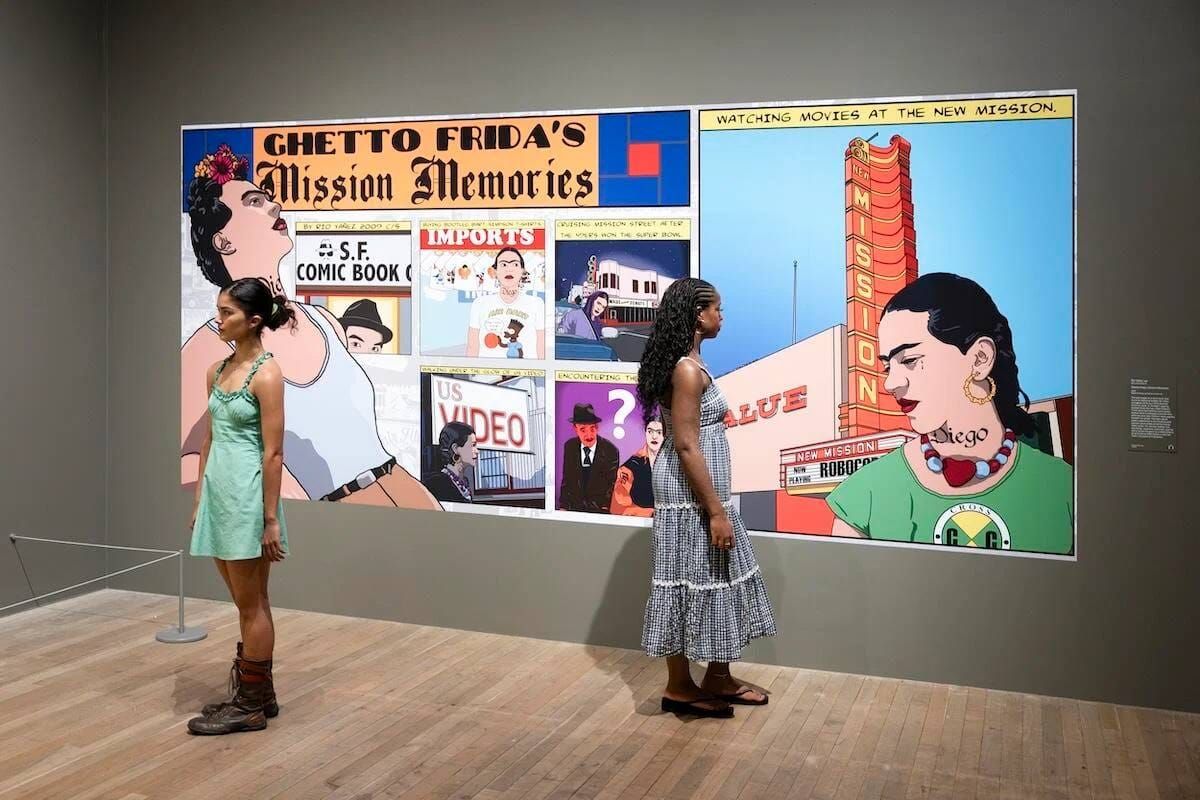
Here is Frida as symbol, Frida as source of inspiration, Frida as object of worship, Frida as commodity. There are not that many works by Kahlo herself, while a significant part of the exhibition is built around artists inspired by her, as well as photographs, documents, costumes, interpretations and later political readings. Which raises the question: what was the artist herself about, if not a successful marketing product?
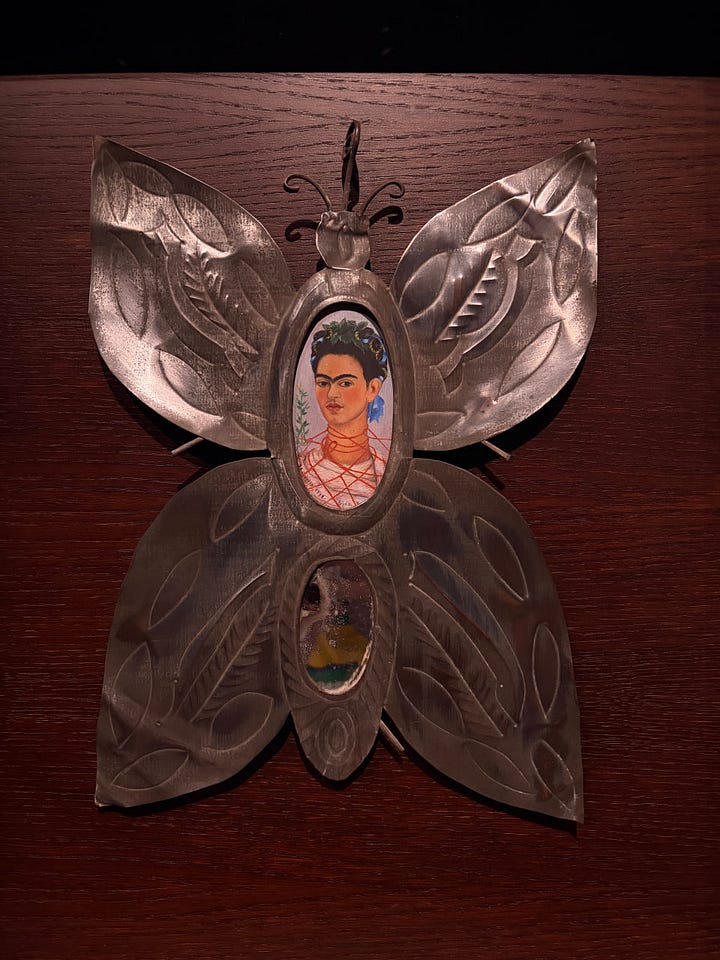
The exhibition promises to unpack the mechanism by which an icon is made. Who created her? Kahlo herself, through labour and sweat? Her husband? Photographers? Feminism? Mexico? Politics? The American art market? André Breton? Museums? Souvenir shops? Social media algorithms? All of the above?
Instead, there is a sense that the exhibition has been somewhat squeezed out of thin air — not because the subject is unimportant (this is where one could insert an advert for a course on artist promotion), but because the structure too easily replaces narrative with outcome. Any embroidery, any self-portrait by another artist, any object with eyebrows automatically enters the orbit of “Fridamania”: the story of how a human life became a logo.
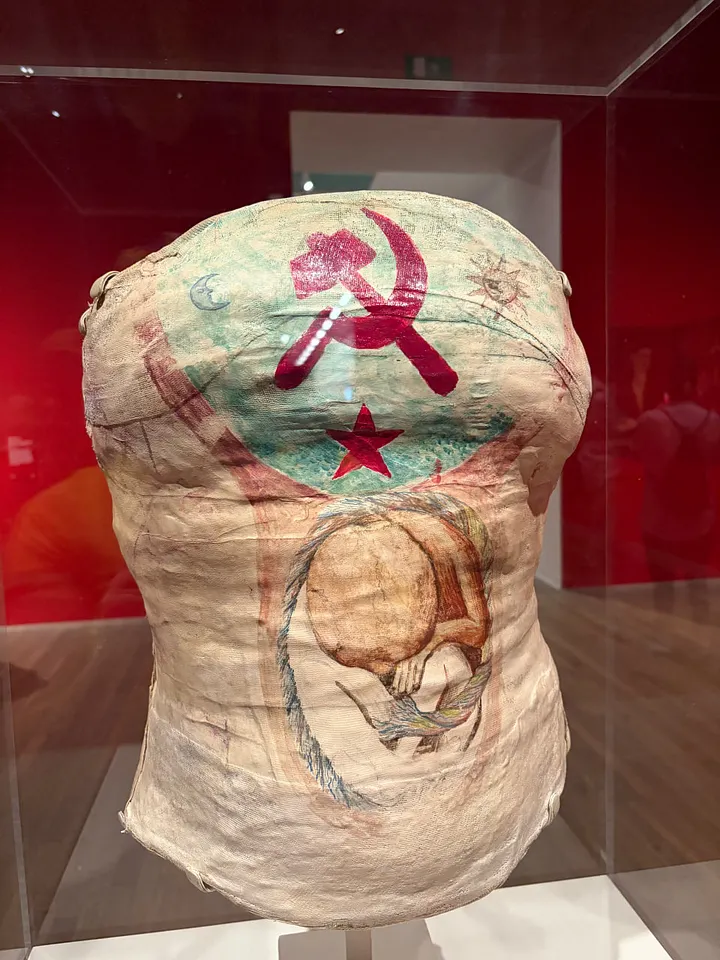
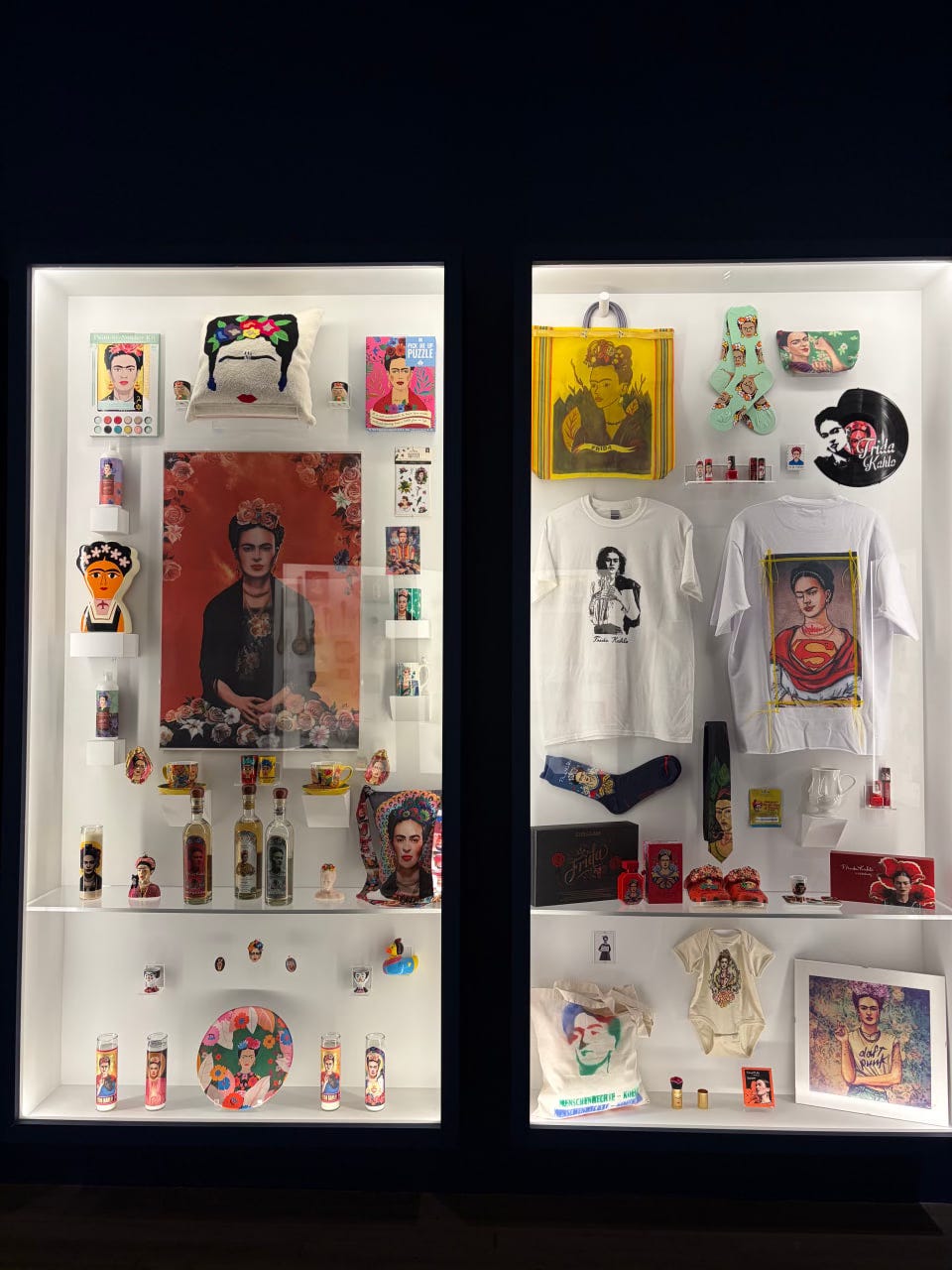
The final room, where objects bearing her image are displayed — from boots to dolls — feels especially odd. Presumably, it is meant to expose the artist's transformation into a brand. But after the whole exhibition, this ending feels almost too literal: look, Frida on things. We know this already. We live in a world where Frida exists not only in museums but also on socks, posters, makeup bags, tattoos, mugs, and Pinterest boards.
The most interesting question remains suspended: at what point did the artist cease to belong to herself? And is it even possible to look at Kahlo today without all this pop-cultural noise — without the heroisation, without the souvenir religion, without the political framework?
The most powerful version of Frida appears in the exhibition not when she is proclaimed an icon, but when the curatorial frame steps back. In the small paintings, in the gaze, in the physical fragility, in the theatre of her own image and style.
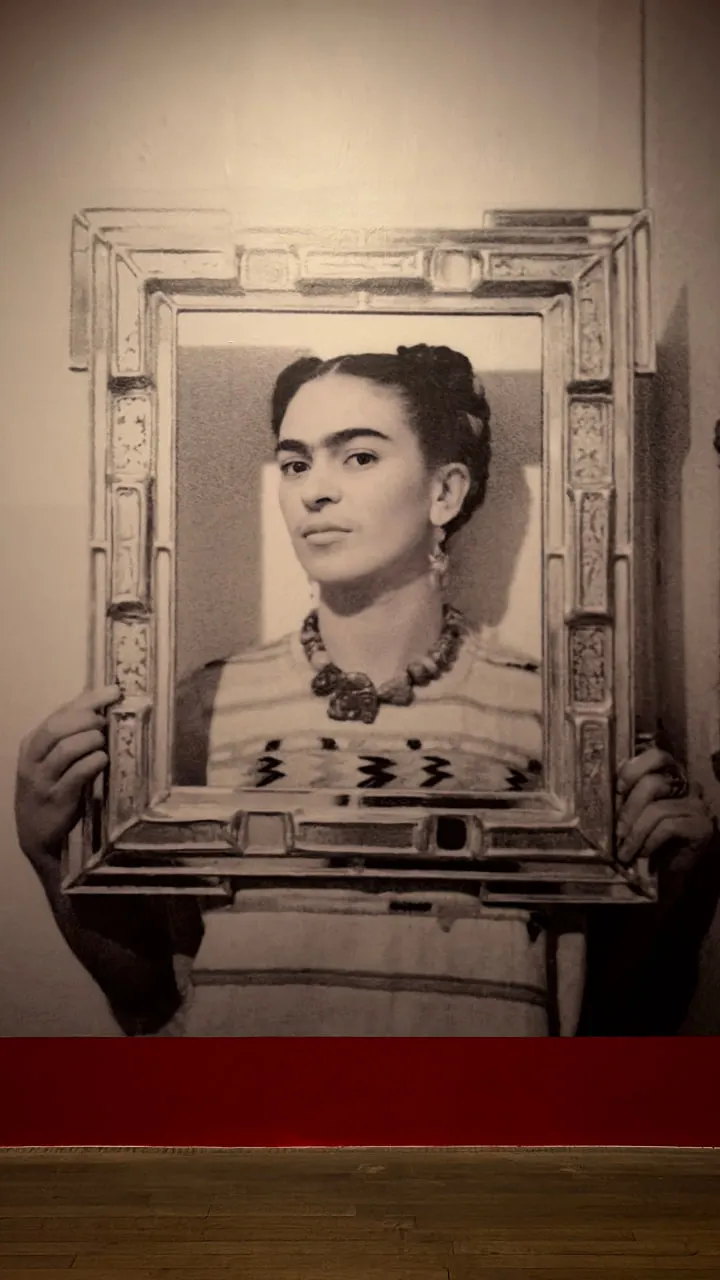
But the curators seem afraid to leave us alone with that Frida. They have to explain why she matters. As if Kahlo herself were not already powerful enough without being appointed an icon of everything at once.