ArtTech Isn't Art on Screens. It's Five Startups to Know Before 2026 Is Out.
What's actually happening while everyone argues about whether AI can paint. Review from ArtTech specialist, currently Digital Project Manager at the National Gallery, London.
When a networking crowd, art or tech, drifts onto arts and technology, the conversation tends to follow the same three vectors. Someone mentions NFTs and regrets buying one, someone asks whether AI is coming for real painters, and someone brings up that student piece they saw last week that looked like a glitching motherboard and emitted concerning squeaks.
One rarely mentions the company that shipped nearly two billion dollars of art per year with AI shipping quotes or tools that can flag forgeries and value collections. And when you do, it’s always a surprise.
Arts and technology is a broad enough phrase to cover anything where the two collide. But when we talk about ArtTech, we adopt the general ‘tech’ particle logic: it covers tech solutions that upgrade art as a sector, making it more accessible and more sustainable ecologically and financially. Fintech does it for finance, edtech for education, you get the picture.
ArtTech is the underlying mechanism that now determines whether you ever find the show, understand the painting in front of you, or take the thing home without it arriving scratched.
Here are five companies worth keeping an eye on to enrich your cultural experience.
Find that art show with CUR8.
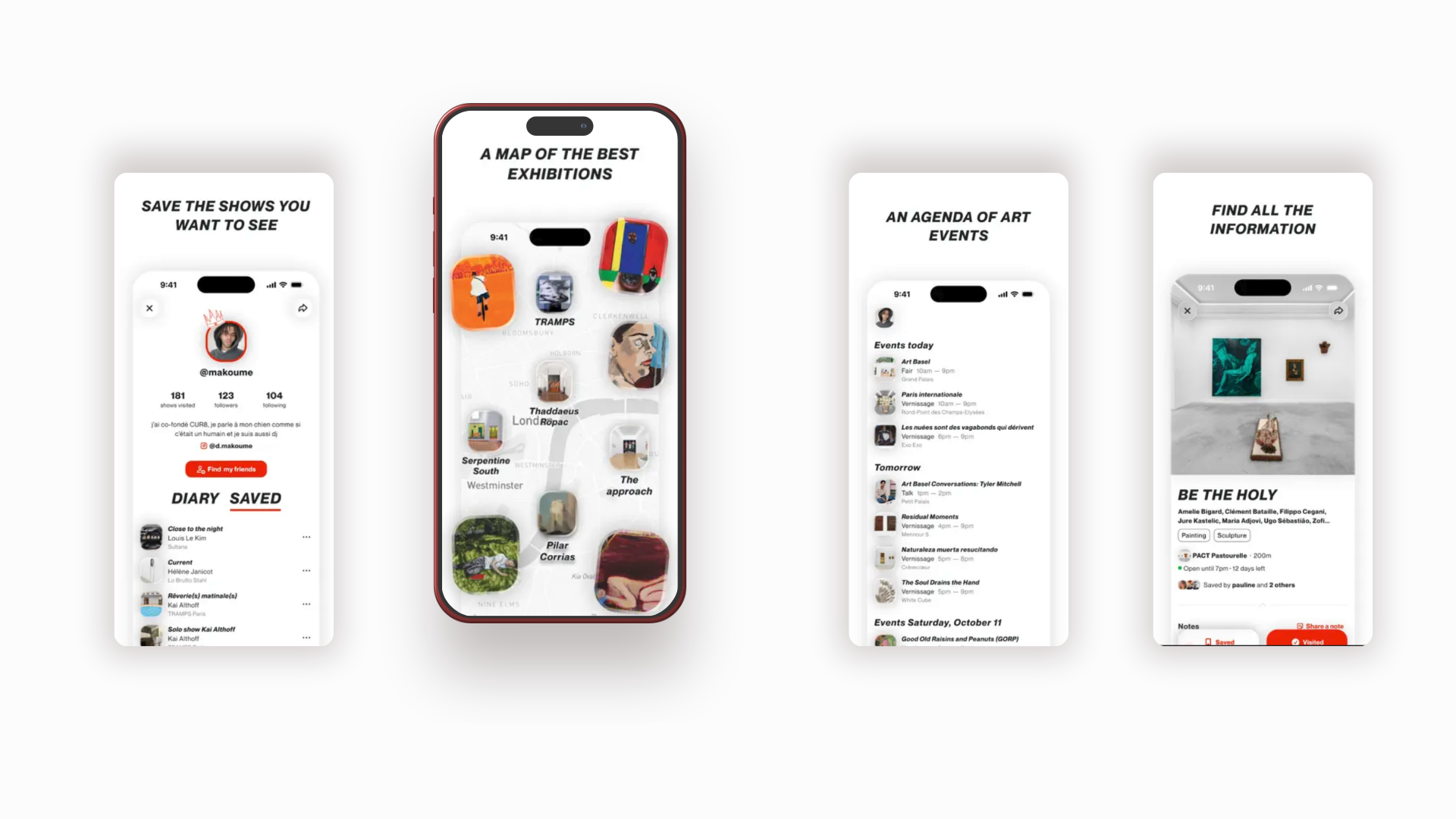
This is a live map of every exhibition happening around you. Research it, plan it, save it to your calendar, and actually go. It's the most obvious app the art world could have, yet it’s ridiculous that this basic, boring problem of “what's on near me” still isn't solved worldwide. There's a known predecessor, ArtRabbit, and you should keep it for London, Berlin, LA and New York. It does the job on the desktop, though the mobile app still screams for testing.
CUR8 is a young team who started in Paris and is now expanding to London. They are 100% mobile-first, live on iOS with Android still to come. They are loud on socials with 62k Instagram followers and a growing crew of CUR8 Locals feeding the map.
The same app developers that brought CUR8 had previously been building a social network for the art people, PACO. I've watched a handful of attempts at exactly that dissolve quickly and quietly, so, we'll see.
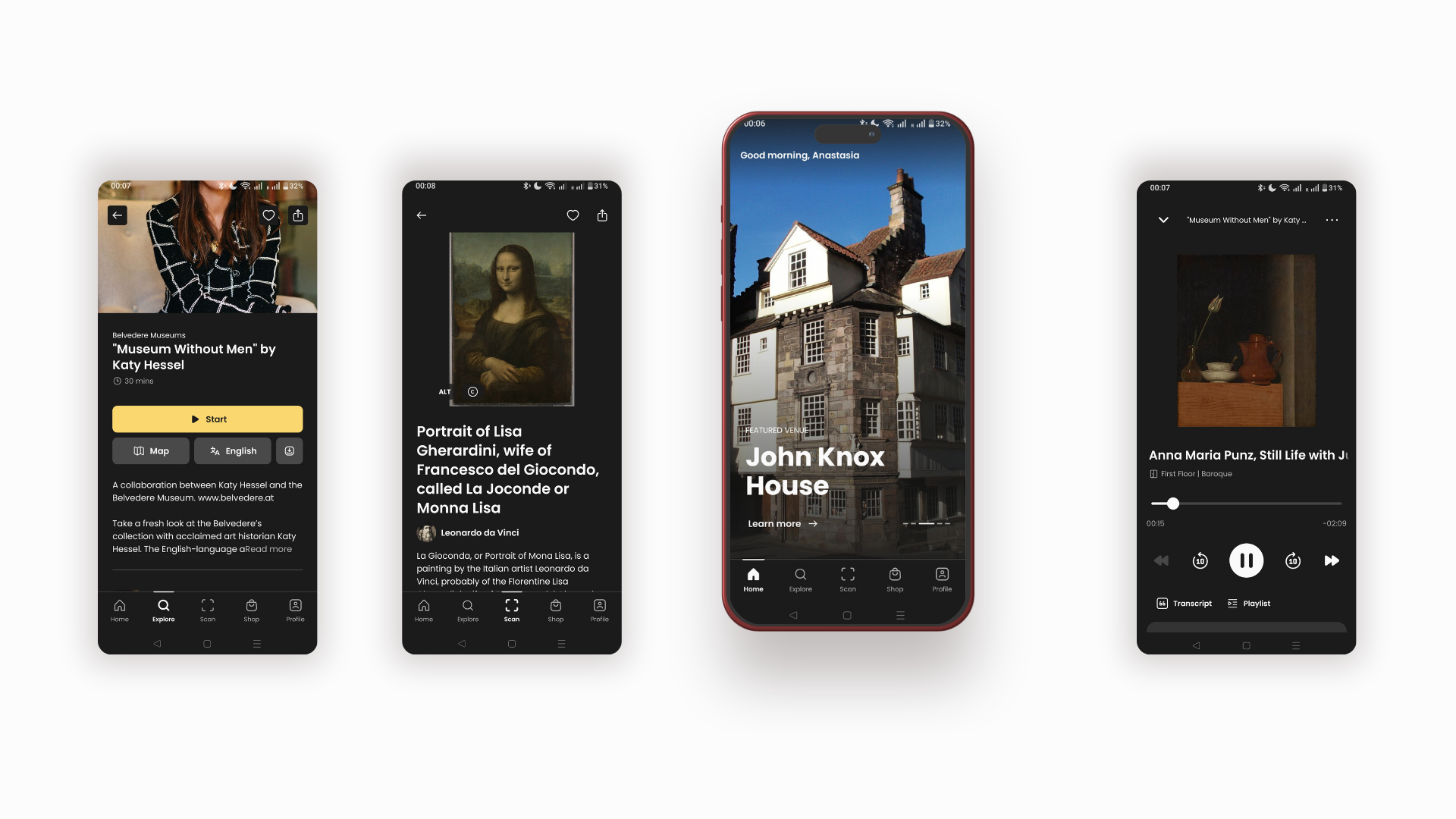
Understand what you are looking at with Smartify.
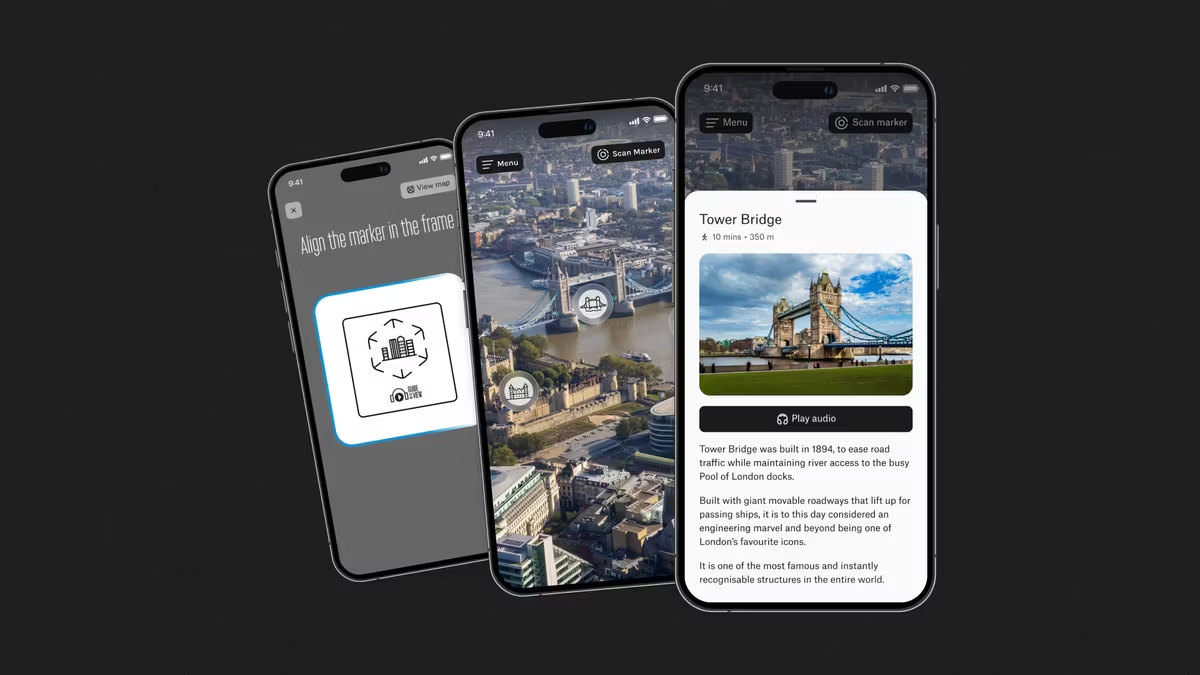
This is an app-guide: point your phone at a painting and get its story, verified and pulled straight from the museum. Publicly launched in 2017, it was named Business of the Year at the Museums + Heritage Awards in 2026. Now it goes beyond just an app into a scalable engagement platform, building tours and off-site experiences. Recently, they expanded into architecture recognition with a web-based AR scanner at the Horizon 22 viewing platform in London. It allows users to observe the skyline through their phone, and the screen displays the object they are currently gazing at.
But why not just wander a museum with ChatGPT? Plenty of people already do, in the recent State of AI in Museums study, 61% of respondents to be exact. However, it still fails spectacularly, mixing two similar paintings, losing its bearings on anything genuinely dark or abstract, and giving you the most generic line description from the internet (statistically most commonly quoted). Smartify can achieve a more reliable experience here by partnering with museums and retrieving details from them.

See deeper with Art Sensei.
This is an art mediator web app. Direct your phone at a work or upload one, and the AI inside asks what you make of a certain detail, points you toward a curious brushstroke or a shift in mood, and follows your own reactions. There's a real method underneath it: art mediation and inquiry-based learning. You come to understand a work through dialogue, where what you think and feel is your way in. Art Sensei is not replacing the conversation in front of a painting, but it is making sure you have one at all.
And it works two ways: an artist can use it as a mentor on their own practice;, an art lover can use it as a companion in a gallery or at home. It has just piloted in 2026, and the team is actively seeking feedback and early testers from the art world. Here you can become an insider.
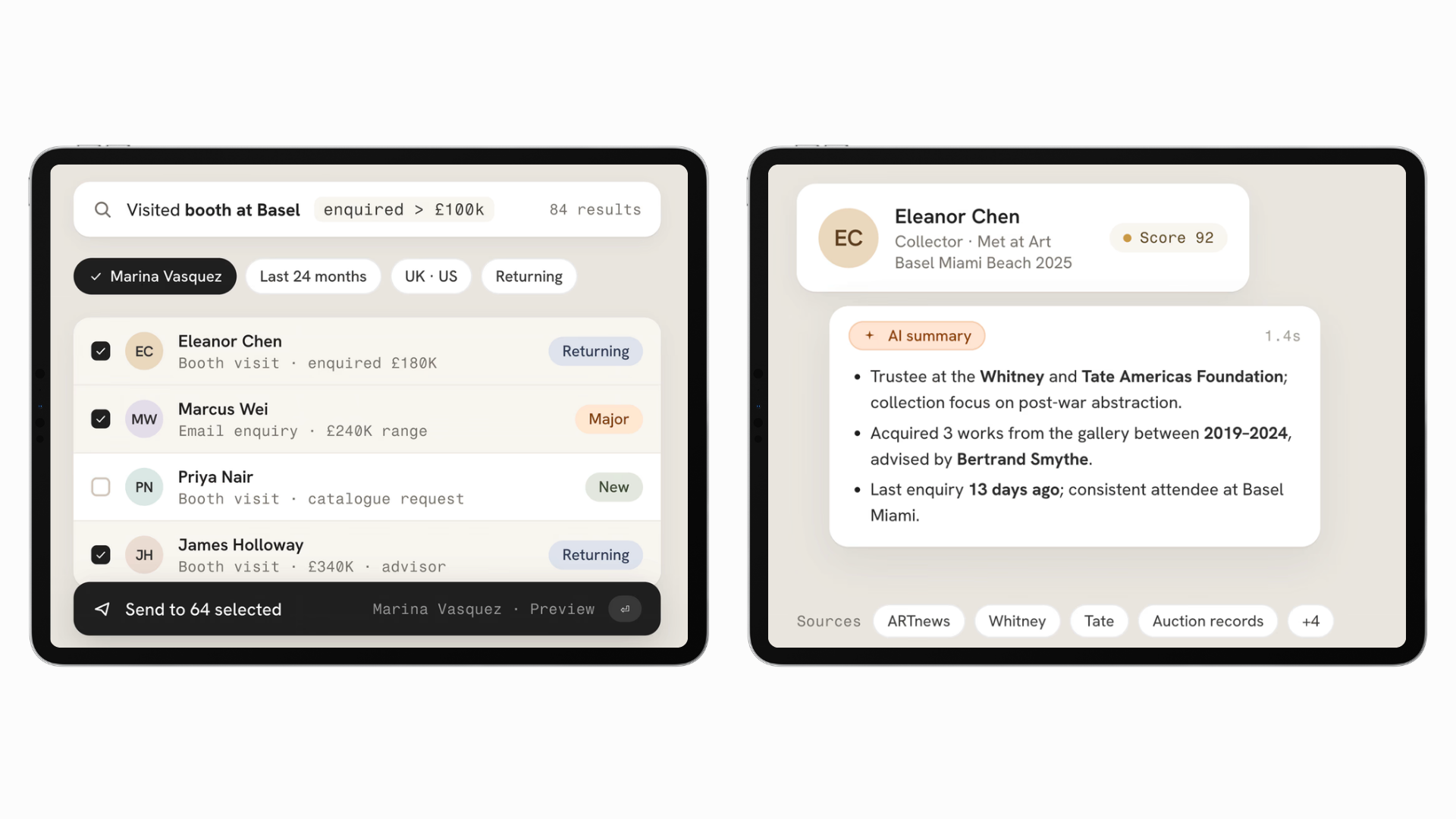
Make sure the gallery remembers you with First Thursday.
This startup is an aggregator for all the chaos of art world communication, though the official title is a “sales intelligence layer”. Think about how scattered your contact with a gallery really is after a visit or a fair: business cards, photos of business cards, emails, WhatsApps, Instagram messages, and the odd phone number scribbled on a napkin at the opening. First Thursday pulls all those leads into a single view and sits atop the gallery's existing system. It integrates with social networks, CRMs like Artlogic and Arternal, and marketplaces like Artsy, Artnet and Ocula. And, of course, they have AI on top, summarising each contact: who they are, where you first met, what they do, how many times they've been in touch over the year.
Most of the value here is for the gallery, but here’s why keep following: the clearer your relationship with a gallery, the better your chances of getting into previews and landing the piece you want. If a gallery uses First Thursday, then even an Instagram message can count toward that. This tool is partially turning the art world's famously closed, “it depends who you know” economy into something a newcomer can enter.
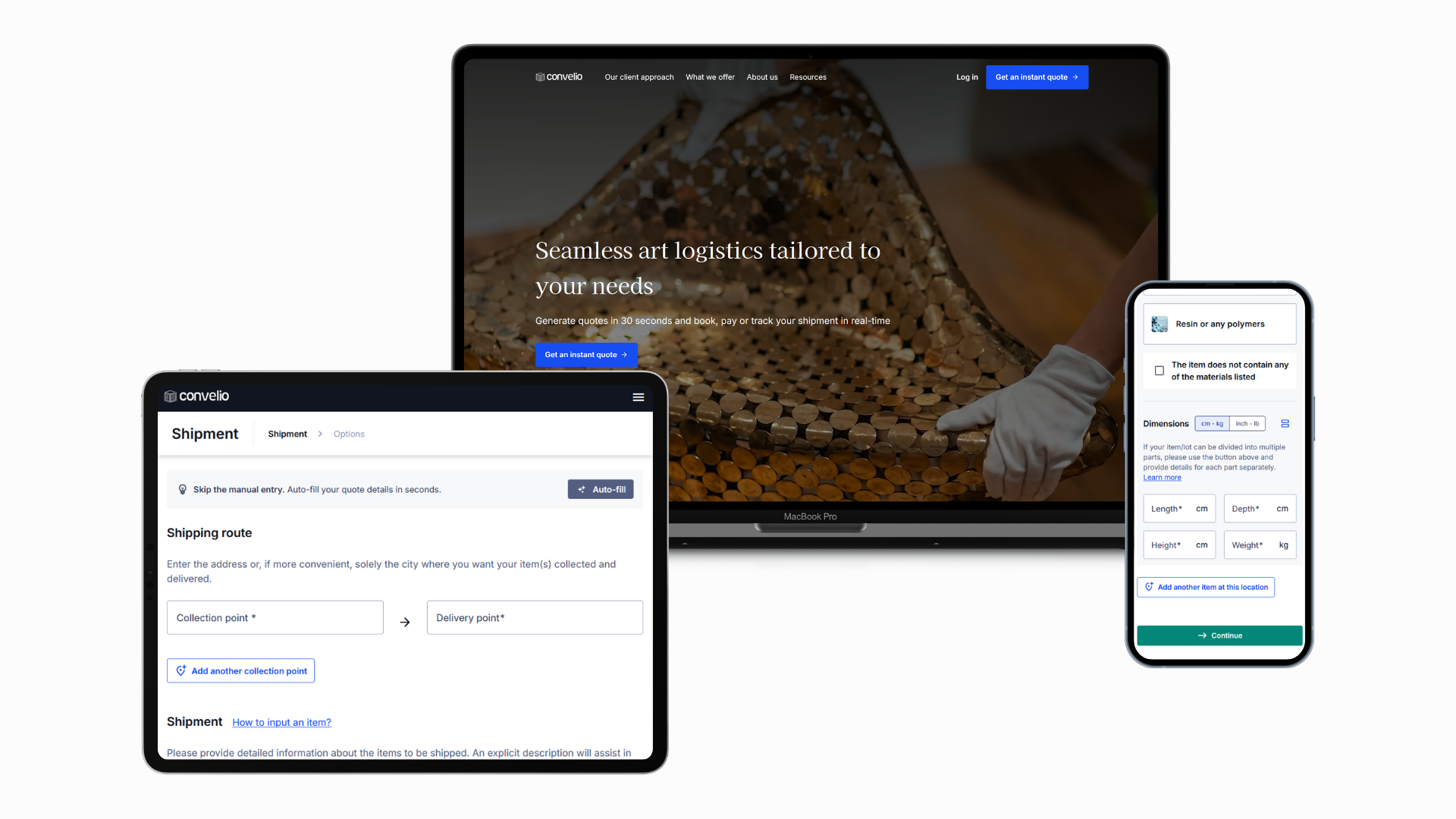
Don't stress about how the work you bought will get to you with Convelio.
Last and most commercially successful player on the list, Convelio is responsible for art logistics. We're following them to trace steady growth and ArtTech investment.
They moved $1.84 billion of art across 92 countries in 2025, became the logistics partner to all three big auction houses, Christie's, Sotheby's and Phillips, and this spring closed their third funding round, with existing backers doubling down. The lead investor was an unnamed French dynasty with generations in the art market, joined by funds that had already backed them in 2022, the kind of repeat money that is infrequent in this market.
The useful part is the free AI quoting tool they launched in 2025: at any moment, you can instantly see what shipping a piece would, in fact, cost and what's included.
Save those, and it’s worth adding a couple more bookmarks in your browser.
Follow the money. Venture funds putting real money into ArtTech are still rare, which is exactly why to track those that exist. The player not to miss is Christie's Ventures, the auction house's own investment arm. When a house like Christie's backs software, it's telling you what it wants the art world to become.
Follow the big names. In April 2026, a loud merger put Artsy and Artnet under the same owner, Beowolff Capital, and shared leadership with the stated aim of making them more technologically advanced. We haven't seen the big moves yet, unless you count the substantial editorial layoffs as innovation, but they're promised to come. Put the biggest art marketplace together with the biggest database of art market prices, and my money's on some kind of price-prediction tool, something that could estimate what a work will sell for, or at least a range, with the reasoning shown.
by Anastasia Mishina