Breaking the Sound Barrier: Tarek Atoui at the Tate Modern
The Tate Modern gallery’s Turbine Hall commission series is one of those rare things: a forward-thinking, artist-supporting initiative located at a global arts institution that is open to all and free to attend. Launched in 2000, the series invites international artists to make one-off artworks that explore possibilities offered by the Tate Modern’s cavernous atrium that dominates its entrance lobby. Originally built as a power station in 1947, the Tate Modern building was repurposed as a gallery in the late 1990s, its five storey-high Turbine Hall taking its name from the industrial turbines and generators that once helped supply London’s electricity. The commission series debuted with Louis Bourgeois’ giant steel spider ‘Maman’, and has produced installations by luminaries like Ai Weiwei, Rachel Whiteread and Kara Walker. Next up is Tarek Atoui.
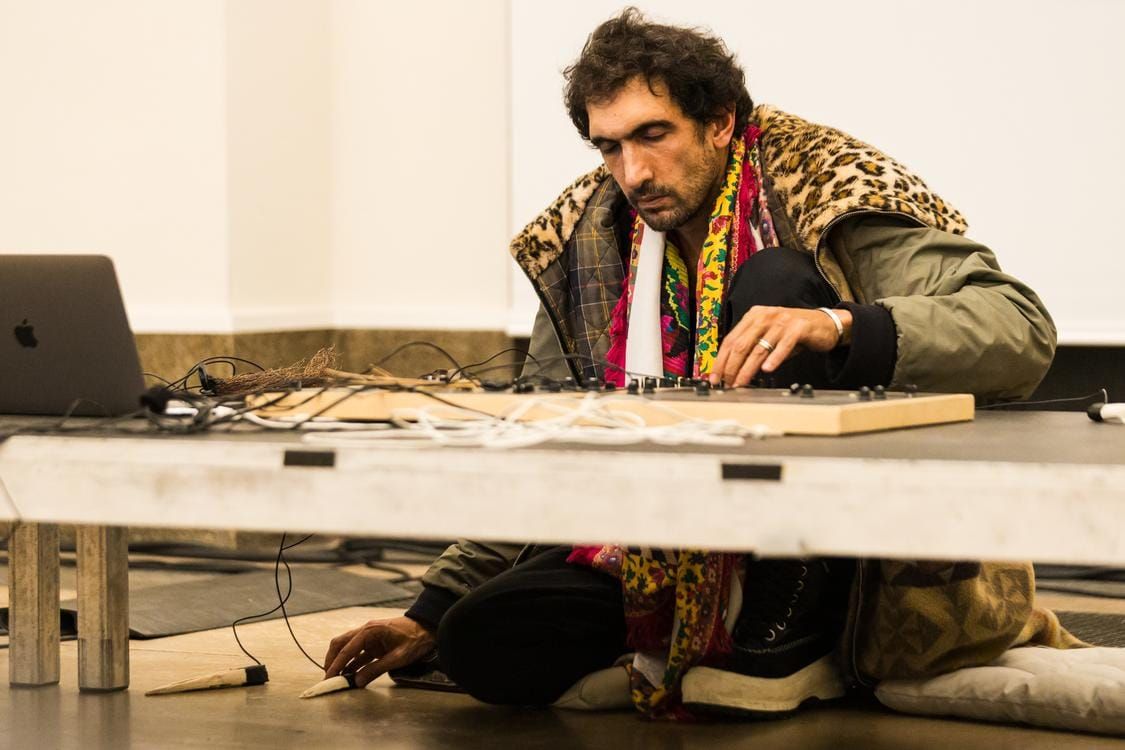
Tarek Atoui’s commission is a first for the Turbine Hall series. Whilst the likes of Bruce Nauman, Philippe Parreno and Cecilia Vicuña have created Turbine Hall artworks that incorporated sound in one way or another, the compositions used to flavour their commissions were often made by collaborators, and worked as add-ons to their central pieces. Atoui’s artistic output is centred entirely around sound, from his live performances using improvised electronics and handmade digital and analogue effects to the installations that have their foundations in interrogating how sound can alter and reflect social and political equilibriums. Thus, not only will Atoui’s commission be the first that revolves around materialising the immateriality of sound, it is also the latest large-scale arts project to acknowledge the importance of sound in contemporary art.
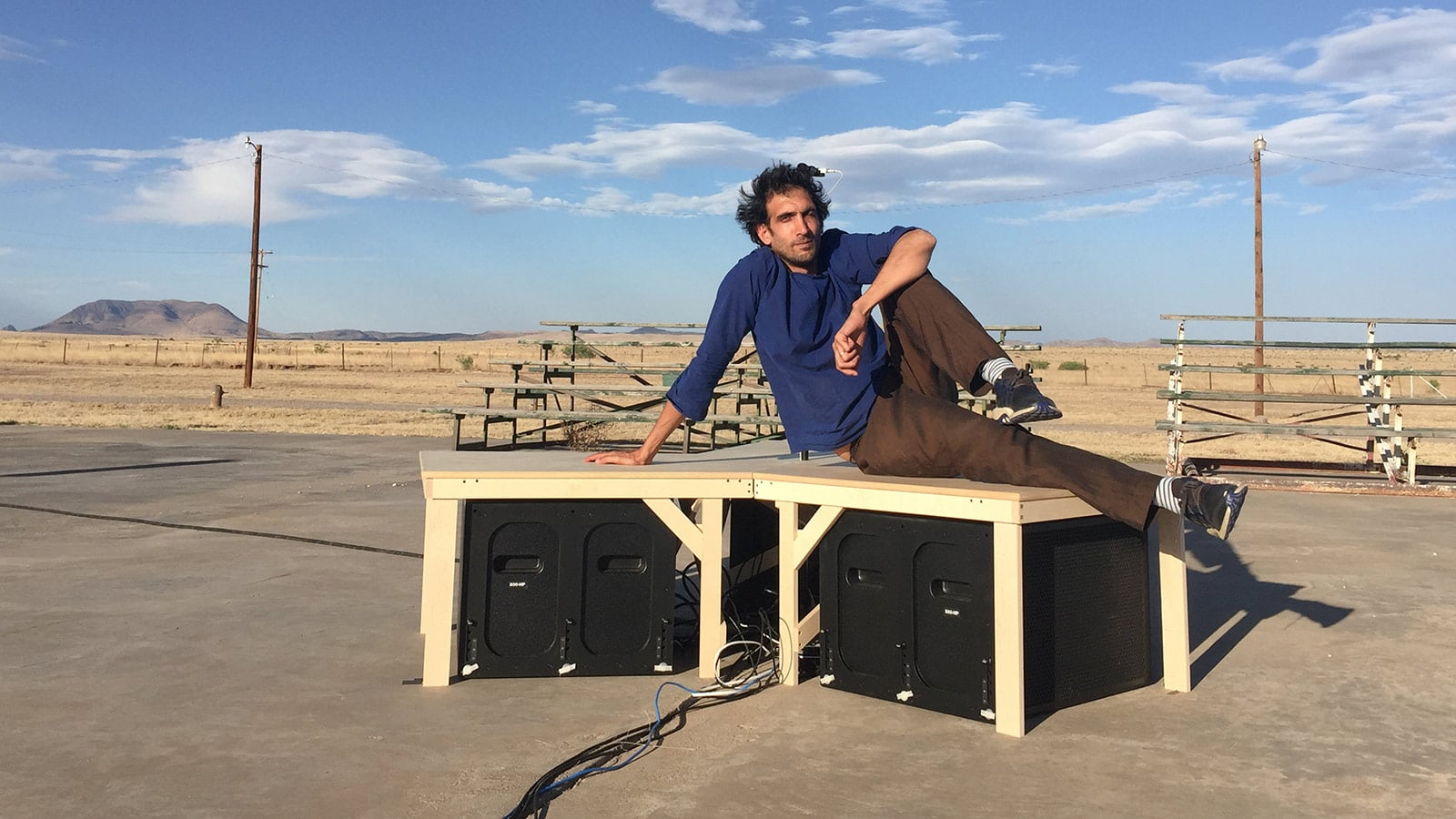
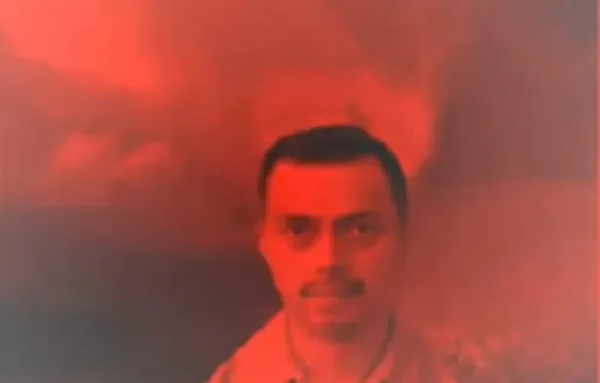
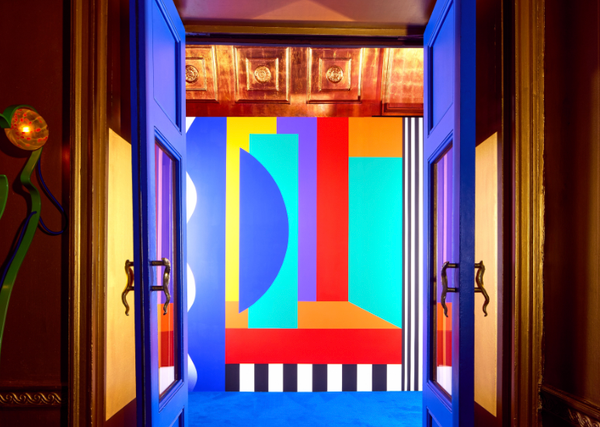
Born in Beirut in 1980, Tarek Atoui has spent a great deal of his adult life in France. He studied electroacoustic music at the French National Conservatory of Reims and lives in Paris. His practice, though, often harks back to his country of birth, and his investigations cover wider issues in the Middle East region – colonialism, warmongering and social migration. The erasure of history is another key cornerstone to his work and, for the past few years, Atoui has been working on his ‘At-Tāriq’ project, an ongoing study of rural music in the Arab World. In 2025, he unveiled ‘At-Tāriq: the Tamazgha Chapter’, an exhibition and concert inspired by the ancient musical and poetic traditions of the Amazigh people from the Tamazgha region of North Africa. While there are plenty of contemporary artists using archival research in their practises, Atoui’s ethnographic approach is imbued with a sharing quality; here is an artist who cares deeply about heritage and wants to present his findings in an accessible and engaging way. When he showed ‘At-Tāriq: the Tamazgha Chapter’ at the Museo Nacional Thyssen-Bornemisza in Madrid last year, for example, Atoui created a majlis – the type of room reserved for hospitality and conversation in the Arab world – to display objects and sculptures that helped define his research.
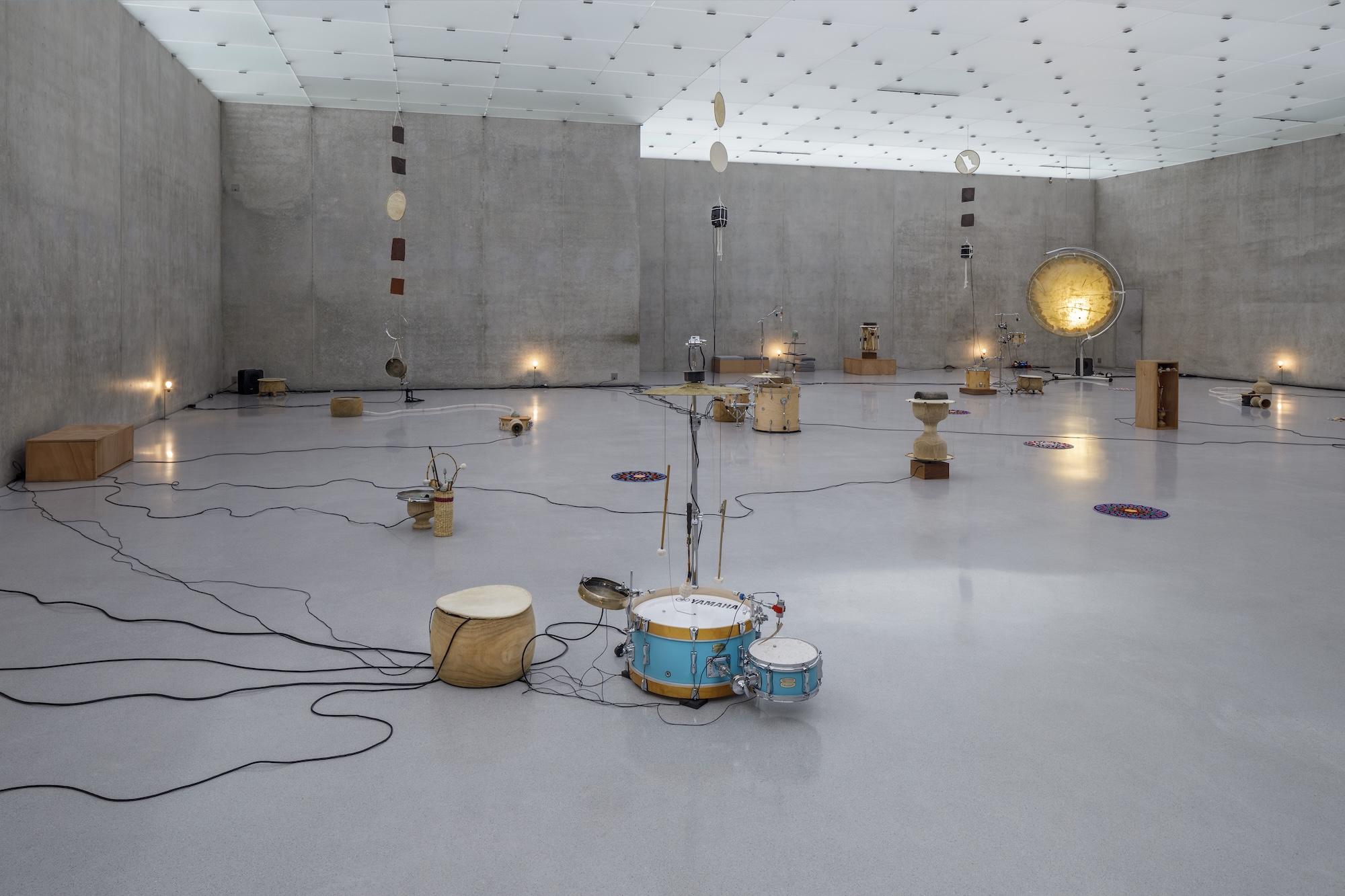
This ability to wade through notions of what sound means in environmental and human contexts produces tangential and fascinating outcomes. First presented in 2021 with help from fellow sound artists Chris Watson and Eric La Casa, Atoui’s ‘Waters’ Witness’ installation is built around sounds recorded in port cities like Athens, Istanbul and Sydney, with Atoui using the recordings the trio assembled to build an interactive gallery experience. Within, sounds from the ports are presented as playable, bespoke instruments in a space surrounded by artefacts from the locations. Rocks hewn from nearby quarries and discarded construction materials become sculptures that bounce recorded clangs, clatters and disembodied voices around the room.
Collaboration is another fundamental maxim for Atoui, and his commitment to inviting a world view of his work reaches beyond the working in the confines of ordinary arts organisations. In 2004, he held a workshop for a class of French schoolchildren, exploring sound and amplification. As the class unfolded, he realised he could take the idea on the road. So, a year later, he gave the same workshop to a group of children in a Palestinian refugee camp, before moving on to introduce concepts around sound to youngsters in Cairo and beyond. During the COVID pandemic he conceived ‘The Whisperers’, a project that included another set of children’s workshops, this time exploring multi-sensory listening and asking how sound can be converted into energy. The workshops encouraged children to think about what sounds mean to them, and how it works for their lives in general. What does it sound like as it has passed over water? Or wood? How do our bodies react to sound? Does it bounce right off, or is it absorbed?
This collaborative instinct has extended to Atoui rethinking how musical instruments are made, and the Turbine Hall commission is not the first time Atoui has worked with the Tate Modern. In 2016, the gallery hosted the culmination of another Atoui research project, ‘The Reverse Collection’. At the beginning of the process, Atoui made recordings of his compositions played on a set of ancient instruments borrowed from Berlin’s Dahlem Museum. He then asked a group of professional artisans to listen to the recordings and build instruments based purely on what they were hearing. The nine contraptions they came up with were displayed in the gallery and played in performances (called ‘The Reverse Sessions’) that brought the project to a close.
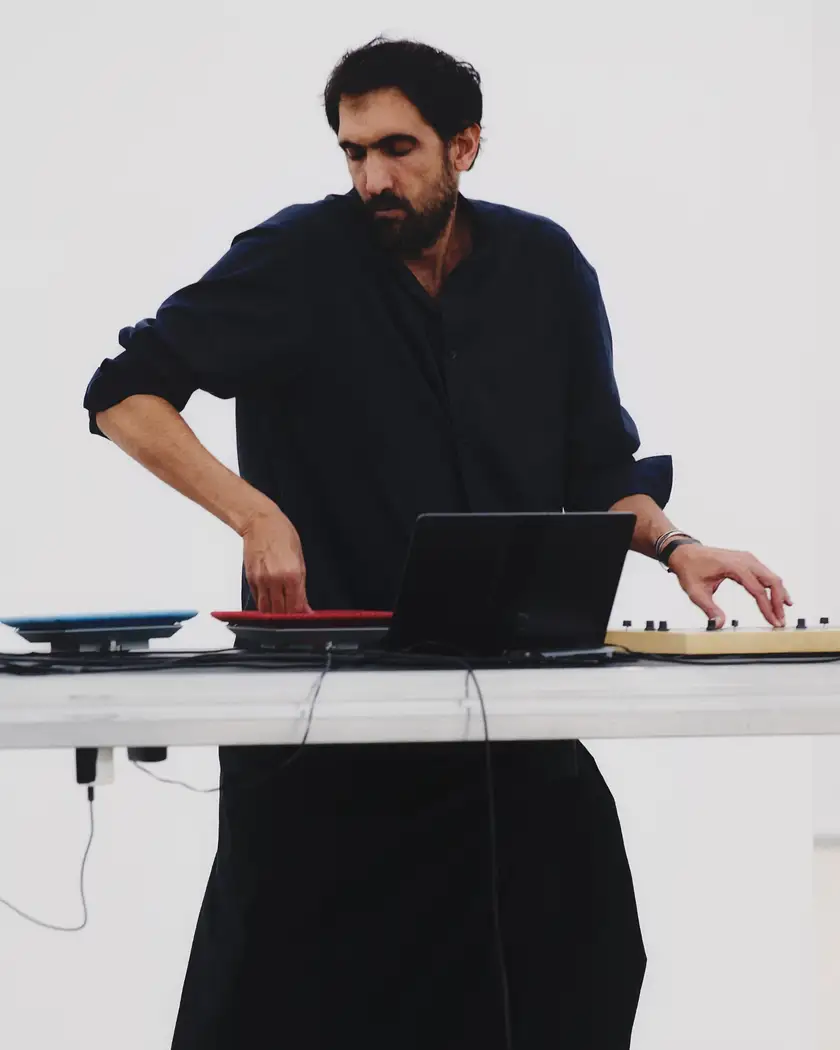
In an age that feels increasingly self-centred and divided, the Tate Modern’s decision to platform Tarek Atoui and his wish to bring people together using sound is a welcome relief. Here is an artist whose altruism is – quite literally – heard throughout his work. Speaking with architectural magazine KoozArch last year, he laid out his philosophy. “For me, true democratisation of sound is about reciprocity – giving and receiving in equal measure,” he said. “A meaningful sharing experience, a democratic experience, is not just about transmitting knowledge but about creating a balanced exchange, where everyone involved appreciates, contributes to and creates a very special moment for all those who are part of it.”
Tarek Atoui’s Turbine Hall commission runs at the Tate Modern’s Turbine Hall in London from October 13th until April 11th, 2027. Entry is free.