The largest retrospective of Leandro Erlich in Grand Palais, Paris: when the magic (dis)appears
Leandro Erlich is huge, believe me. You’ve definitely seen his “The Swimming Pool”, and probably a lot of his artworks appeared in your feed from time to time. Because he is viral, he is entertaining and he moves people's hearts.
His works have travelled the world, posing the question to all visitors: ‘Do you believe what you see?’ Following exhibitions in several cities, the exhibition has arrived in Paris for the first time, inviting us on an illusory adventure that bends space in all the axes possible.
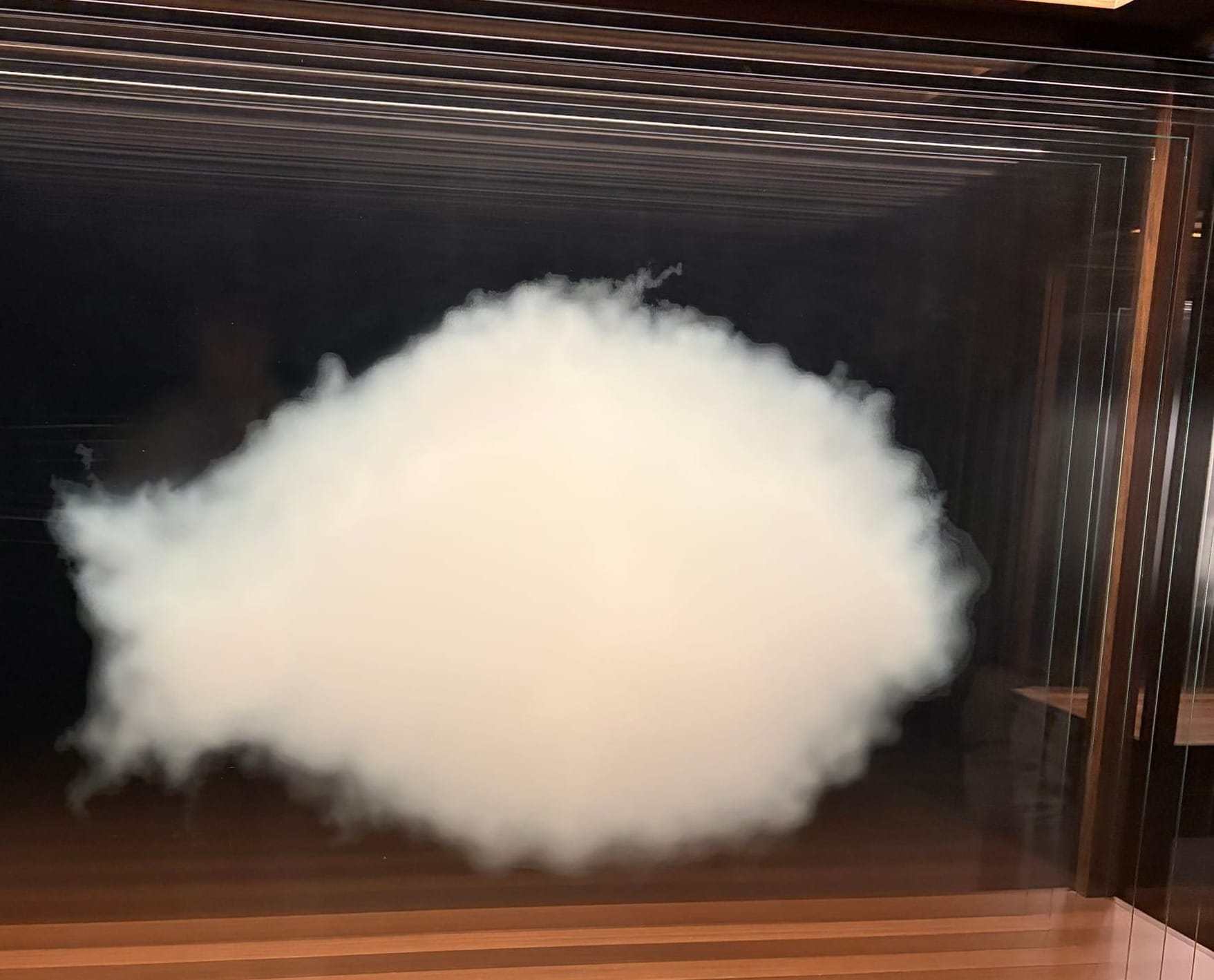
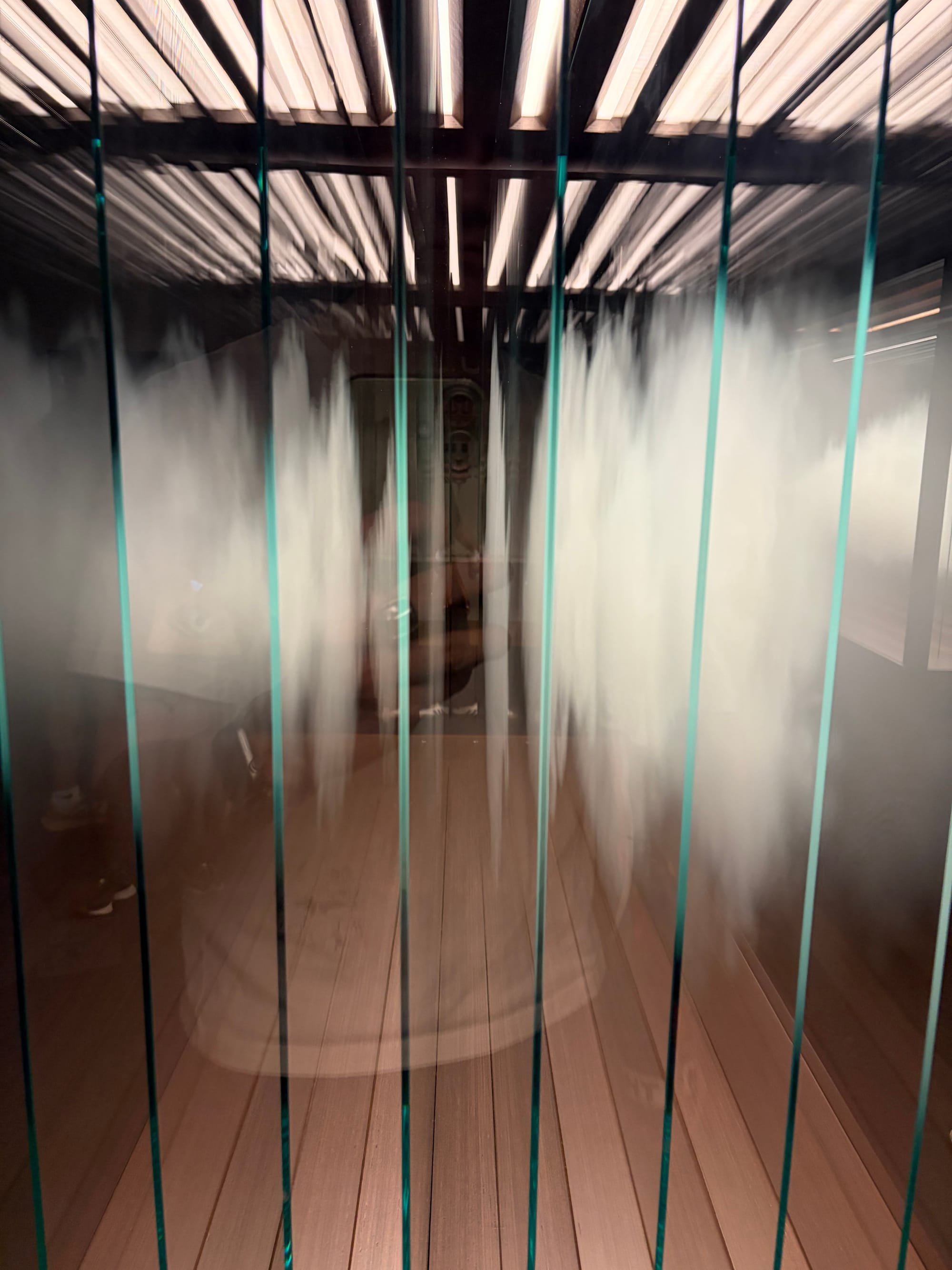
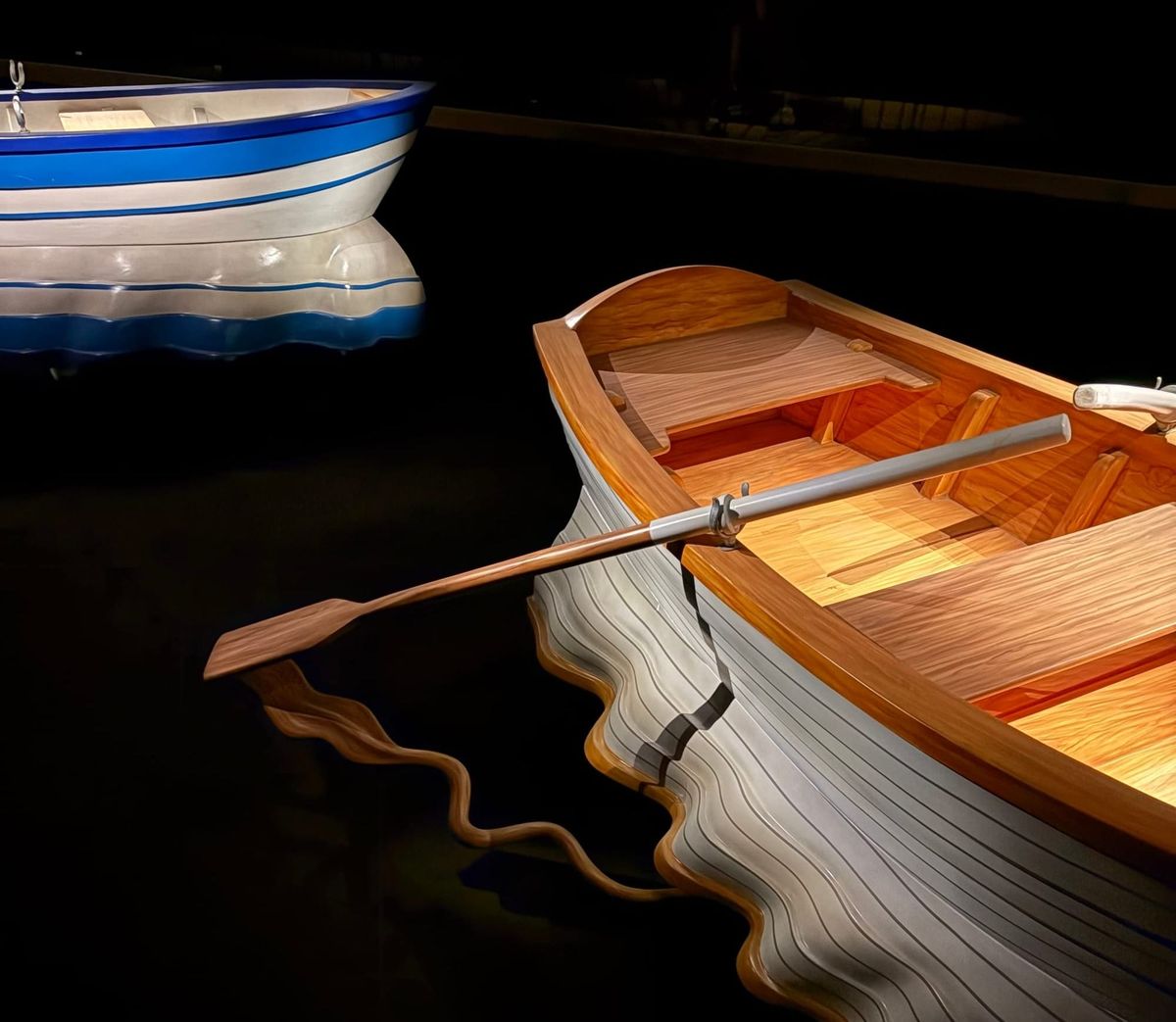
Leandro draws the exhibition visitor into active creative participation, transforming them into a creator of feelings and emotions, when they approach the artwork. It begins from the entrance, a dark room, in the centre of which boats appear to be levitating, as if in a bottomless lake of dark water. It is not immediately apparent that the lower section—which looks like a reflection of the hulls and oars in the water—is in fact a solid part of the sculpture, an extension of it. All around, there is the sound of water; the boats barely rock in this invisible substance, and the realisation that all this is merely the trickery of illusion and optics constantly slips from one’s consciousness.
His “Port of Reflections”, as the opening installation—one of the largest and most magical—sets the bar far too high. As I made my way through the exhibition, I found myself constantly wanting to return to those boats and watch their gentle, barely perceptible movement in the void. But was it the exhibition team’s intention to constantly remind us of these boats?
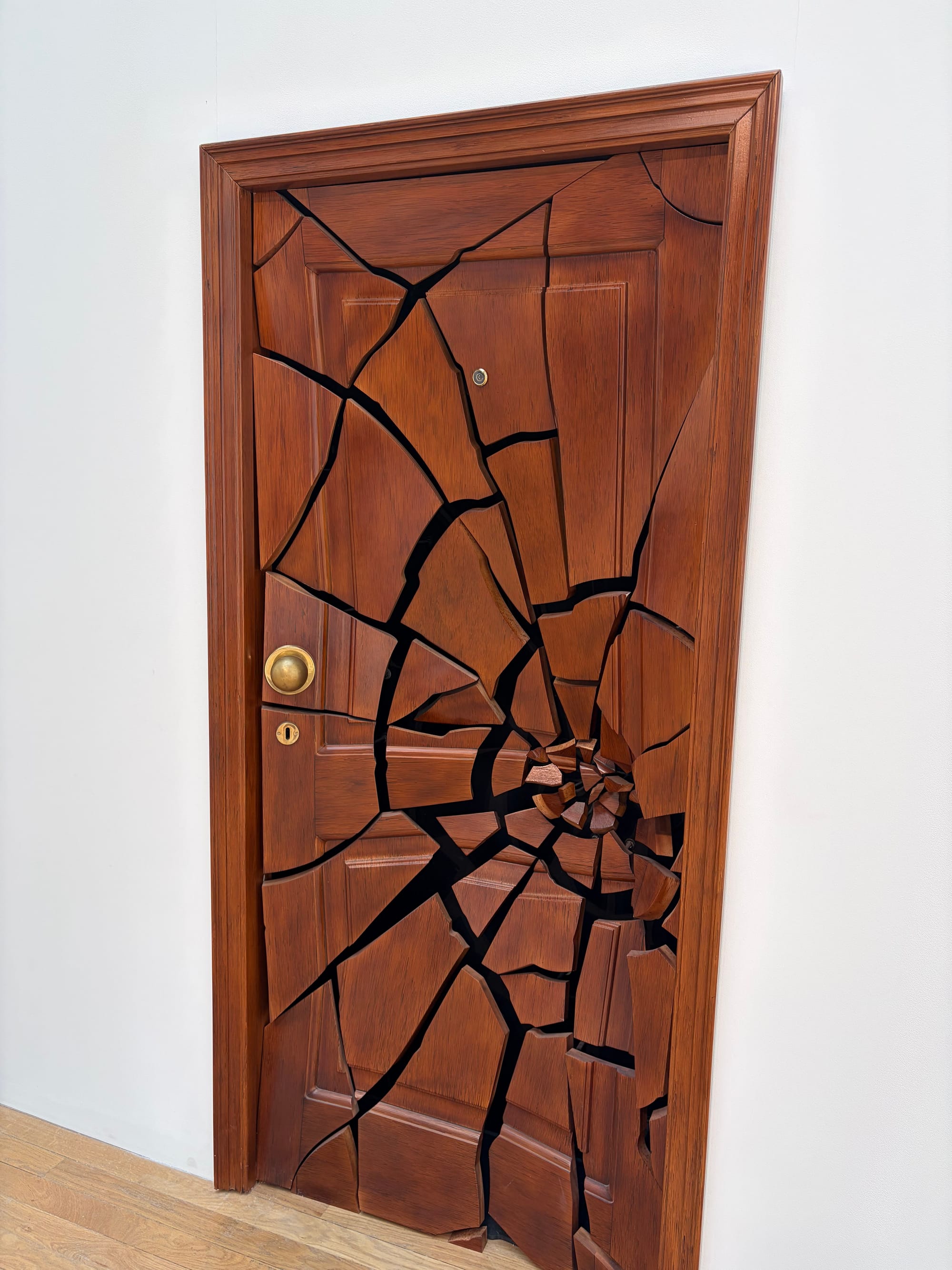
The fact is that all magic and illusion have their own saturation point, beyond which the visitor is no longer surprised by what lies around the next corner. The same thing happened to me: having walked through the ground floor of the exhibition, I had already lost any willingness to play along with the artist’s game with my mind.
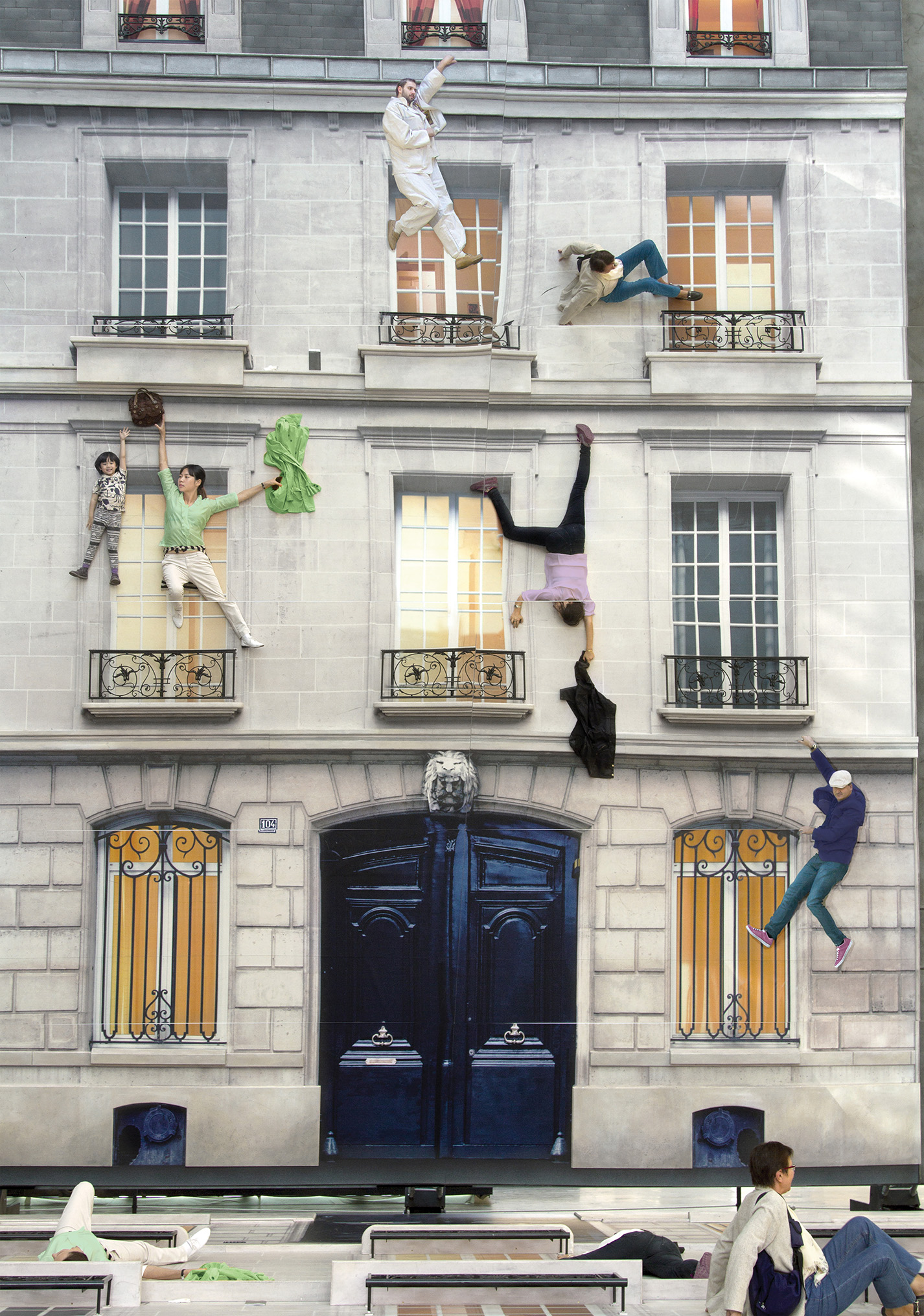
The thing is, it seems to me that Leandro’s works lack the scale of the Grand Palais. His works do not breathe; they do not exist in the space in which the artist envisions them. His installations evoke the sense of wonder and raw emotion that one experiences by chance whilst walking down the street and stumbling upon a door suspended in mid-air; a house hanging from a crane. This disrupts our reality and makes it just a touch more interesting. When the works are housed in an enclosed space, this effect, unfortunately, fades very quickly. By the time I reached the final piece, the sense of wonder had completely vanished: the gigantic house, from which people seem to be hanging and are about to fall, had become the showpiece of this exhibition, but due to the sheer volume of impressions I’d already experienced, its impact was simply no longer felt.
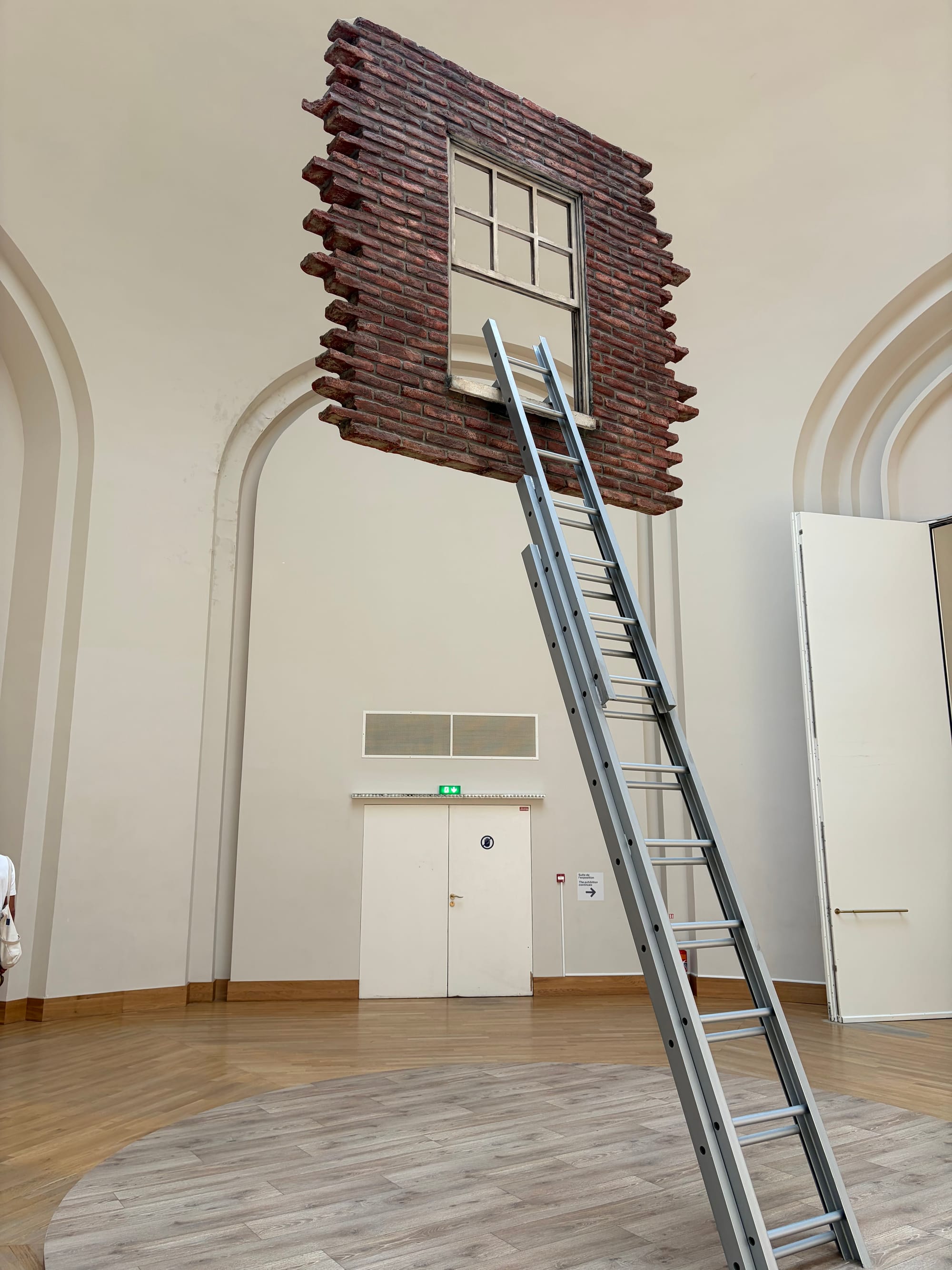
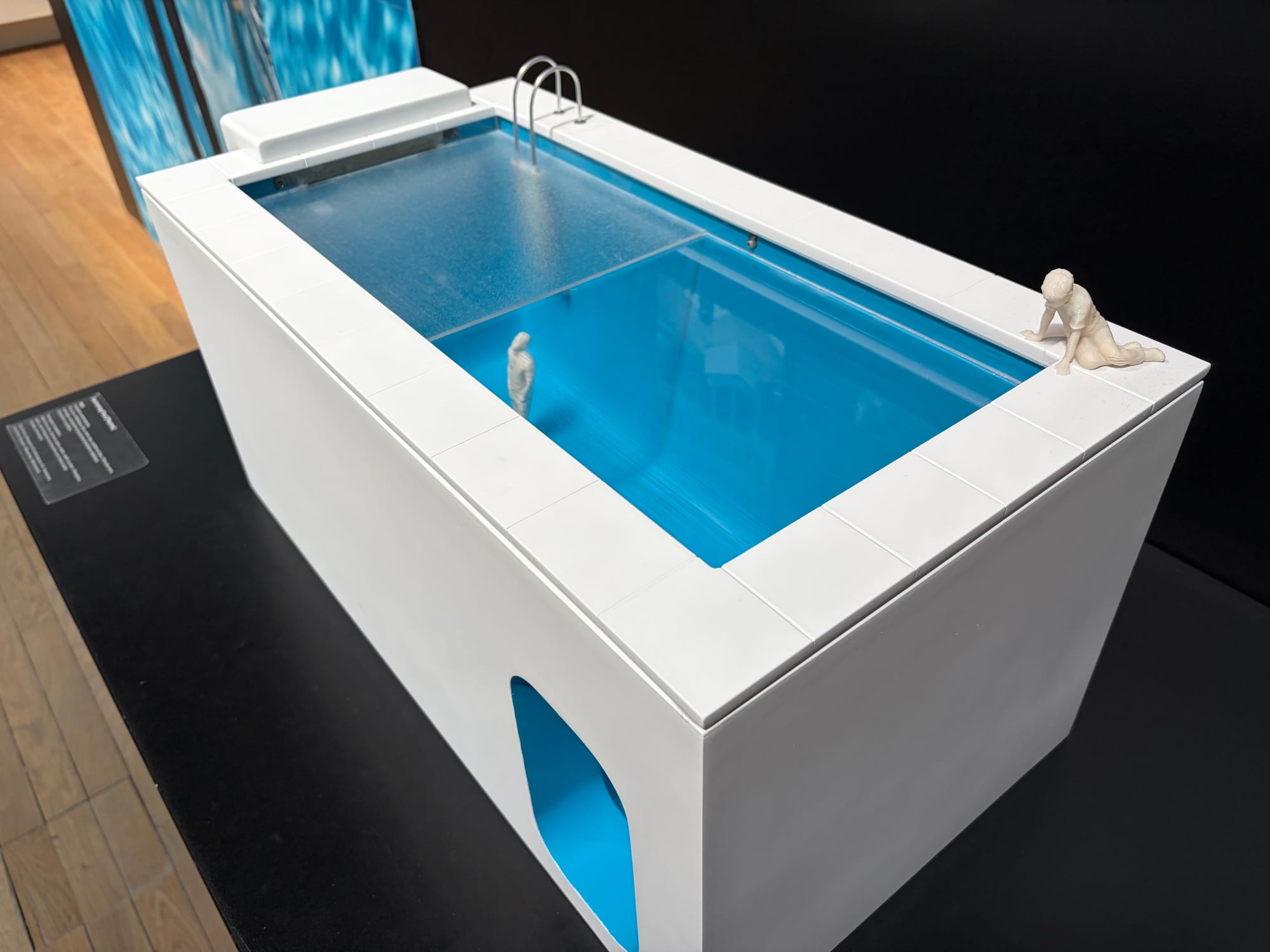
At the centre of the entire exhibition was a large-scale area showcasing many of the artist’s works and optical illusions. Models, photographs, videos—the sheer volume of detail was overwhelming, and it was truly fascinating.
And here I thought about making the illusions stronger: what if these models were placed throughout the exhibition, like a relaxation and reflection area following each major work, offering visitors the chance to engage with the works on a theoretical level? Within the undulating structure of the exhibition’s narrative, visitors would feel a far greater desire to explore Erlich’s methods further. And his masterful work would take on a whole new dimension.
Of course, the illusion won’t surprise us every time; the more we encounter Leandro Erlich’s works, the more the magic wears off and our scepticism hardens. But that moment when you first see something you can’t explain at first—that is precisely what is so incredibly precious.