The Crab Museum: Margate’s Most Brilliantly Sideways Institution
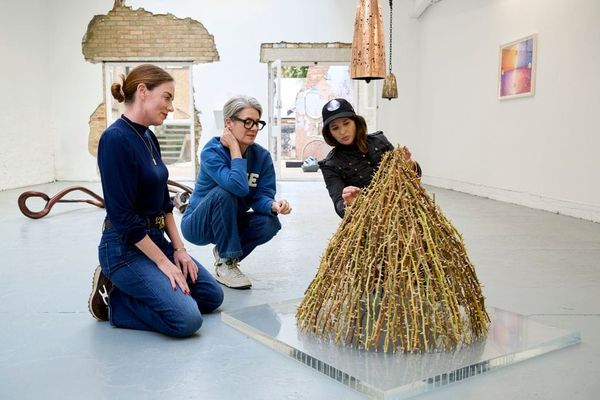
Culture is, of course, already filling Margate with weekend tourists. Turner Contemporary began the official regeneration narrative; Tracey Emin has done more than most to turn the town into a serious artistic ecosystem, opening TKE Studios and an artist residency in her hometown. There are galleries, studio complexes, increasingly ambitious restaurants and enough aesthetically distressed shopfronts to reassure any visiting Londoner that they have arrived somewhere culturally relevant.
But there is also another, rather less polished hidden gem: the Crab Museum.
Located on Broad Street in Margate’s Old Town, it describes itself as Europe’s first and only museum dedicated to the world of the decapod. Entry is free. The subject sounds like the result of a particularly niche Arts Council application and yet the Crab Museum may be one of the most intelligent cultural spaces in town.
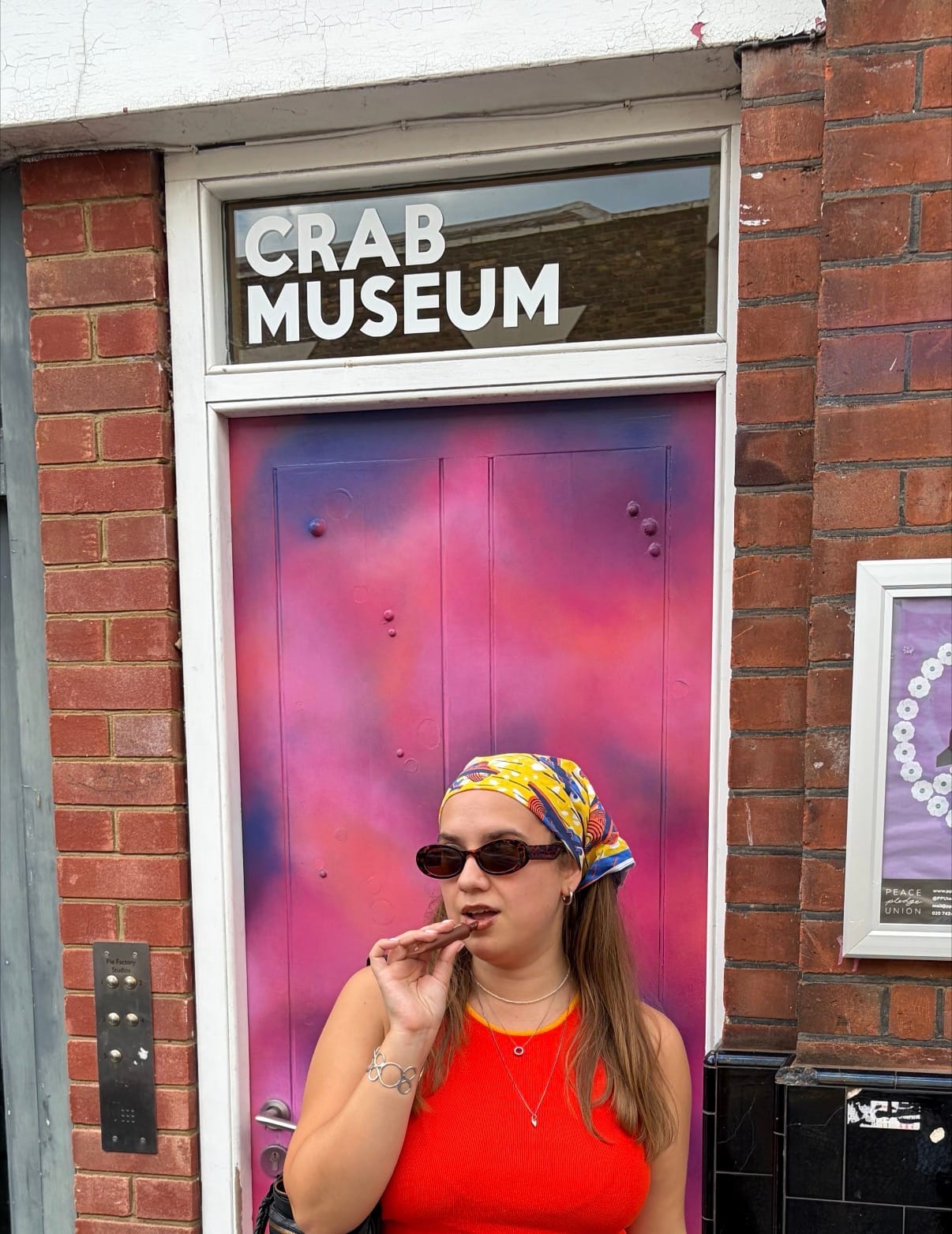
The museum was conceived in 2021 and opened in October 2022 by brothers Bertie and Ned Suesat-Williams and their friend Chase Coley. None of them came from conventional museum or marine-biology backgrounds: Bertie is a geographer and writer, Ned has worked in archaeology and education, while Chase is a sound artist who builds experimental instruments and underwater microphones. They reportedly considered other subjects — worms, slugs and even hexagons — before deciding that the crab offered more intellectual possibilities.
This is important because the Crab Museum is not really only about crabs. Crabs are simply its curatorial device: a sideways route into evolution, biodiversity, climate change, colonialism and capitalism. Which is already more conceptual ground than some museums manage to cover with six floors, an international board of trustees and a café designed by a Turner Prize nominee.
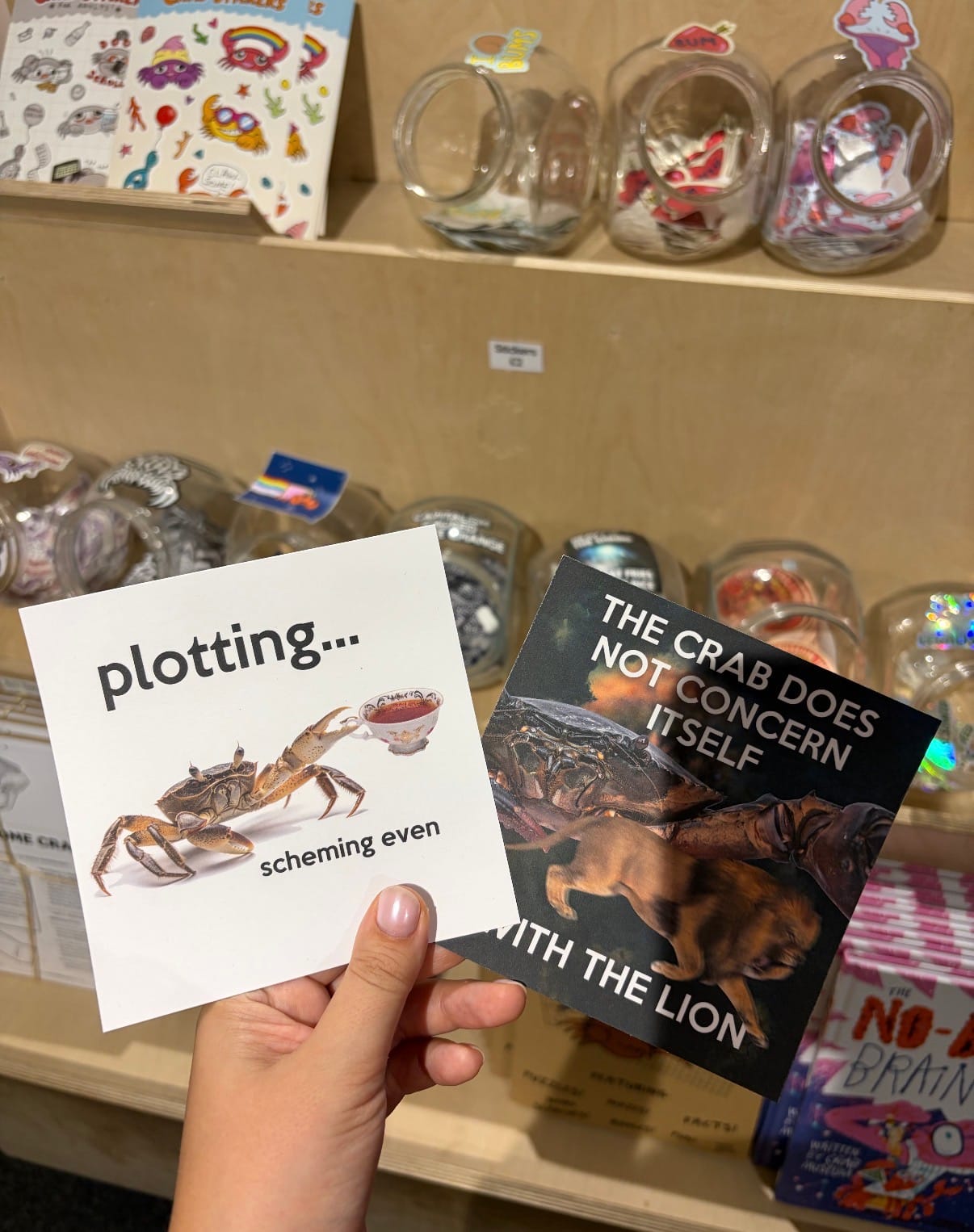
The founders began without a collection. The museum was initially financed through their savings and a loan, and it now survives largely through donations and the sale of merchandise. This absence of institutional machinery has produced something unexpectedly liberating. Instead of organising precious objects inside glass cases, the museum organises ideas — using hand-painted signs, cartoons, deliberately absurd models and jokes that initially appear designed for children, before quietly leading adults towards questions about environmental destruction and political power.
The exhibition introduces the extraordinary biological diversity of crabs: creatures that use tools, decorate themselves, change sex, communicate through vibration and have independently evolved a crab-like body shape several times. The Hawaiian pom-pom crab, for example, carries tiny sea anemones in its claws, using them for defence. It can also split one anemone into two and encourage the pieces to regenerate — somewhere between cloning, farming and carrying your own armed accessories.
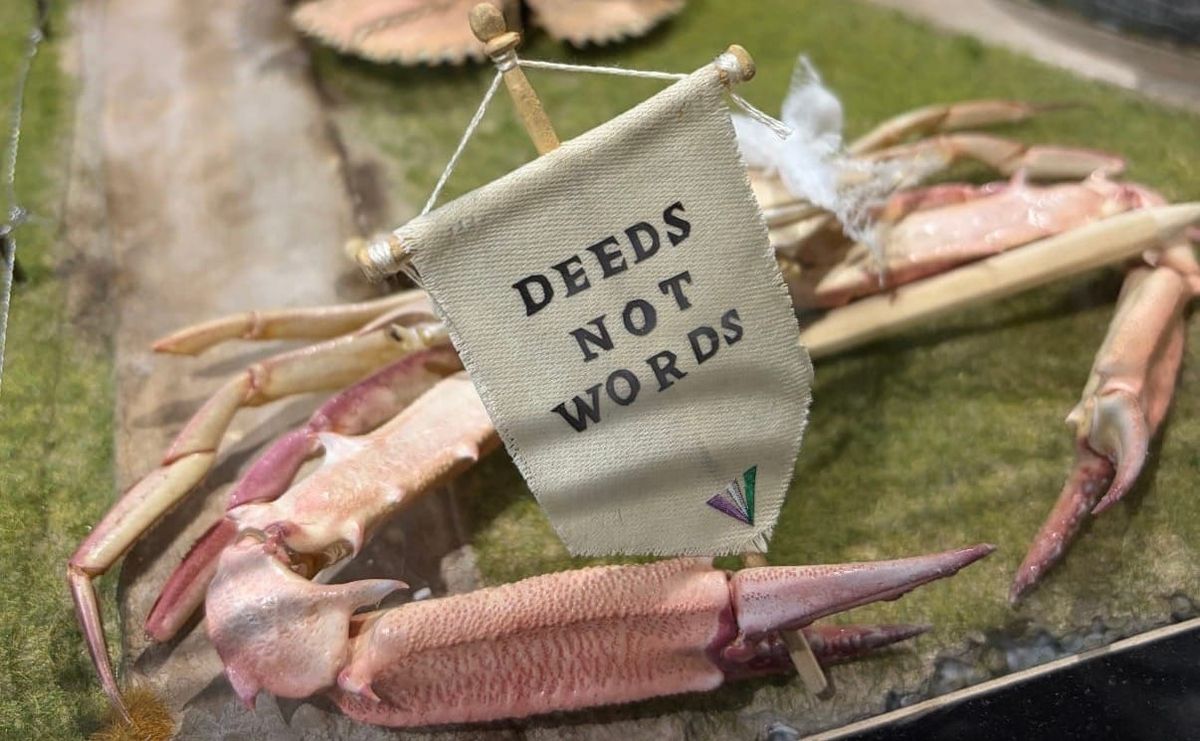
Elsewhere, three crab species appear in period costume as participants in the 1926 General Strike. The accompanying text explains that these species inhabit different parts of the world and would never encounter one another in nature, so placing them in a realistic habitat would be misleading. Dressing them as organised labour is apparently the more intellectually honest solution.
This is the museum’s particular skill: it refuses the idea that education must arrive in the neutral visual language of institutional authority. Its jokes are not decorative additions intended to make science “accessible”. Humour is the actual method. You laugh first, then realise you have absorbed something about ecological interdependence, industrial exploitation or the absurdity of claiming that any museum display is entirely objective.
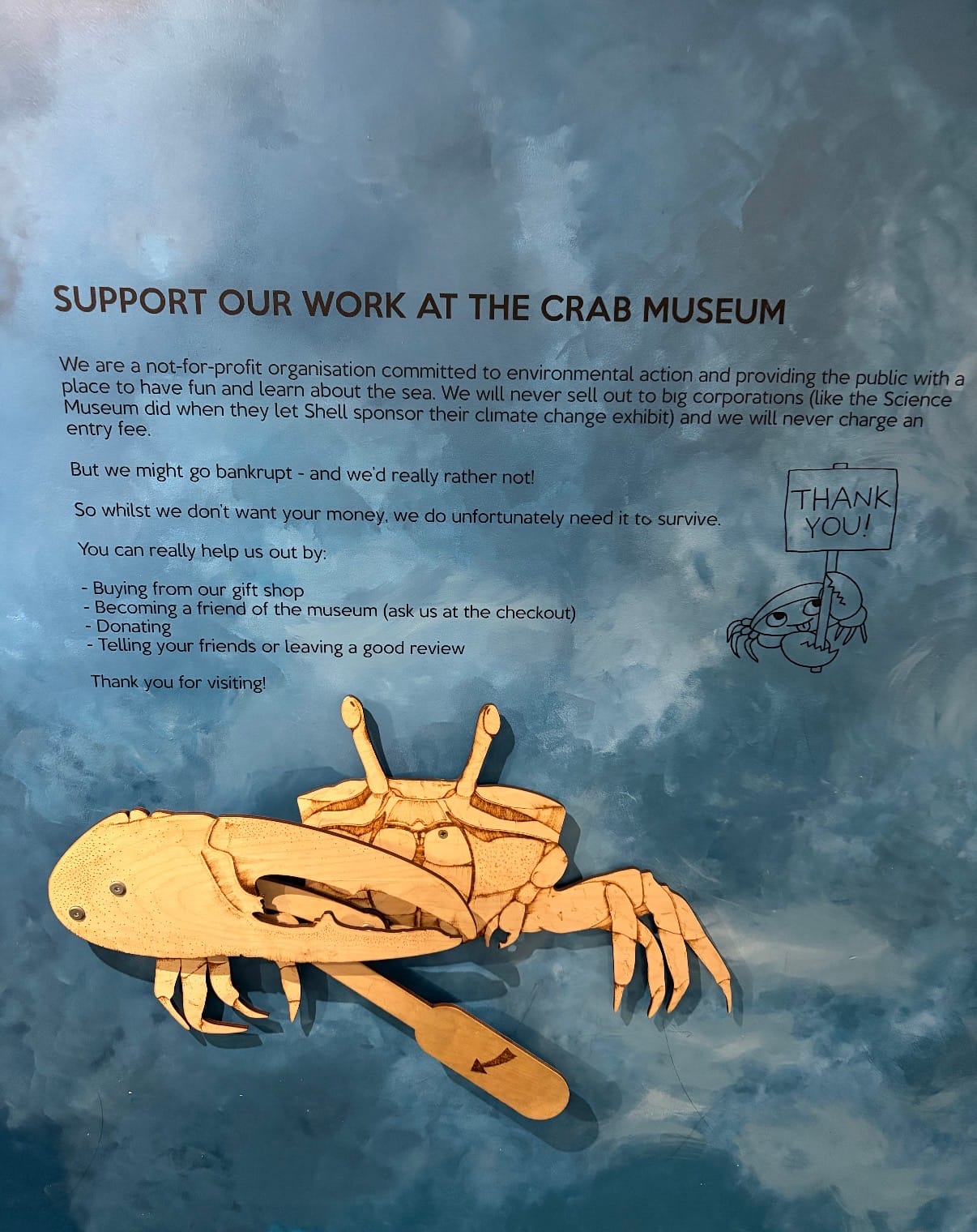
The Crab Museum also understands that natural history is political history. Discussions of crustaceans lead towards the climate crisis, commercial fishing and the way systems of classification reflect human assumptions about order and value. A crab is never merely a charming coastal creature. It is part of an ecosystem, a commodity, an evolutionary puzzle and, in the right hands, a tool for explaining why the world works as badly as it sometimes does.
This could easily become exhausting. Museums increasingly feel obliged to attach a global emergency to every object, leaving visitors with the impression that even a seventeenth-century spoon is personally asking them to dismantle capitalism. The Crab Museum avoids this because it has no interest in moral grandeur. Its politics are serious, but its tone remains joyfully unrespectable.
That may explain its success. Despite its modest scale, it has attracted tens of thousands of visitors, won an Arts Council England Digital Culture Award and developed the kind of genuine cult following that institutions usually attempt to manufacture through expensive rebranding exercises. Its social media is funny, its gift shop is excellent, and its central proposition is immediately understandable: come for the crabs, accidentally think about the world.
Margate already has the recognisable infrastructure of a cultural destination. It has the major contemporary gallery, the famous artist returning home, the studios, the collectors and the creative migration from London. But places do not become genuinely interesting through flagship institutions alone. They need eccentric, independent spaces capable of following one idea with unreasonable commitment.