Resonant Lightscapes: When Light, Sound and Space Become One
At Roca London Gallery, Resonant Lightscapes brings together light, sound, reflection and architecture in a responsive environment. We spoke with artists Gadi Sassoon, Yael Erel and Avner Ben Natan, and curator Alisa Lisovskaia about collaboration, feedback and letting go of control.
How did Resonant Lightscapes begin, and what brought these three artistic practices together?
Gadi: I met Yael and Avner when I staged my first sound sculpture performance piece, Modes of Vibration, at a theater called EMPAC in Troy, NY, where they have their company Lightexture. The piece I was showing uses slashed metal plates to explore the interplay between sound and embodiment, and when I saw their work with the metal reflectors, we just clicked: it was a kind of mutual eureka moment of saying, well, we are tackling a very similar mixture of digital and mechanical from very different angles, how can we bring these hybrid analogue worlds of light and sound together? And so we started a conversation, that eventually flourished into these collaborations.
Yael + Avner: The full collaborator team on Resonant Lightscapes came together during Mirrored Lightscapes installation at art’otel in 2025. Building on the show’s success, also curated by Alisa Lisovskaia, who connected the team with ROCA, we wanted to continue working in the interface between light and sound. Resonant Lightscapes was a wonderful opportunity to further explore immersive installation and the spatial feedback loop between audio inputs and reflection.
Light usually helps us see art. Here, light becomes the artwork itself. How does that change the way we experience the space?
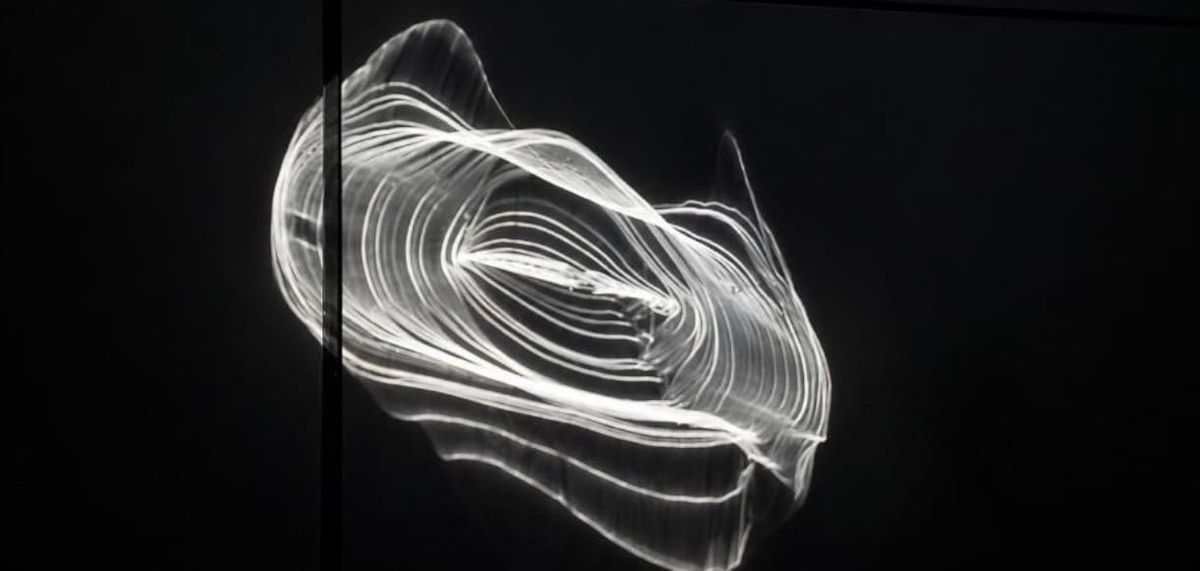
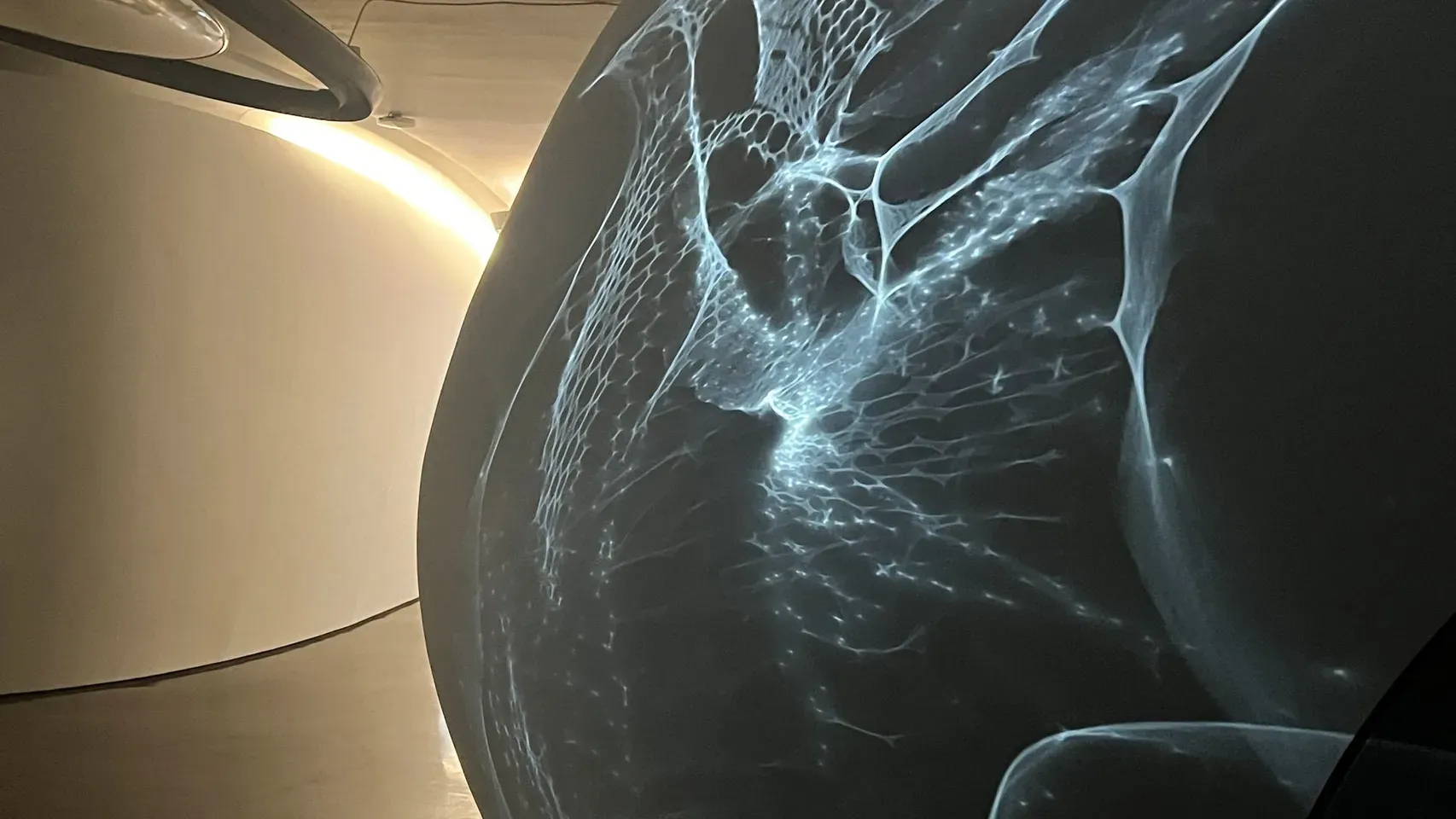
Y+A: Seeing is an event that happens in the interaction between light, material and the human eye. In this case light reflects off of sculpted mirrors and functions as a spatial microscope - allowing us to see details that our eye can not comprehend. This work exposes the role of light in the way we see space and art. The medium of light becomes the focus and the architecture becomes the canvas onto which light is registered. The artwork is the complete spatial, sonic and visual system.
G: The visuals of this piece are very slow, calm and organic. To me that makes the space feel pensive and otherworldly. In composing the sound I’ve leant into that perception, building piano loops on an old tape machine, then digitally layered to respond to the amount of light at any point in the piece. So when intensity is high, it gets quite emotional and cinematic. This is reinforced by the mechanical feedback between sound and light: with more light, the sound gets louder; in turn, when sound gets louder, it vibrates the reflection, making light more intense. In designing a space, I think this kind of multi-sensory correlation is what triggers a sense of organicness in the visitor, because it’s the kind of complex interplay you see in nature.
Where does technology stop being a tool and start becoming part of the artwork itself?
Y+A: One definition of Technology is “the application of scientific knowledge”, under that definition, this show is in essence technology. It is a manifestation of the physics of reflection as a spatial mechanism revealing material behaviours. We use sound, projection, and sensors to heighten this understanding and make it tangible.
G: Personally, I think that when technology stops being the most interesting thing about a piece, that’s when it becomes part of the artwork. A good painting gives you more than an insight into what brushes the painter uses: when tech becomes transparent and lets aesthetics, ideas and feelings shine through, that’s to me when it works.
How did Zaha Hadid’s architecture at Roca London Gallery shape the exhibition? Could the project exist in a traditional white cube?
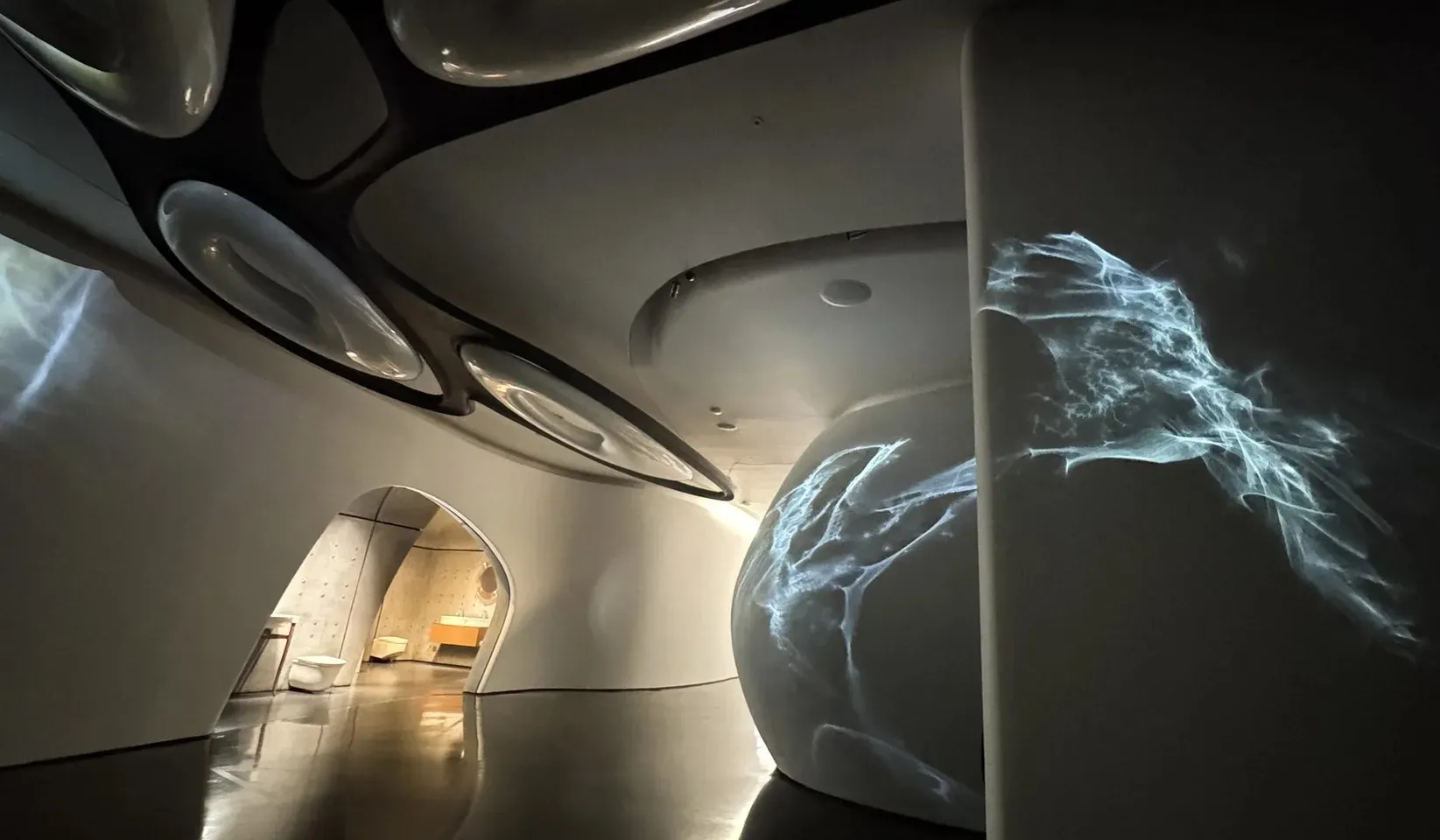
Y+A: There is a unique spatial conversion between the Zaha Hadid curvaceous wall geometry in the ROCA gallery and the fluid lightscapes, as well as a dialog between our exhibited objects, light pebbles, Kaleidoptera and Clalylight Balance and the architectural syntax at ROCA. Zaha Hadid’s architecture at the ROCA gallery is about dynamic flow. When preparing reflectors for this show, we worked with the curved geometry of human muscles, eyes and lungs, capturing this idea of flow and movement in the lightscapes as well.
That said, this system can definitely exist in a white-box or black-box setting (similar to a previous show - Reverberating Light). The nature of the architecture affects the nature of the resulting show.
G: I take after Xenakis in the relationship between architecture and music: I feel like the shape of the environment is key to how any work is presented and perceived. In this particular audiovisual work, we couldn’t have asked for a more aesthetically aligned space: Zaha Hadid’s biomimetic style really reinforces the organic nature of this piece.
How important are unpredictability and loss of control when working with feedback loops, robotics, light and sound?
Y+A: control exists within setting the system relationship between light, audio cues and material behaviour. The physical results are often not completely predictable, providing added interest and surprise.
G: extremely! That’s the name of the game, and why it’s exciting really. When you bring embodiment into the picture, you are essentially saying to the laws of physics: let’s play. There’s only so much you can control with actuators, robotics and things moving in three dimensions. When you build audio reactive or light reactive systems, you are building processes where you relinquish control in favour of process. It’s so fascinating because you find all these unexpected patterns and connections when you allow a little chaos into the mix.
Gadi, in your live performance, reflections are translated into sound in real time. What is the instrument here: the camera, the technology, the space, or the light itself?
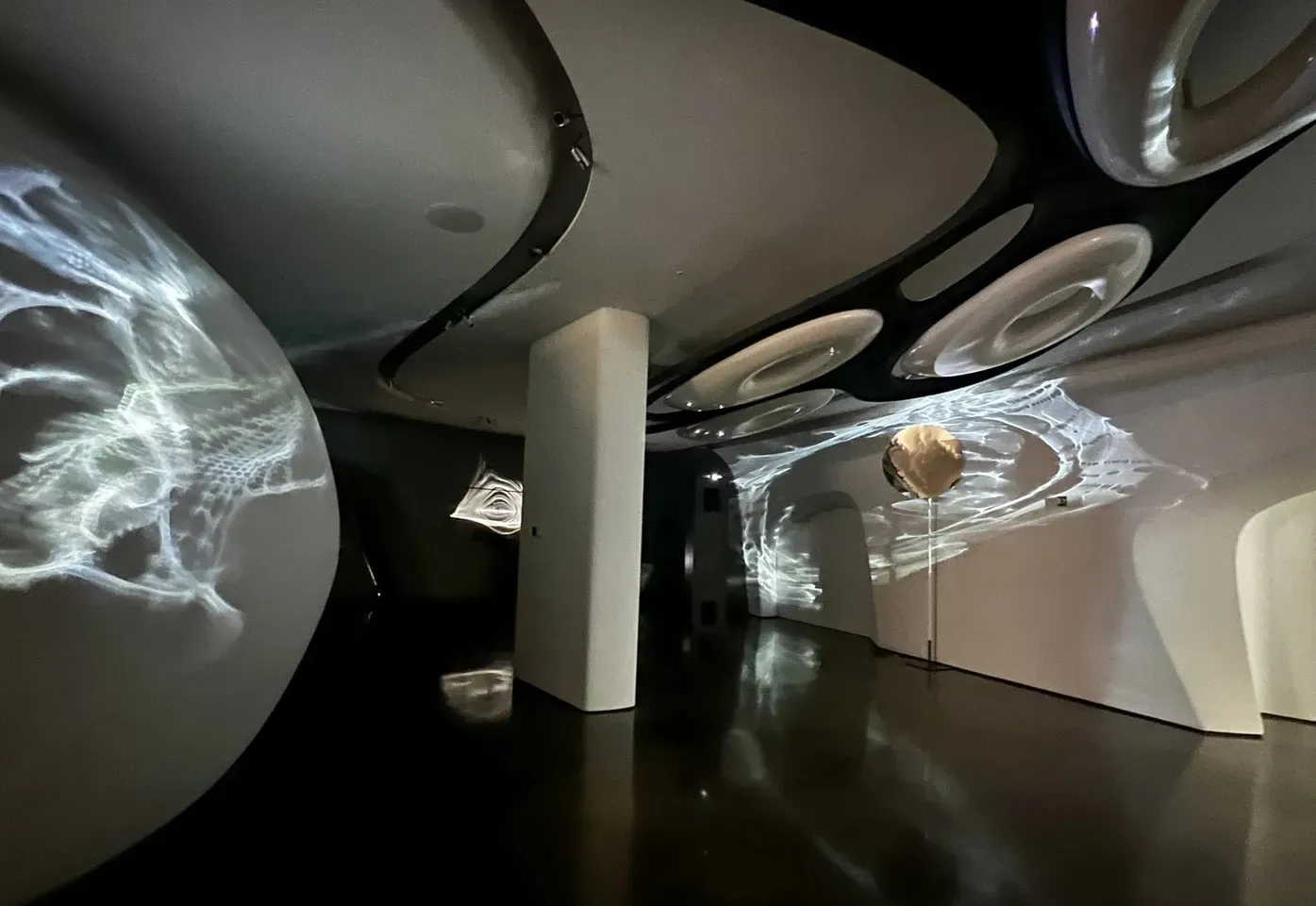
G: The space and the light definitely become part of the instrument here, like say the strings and body of a guitar. But I would add the audience to that list: I think of this performance partly as a happening, so I hope people feel like their presence and perception is part of that same instrument, and that being in that space is an act of agency, not of consumption.
Has the audience interacted with the exhibition in any way you didn’t expect?
Alisa: Something I didn’t fully anticipate is how differently audiences from different backgrounds respond. Design professionals often focus on the materials, technology or spatial composition, while visitors without that professional background tend to describe the exhibition in emotional or sensory terms. Seeing those perspectives coexist has reinforced the idea that light and sound are universal medium.
Photo credit: all photos belong to artrabbit.com