Molten Balance: Interview with Peter Layton
We talked about working with glass, preserving knowledge and skills, and how to collect glass artworks
1. London Glassblowing is celebrating its 50th anniversary — what does that milestone mean to you personally, and what does it say about the place of glass in British craft and contemporary art?
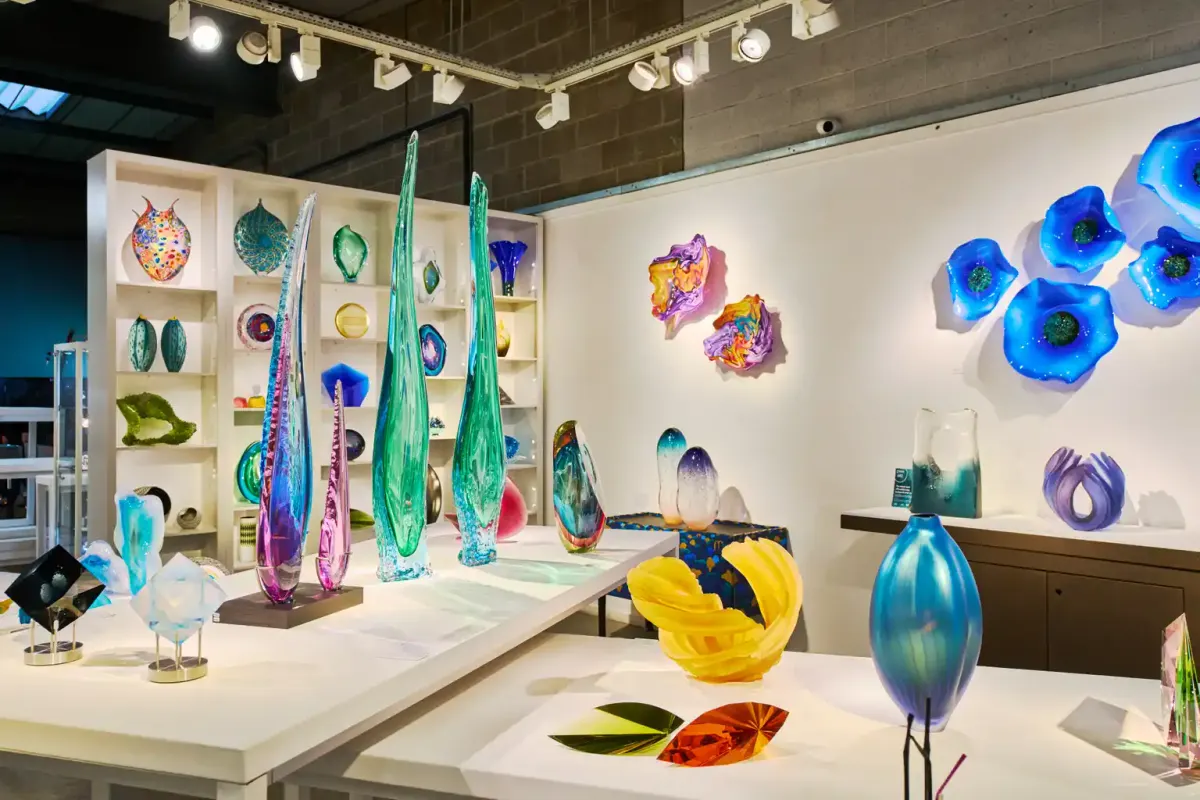
It means a great deal, not least because it was never guaranteed. When I set up the workshop in 1976, in a 19th century towage works beside the Thames at Rotherhithe, there was little or no market for studio glass in this country. We were total novices and, as it turned out, pioneers. To have survived five decades, and many recessions, and to have grown from two of us with no admin staff to a team of around twenty, feels like something of a triumph against the odds. It also says something about glass itself. When we started, the craft galleries were preoccupied with British ceramics. Fifty years on, contemporary glass has earned its place, though I would argue it still remains a largely undiscovered medium.
2. Glass is beautiful, but also technically demanding, fragile and unpredictable. What first made you want to dedicate your life to this medium?
I trained as a ceramicist at the Central School of Art and Design under some of the leading potters of the day, and was introduced to glassblowing while teaching in the USA during the swinging sixties, just as the Studio Glass Movement was gathering momentum. I was captivated by the immediacy of the material, the spontaneity and the risk-taking the process demands. There is nothing quite like working at the furnace with such a magical medium. In 1972 I had an exhibition at the Commonwealth Art Gallery in London for which I didn't want to make pots, and I realised then that glass was where my heart lay. I returned from America on the crest of a wave, and I have never really come down.
3. For someone who knows very little about glass, what should they look at first when standing in front of a piece — the colour, the form, the light, the technique, the risk?
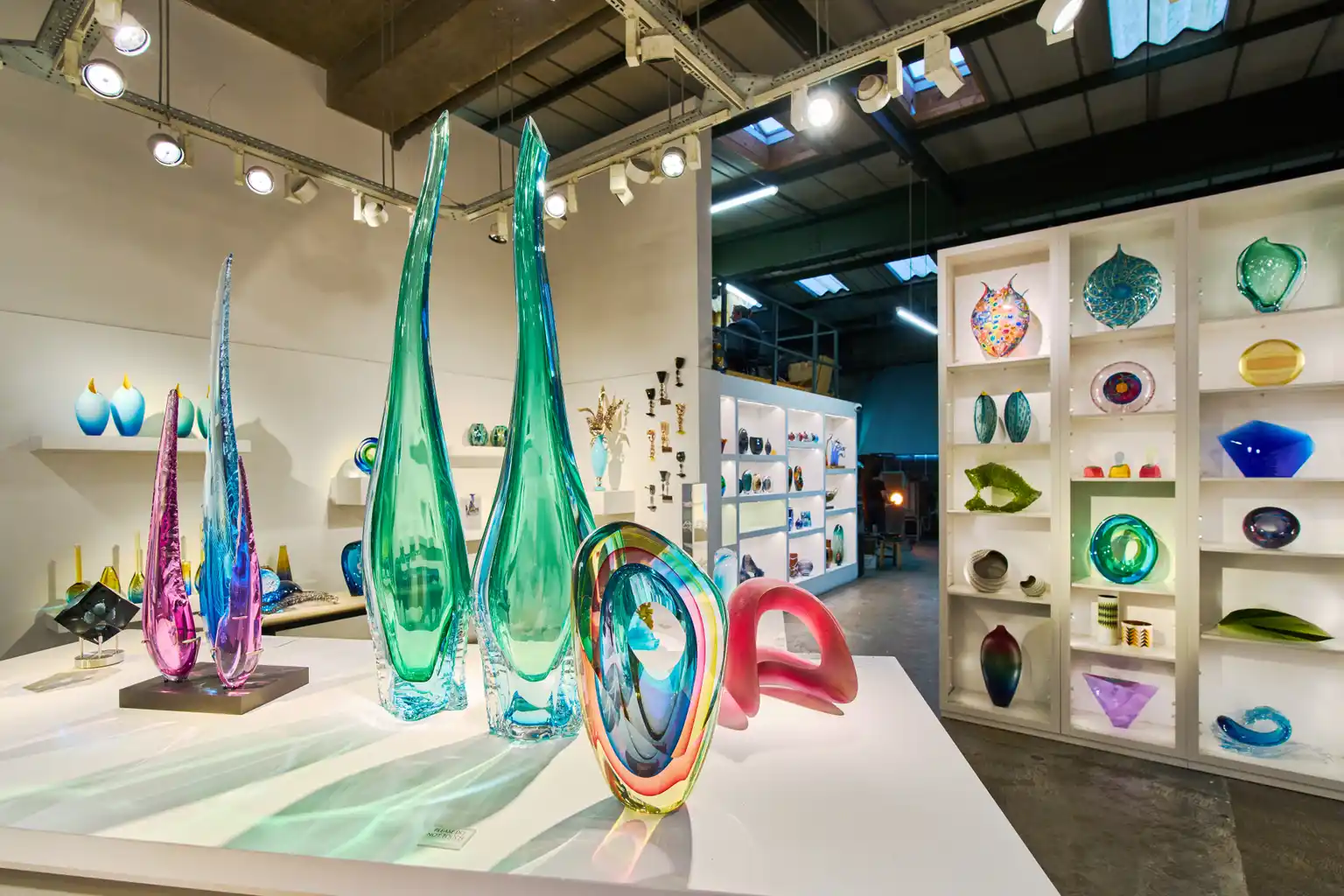
The light, I think, because that is what glass does that no other material can. Watch how a piece holds light, bends it and reflects it. Then let your eye travel to colour and form. People are often gobsmacked when they walk into our gallery, and that instinctive response, the jaw dropping, is the right one. London Glassblowing and my work is known for its vibrant colours. When you visit
the gallery you see the incredible range of techniques, all of our artists have their own unique style.
4. What do people most often misunderstand about glass as an art form?
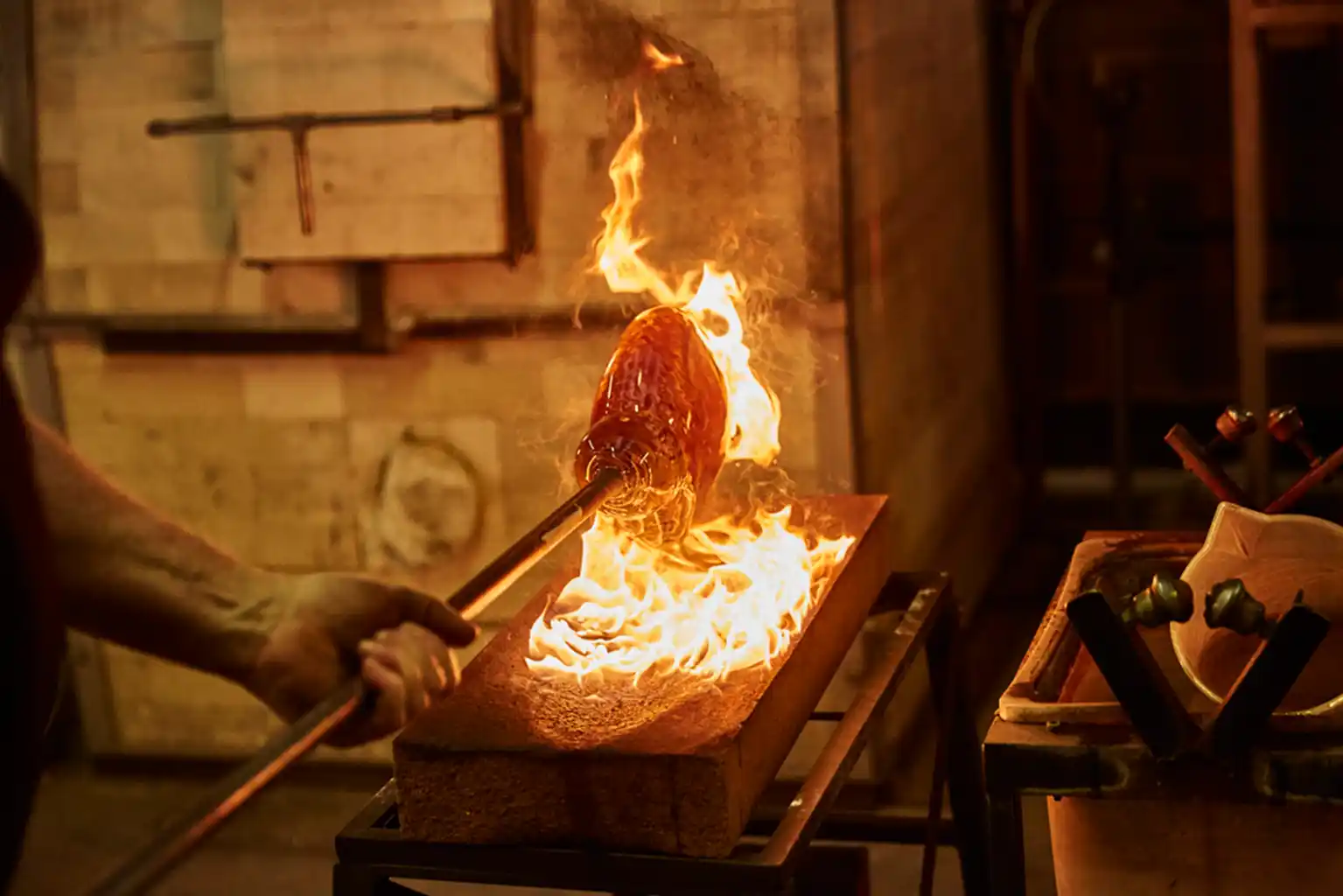
That it is merely decorative, or functional, or disposable. For centuries glass has been the material of windows, bottles and tumblers, and that legacy means it sits lower in the hierarchy of media than it deserves. What people often don't appreciate is how demanding it is. Our pieces can take an hour, two or even weeks to make, where a glass factory might consider five minutes on a blowing iron too long. There are sections of solid, clear glass that make the weight at the end of the iron very considerable, and the heat and constant reheating make it a genuinely arduous artform. Behind every apparently effortless piece lies months of development and years of skill. It’s also not just about the hot element of the making, we have a coldshop studio behind the scenes where the cutting, grinding and polishing happens - a really important part of some of our work.
5. London Glassblowing has become both a studio and a cultural meeting point. How important is it to preserve not only objects, but also skills, knowledge and ways of making?
It is vital, and increasingly urgent. It takes many years to master the art of glassblowing, and these handskills are endangered throughout the world. Sadly, many of the university courses in this country that covered glassmaking are closing. So the studio matters not just for what it makes but for what it passes on. Throughout five decades my mission has been to nurture emerging talent, whether through the studio itself, through chairing British Artists in Glass and the Contemporary Glass Society, or simply by keeping our doors open so that visitors can watch the making. Skills survive by being practised in front of people, and handed on. We support glass students with work experience in our studio which is very important to their early careers.
6. Do you think glass is still sometimes treated as "decorative" rather than as serious contemporary art — and has that changed over the past 50 years?
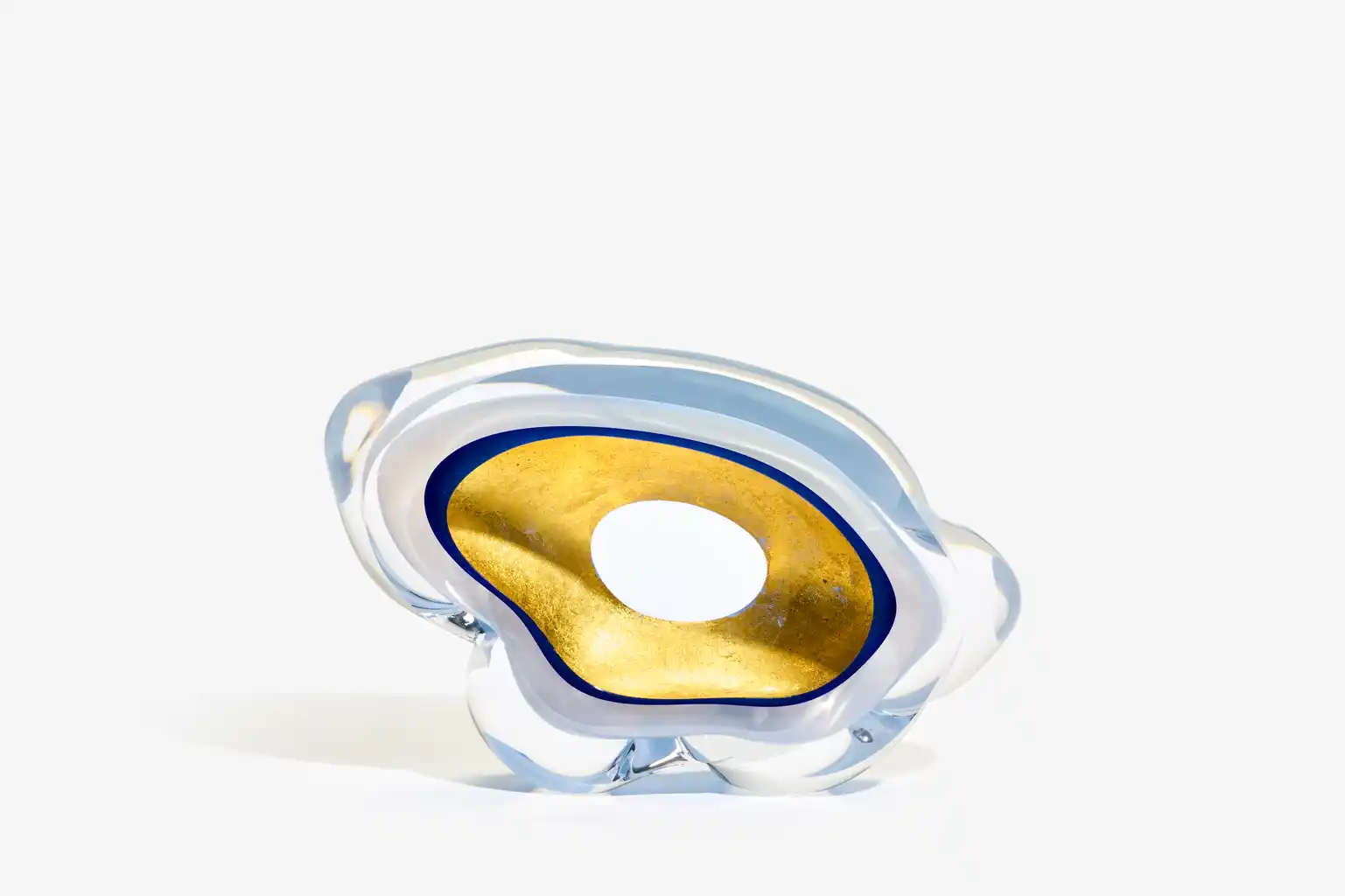
It has changed enormously, though perhaps not enough. When I began hawking my wares around the craft galleries, selling from the back of my car, gallery owners worried about needing specialist lighting. That is partly why we made our name with iridising, so the work would glow without any fancy lighting at all. We have collaborated with the National Gallery and the Royal Academy, we show at Collect (An international art fair for contemporary craft) and have shown at PAD London, and the best contemporary glass is unmistakably serious art. But the old prejudice lingers, and I regard that as a golden opportunity for collectors. Extraordinary work is still available at prices that would seem modest in painting or sculpture.
7. What makes a great glass artist today? Is it technical mastery, experimentation, patience, obsession, or something more difficult to define?
All of those, and something more. Technical mastery is the entry fee, and it takes years. But what we look for in the artists we exhibit is exciting ideas, a personal direction, and the ability to express the versatility and magical qualities of the medium. My own approach I would call evolutionary. I use a method I refer to as sketching on the blowing iron, responding to each experimental idea by changing aspects of process, colour and form. So perhaps the honest answer is a willingness to keep experimenting, and to accept risk, for a very long time.
Obsession helps and it’s a very addictive medium. London Glassblowing is a creative hub, the artists inspire each other, use the facilities and exhibit their work in our gallery.
8. How has the audience for glass changed — are younger collectors and visitors approaching it differently?
The audience has broadened wonderfully. During the pandemic we switched very quickly to selling more online, which brought us people who might never have come across us. Younger visitors tend to arrive with fewer preconceptions about where glass sits in the artistic hierarchy, which is refreshing. They respond to the making itself, to watching the alchemy of molten material becoming a finished object before their eyes and our glassblowing half experience days which are very popular. The vibrant Bermondsey Street helps too. It has become a real destination, and we get a marvellous mix of seasoned collectors and the simply curious.
9. Is there a piece, moment, failure or accident from the studio's history that still stays with you?
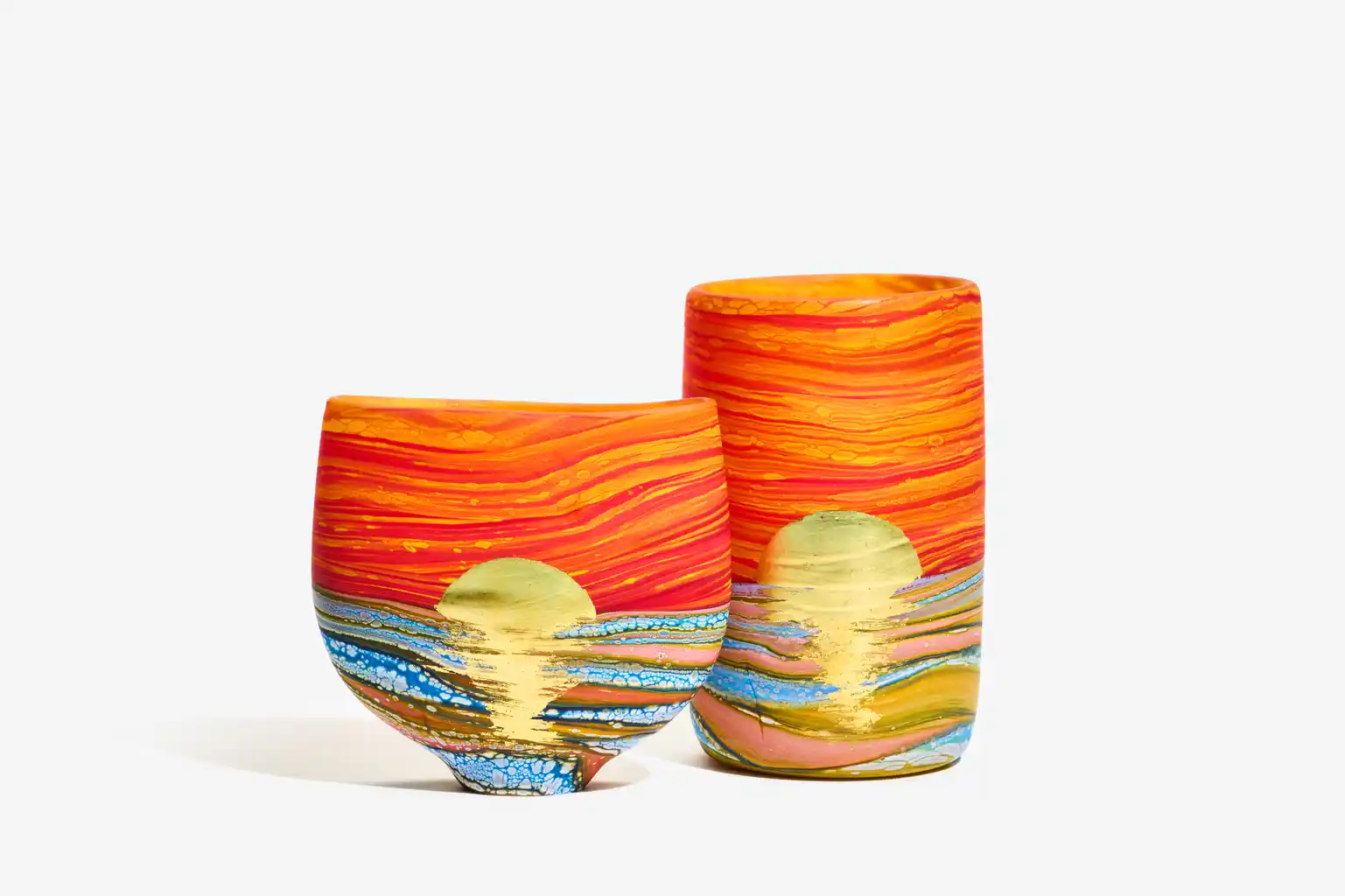
Failure is built into glassmaking. Pieces crack, collapse, or simply disappoint, and one learns to let them go, though some losses do sting. The accidents or incorrect colour application often end us as unique series! Burning myself badly in the early days.. But the moments that stay with me are more often about survival. Moving into large-scale architectural work in the nineties, when things were tough, making sculptures for cruise lines and public spaces. Keeping the studio going through recessions and a pandemic.
10. For readers who would like to start understanding or even collecting glass, where should they begin?
Come and look. Visit London Glassblowing and watch a demonstration in our studio where you can see work being made from start to finish. We keep an open studio precisely so that people can watch the making and understand what goes into a piece. Buy a piece that moves you, though contemporary glass remains remarkably good value. And talk to the makers. Glass artists are a very friendly and welcoming lot, and there is no substitute for hearing an artist describe their own work.
11. Looking back at 50 years of London Glassblowing, what are you most proud of — and what do you still want to do next?
I am the proudest of the journey. The many glassmakers who have worked with me over the decades, some staying many years, and gone on to remarkable careers of their own. And I am proud that against all odds we have grown and succeeded in becoming a UK destination for glass. As for what's next, my protégé and son-in-law Tim Rawlinson, a very talented glass artist, and his wife, my daughter Sophie Layton, are preparing to take up the reins, and I am confident they will build on what we have made. I turn 90 next year, so I may finally be ready to step back a bit. Though I make no promises. There is still so much to explore, and I am still finding new possibilities in this magical medium after all these years.