Invisible Flock: Preserving a Vanishing Sound
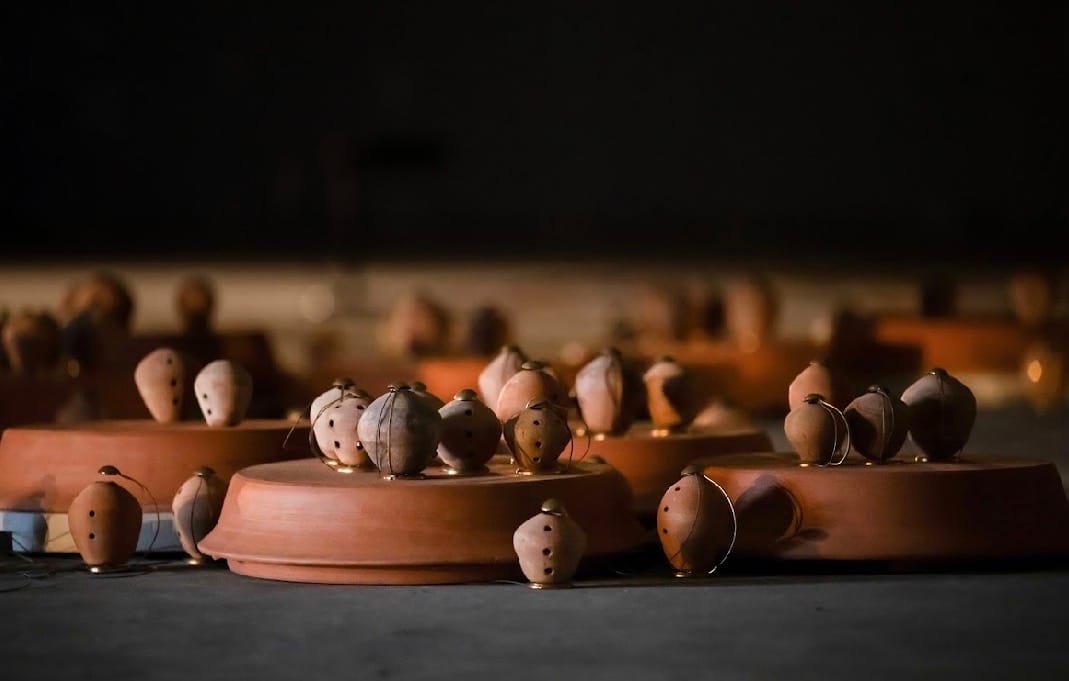
Microtonal explores the endangered tradition of the borindo, bringing together 200 handcrafted instruments, technology and the knowledge of the musicians and craftspeople keeping its legacy alive. We talked about this work with Invisible Flock in this interview
1. Microtonal began with the borindo, an instrument whose tradition is at risk of disappearing. How did you first encounter it, and what made you feel that it should become the centre of this work?
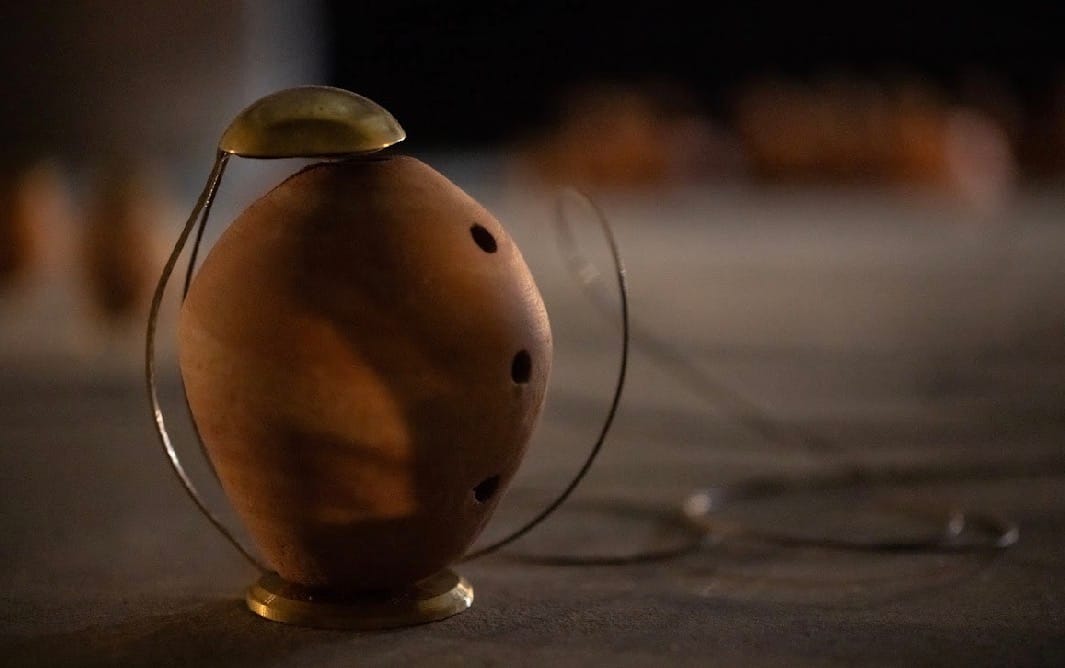
We first encountered the borindo through collaborative research and development with the Karachi Biennale 2024 curatorial team. We were generally exploring overlapping ideas of extinction and the idea of cultural extinction and the disappearance of sounds mirroring that of wider extinction of the natural world. In many ways the borindo is the work, it’s an exploration of the borindo both as an object and of its sonic properties, whilst also laying out all of the intrinsic meaning that an object like this holds, the earth it is made from, the hands that have shaped it, the tunes it holds.
2. The installation was developed with the last known musician to play the borindo and the only remaining craftsman known to make it. How did you approach this collaboration without turning a living cultural tradition into material for a Western artwork?
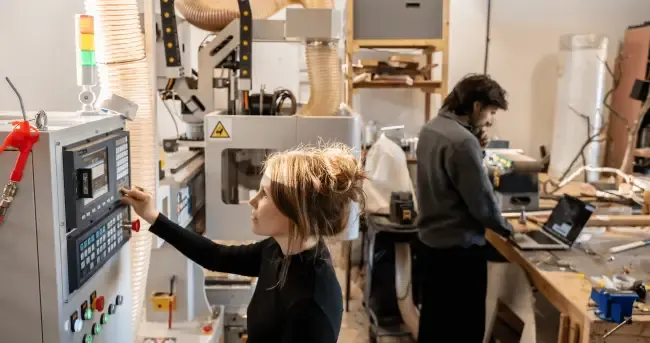
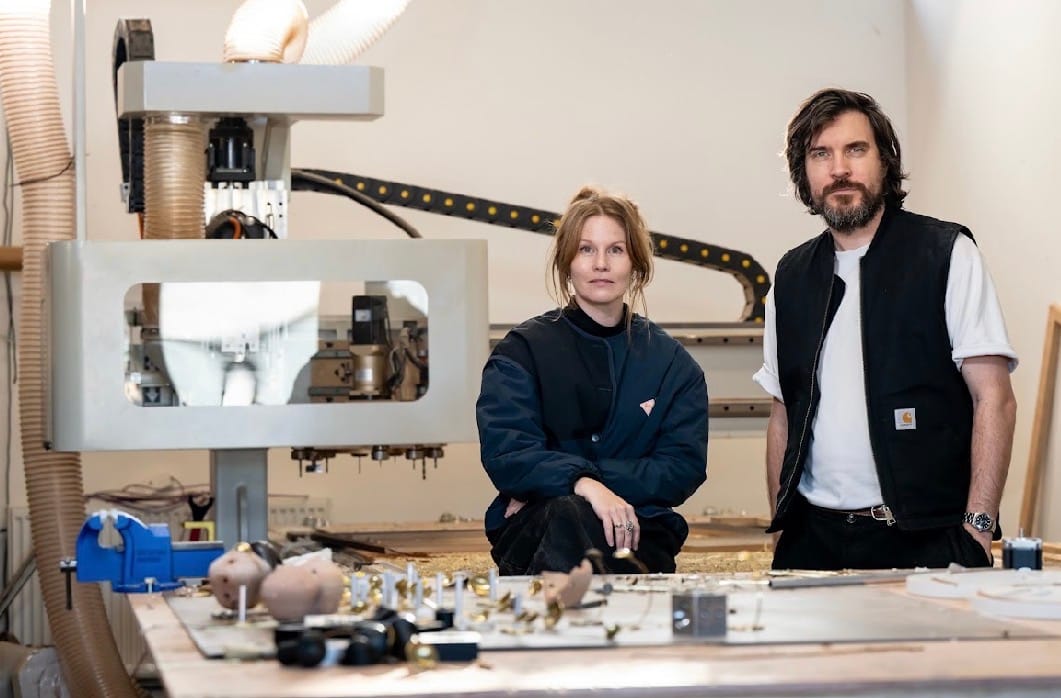
The work is through and through a collaboration, which began in 2021. Faqir Zulfiqar is a renowned and celebrated musician and main steward of the instrument’s tradition. Zulfiqar began working with potter Allah Jurio many years ago, experimenting together with ways to make the borindo. Like many folk instrumentalists, Zulfiqar is focussed primarily on the playing and the sharing of his instrument and music. Working together to make this work was the equivalent to us sitting together and playing, a collaboration between his work and ours. Together we devised what we could make, what would benefit the recognition of the instrument, and what would be the purpose of bringing together our respective crafts. Zulfiqar continues to collaborate on the different showings of the work as it is shared in different contexts, performing within the installation. All of Invisible Flock’s work is built around collaborative principals or reciprocity, collective activism and long form working partnerships.
3. The borindos respond autonomously to their immediate environment. What does technology add to the instruments—and how did you ensure that it did not overpower their original sound, history or cultural meaning?
The work is a response to the borindo and whilst it is obviously closely focussed on the instrument and its tradition, it is also about the wider themes that speak beyond the Taar desert and actually concern all of us as we consider the place and meaning of culture in our societies and how we maintain or even at times resurrect lost practices. Whether the installation does or doesn’t overpower is I suppose subjective and for some purists perhaps it does. The technology within the work plays and responds to the space of the gallery, both listening to the sound being played as well as exploring the tuning of the borindos. It doesn’t so much add anything to the instrument rather it explores it through a new lens and perspective. The main effect of the technology within the work is to allow for 200 of the instruments to be heard at the same time as a chorus which is simply something that could not happen otherwise and is a sort of imaginary space for the borindo as a choral instrument as opposed to its current status as a solo one, due in part at least to the lack of players. The installation as a whole also intends to bring the traditional technology of the borindo into wider recognition and understanding
4. Can an artwork genuinely contribute to safeguarding an endangered musical tradition, or is its role primarily to make audiences aware of what is being lost?
I think it can contribute for sure, in many ways this work already has. I think there is a wider philosophical argument about where does culture really live, is it in museums and lists held by UNESCO (which the borindo was recently added to in small part at least thanks to this work) or is it in the practice of musicians and memories and stories of people. Whether the work creates a new cohort of borindo players is probably unlikely but has it opened up more conversation, dialogue and exposure around the instrument? Then yes. It’s hard to predict how a folk tradition evolves and mutates and what the future of it looks like.
5. Microtonal has travelled through regional venues in the North rather than being presented only in major London institutions. How has that touring context changed the work and the kinds of encounters it produces?
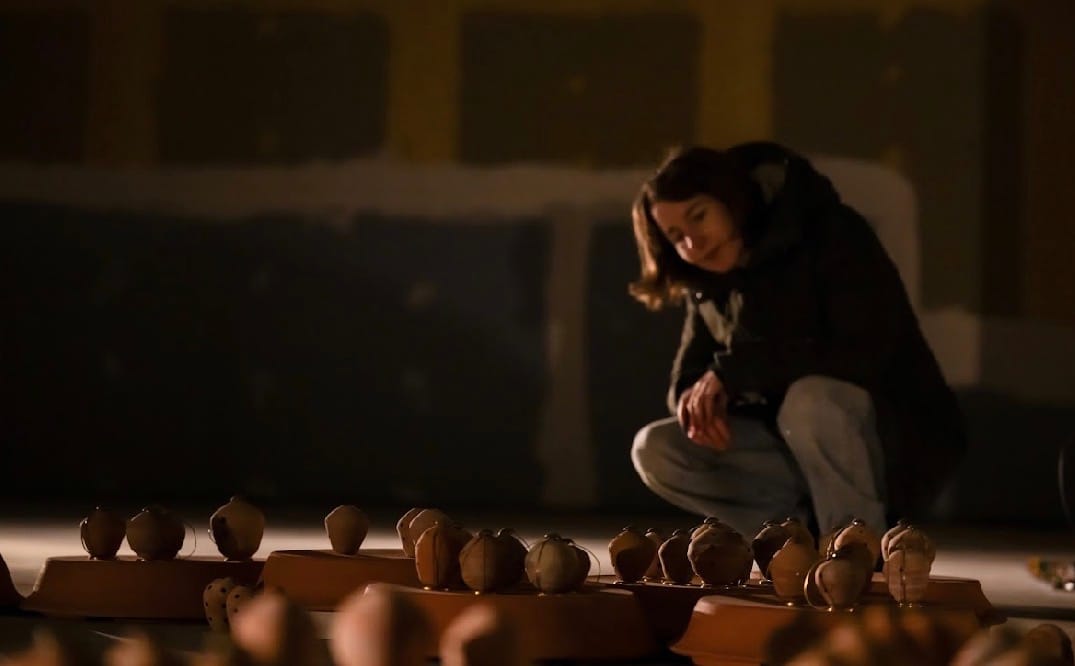
As artists we all live in the north of England and our studio is based up here so this is much more home turf for us in some ways. The work has been shown in some reclaimed and non conventional spaces as well as galleries, showing work to both traditional art audiences and less so. We always enjoy showing work to people encountering it in their daily lives, taking over a shop unit that they pass everyday on their way to work for example and seeing how people fold it into their lives and the landscape of their cities or towns. Audiences often become repeat visitors and develop longer relationships with work which is always interesting. The way in which audiences interact with non conventional spaces will also define how the work sits, lots of kids shouting into the exhibition microphones to make it react has a different feel to a more reverent and quiet audience in a gallery.
6. The installation contains around 200 handcrafted borindos and may be the largest collection of them anywhere in the world. How do you think about the responsibility of holding, transporting and eventually preserving a collection of instruments this rare?
With great care.
7. As the tour concludes at Huddersfield Contemporary Music Festival, what would you like audiences to carry away from the work: an understanding of the borindo, an experience of sound, or a broader reflection on cultural extinction and preservation?
We are loath to define for an audience what they should feel; I think the work is open for people to engage at an intellectual, emotional or technical level. For some it will be of interest musically, others the story will affect them and a more technical appreciation. All are legitimate. The audience of the festival themselves will I’m sure bring a specific critical lens to the work and this in turn will enrich the work going forward. Hopefully this will create new connections and stories and futures for the borindo.
Visit the Huddersfield Contemporary Music Festival and see this installation live: https://hcmf.co.uk/programme/installation-microtonal/