Humanity in shaping the techological future: interview with Tamar Clarke-Brown
How does artists react on AI era? What shapes museums in modern technology shift? And how can digital mediums be preserved? We talked about that with Tamar Clark-Brown, arts technologies curator at Serpentine
The exhibition is presented as an archive rather than a conventional exhibition. Why was it important for Serpentine to make its research process visible now, rather than simply presenting new commissions? What does an archive reveal that finished artworks cannot?
processing… is the first public programme in Activating Serpentine’s Archive, a two-year project supported by The National Lottery Heritage Fund which aims to digitise and make accessible Serpentine’s archives, enabling new modes of audience access and future-oriented research, while keeping the archive open to new questions.
An archive can reveal sustained attention and ongoing engagement with its subject. In processing… this takes the form of conversations, publications, papers, photographs, workshops, exhibitions, experiments, tests and prototypes commissioned and produced between 1975 and the present day with a wide network of practitioners working at the intersection of art and advanced technologies. Archives can also reveal the continued pursuit of a perceived horizon or utopia and the many transformations and reconfigurations towards that goal; revealing process and possibilities; all the ways a story could have gone before choices were made. We can see this in the department’s latest commission exhibited in the space - Danielle Brathwaite-Shirley’s I DIDNT REALISE YOU THOUGHT LIKE THAT (2026) - a digital game addressing polarisation online and beyond. It’s the perceived failure states in this piece, as often in games, that light the fire that coaxes us into change in pursuit of different results. We wanted the space to be generative rather than enforcing a single history or narrative.
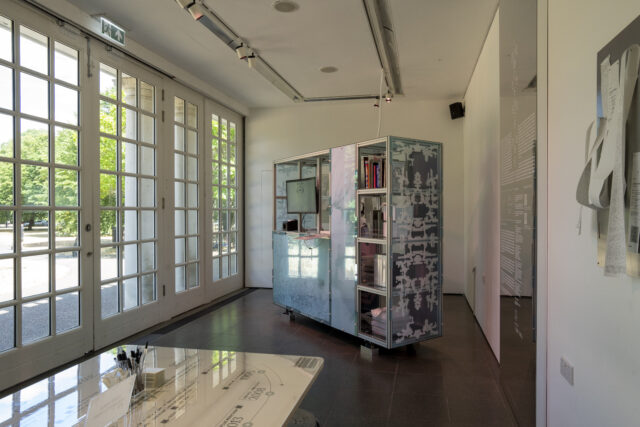
It’s important to distinguish that Serpentine doesn’t have a collection or conservation department. We are predominantly a commissioning institution, concerned with production and circulation. Arts Technologies is an R&D (research and development) based department, and we’ve been bringing that side of our work increasingly into view over the past few years. We don’t only make artworks; we convene and commission research, produce knowledge and IP. Decentralisation is part of our ethos. As a growing network of practitioners, we’re interested in open questions and culture as an ‘ongoing conversation’ (Stuart Hall, cultural theorist) rather than a static artefact or conclusion; a site of continuous negotiation where meanings are constantly created, contested, and reshaped. We wanted to keep listening, and to keep doing our work through the installation, and as such, processing… is designed as an active archive; part listening room, part research space.
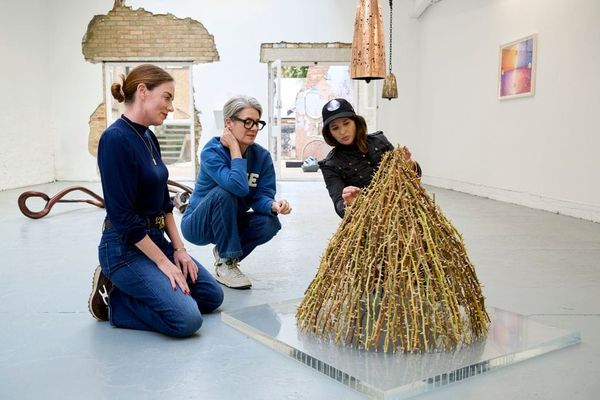
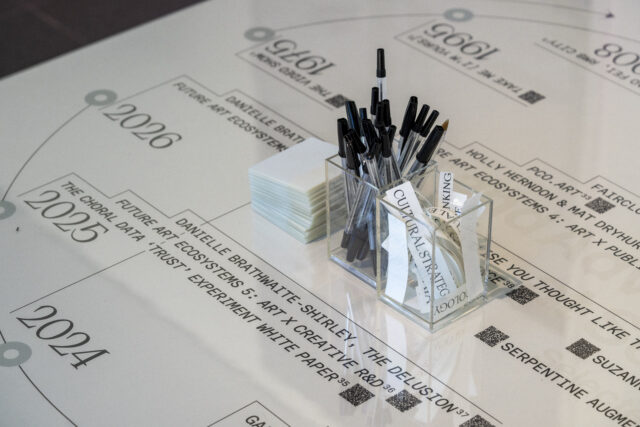
COVID-19 led to a widespread shift online, a rapid expansion of digital culture and a sudden expanded visibility and potentiality of audiences, including and the reconfiguration of its Arts Technologies department, including the launch of its own Twitch channel. Importantly for us then, processing… is a space that’s designed for use; for activity and engagement with its gathered materials. From the sound that greets visitors on entry, including raw choir recordings from Holly Herndon and Mat Dryhurst’s The Call (2024), archiving the sounds of many voices negotiating and coordinating with each other, to the annotated subject readers that invite visitors to add their thoughts using the post-it notes on the worktable, to our archive cataloguers who are actively and diligently continuing the digital archiving work inside the space every Tuesday.
The format and design of the display- reflective, modular and on wheels- also echo the reality of where we are now as a department: significant touring activity, embedded PhD researchers and the transformation of the Future Art Ecosystems initiative; a project for building 21st-century cultural infrastructure to support art and advanced technologies for the public good, into a fellowship programme. By navigating the Future Art Ecosystems website (beta) in the archive space, visitors can encounter some of the keywords through which we have come to understand ourselves in recent years, frameworks we use to navigate, align with others committed to worldbuilding and critical inquiry. We want people to get involved and build with us - it’s less about this idea of a finished product, and more about creating frameworks that allow us to explode processes, craft and test alternatives with others in real time.
* [For more detailed information on our approach to R&D, please check our latest report from Future Art Ecosystems; Vol 5. Art x Creative R&D]
Serpentine has worked with artists exploring AI, blockchain and digital systems long before these topics entered mainstream cultural debate. Looking back, what surprised you most about how artists anticipated the conversations we're having today?
Yes, this is true - Serpentine is an institution that incubates future ideas and embraces the challenge of ‘impossible’. If you head to the worktable in the space, you’ll see a navigable timeline with highlighted projects that surface some of this history; The Video Show (1975); Europe’s most comprehensive video exhibition at the time, Simon Denny’s Products for Organising (2015), an exhibition which explored the organisational strategies used by online communities, live simulation experiments like Ian Cheng’s BOB (2018), and new systems of ownership, stewardship and distribution enabled by blockchain technologies like Partial Common Ownership (2024), an ongoing project developed with RadicalxChange.
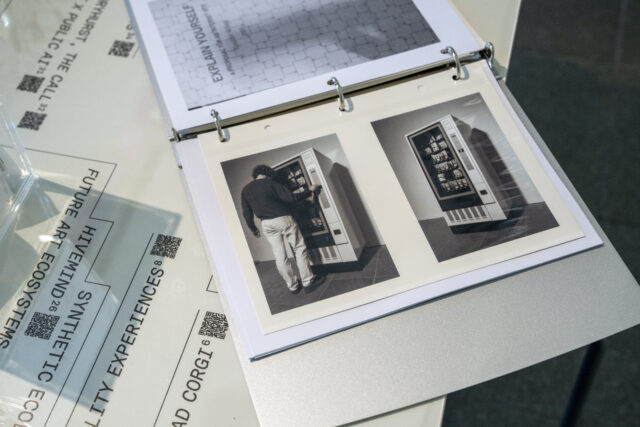
From the gallery’s early days; across the many projects and networked actors, including Hans Ulrich’s first exhibition at the gallery; Take Me [I’m Yours] in 1995, which offered online access to the gallery and distributed artworks through a vending machine that visitors could take away, what is perhaps most surprising is that similar questions continue to emerge. These include: How can art affect change? Where is culture and meaning made? How is value shared? What can agency look like? These are the bigger questions that recur across our research, commissions and programming. Years later, we are still experiencing and investigating the impact of networked society; the affordances and nightmares of platforms and social media for organising and activity. See for example Future Art Ecosystems: Vol. 2 - Art x The Metaverse (2021), and its partner Twitch series, Artist Worlds, which explored gaming and the then-seemingly imminent ‘metaverse’. This edition explored phenomena like MMORPGs; Massively Multiplayer Online Role Playing Games and their unique opportunities for worldbuilding, video game infrastructure and social architecture.
Many museums are currently trying to respond to technological change. From your perspective, what distinguishes Serpentine's Arts Technologies programme from the growing number of institutional initiatives focused on AI and digital culture?
The speed and ramifications of technological development may have become more rapid, visible and urgent. But we are still focused on the role of humanity - and artists - in shaping these. Over time, the gallery and its now dedicated Arts Technologies department have shifted towards building infrastructure and prototypes to test, propel and embed ideas concerning technological change - through long-term research partnerships, co-commissioning models, and connection with policymakers. Importantly, though we are proud of the many ways in which we innovate, we position ourselves as part of a wider, global ecosystem - culture is not a competition :)
Arguably the most radical and honest expression in our post-truth, ChatGPT-explains-it-all era is; I don’t know. This is what gets you to seek and find real solutions - hopefully with others moved by similar questions.
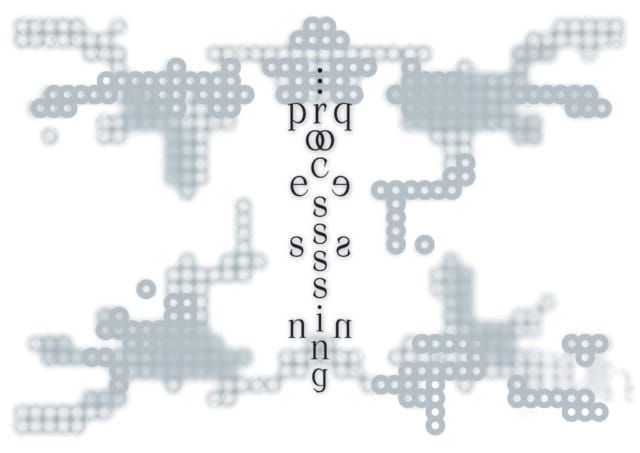
processing… takes its name from the message shown during an in-progress computation. This reflects the current department’s approach to knowledge production; developing a critical distance (or rather intimacy) with culture as it grows, developing open-source resources, tools and insights that can be used to navigate shifting realities, accessed, used and improved by many to benefit a wider ecosystem of changemakers.
The title processing… suggests something intentionally unfinished. Is there a risk that museums feel pressure to provide answers about technology, when perhaps their role is actually to remain in a state of experimentation and uncertainty?
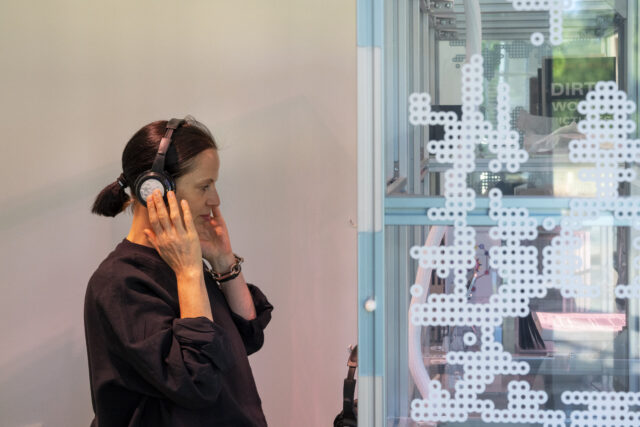
In the space, headphones allow visitors to listen to a curated playlist of conversations and podcasts from across Serpentine’s wider history and public programming related to art and advanced technologies. The first track you hear is a conversation between Serpentine’s Artistic Director, Hans Ulrich Obrist, and Dame Zaha Hadid for the Serpentine’s 89plus Marathon (2013), which explored the impact of networked society and hosted, among other proposals, the digital platform 89plus CLUBHOUSE. In this conversation, the two discuss Hadid’s line: ‘There must be no end to experimentation’.
In Future Art Ecosystems 5: Vol.5. Creative R&D (2025), we share our belief that “deliberately open-ended, cross-disciplinary Creative R&D environments… have an important role to play in social transformation.”
Institutions increasingly wear many hats, and answer many calls, but if the horizon is a metaphorical imaginary that must be redrawn every day, we must safeguard and protect art as a home of risk and experimentation.
One of the recurring questions throughout the exhibition is how institutions preserve digital culture. What does it actually mean to archive artworks created with technologies that may become obsolete within just a few years?
It’s a process of constant adaption and staying active! We try to be a very recursive team, constantly learning from our projects, building in evaluation, keeping abreast of new tools and workflows that can improve our practice, and we try to be very meticulous about documentation!
Our projects require a high level of care and awareness from curators and the artists too to ensure the works we produce can tour and have an afterlife. This impacts many decisions including which version of software to use, how readily available or expensive to reproduce elements are, and considering from the start how works could be reconfigured for different tech setups or environments.
Some of our older commissions, such as Agnes by Cecile B Evans (2014), a spambot that lived on the Serpentine website and the gallery’s first digital commission, are currently decommissioned - offline or waiting for an update to revive them. Digital work requires maintenance and a future-forward approach to archiving. Often the required software or hardware becomes outdated or no longer available, meaning that the artwork cannot be supported. For this, institutions need to be attentive to ‘tending the software garden’ (Cass Fino Radin, 2018) - ensuring software is fully updated, managing patches, etc. to maintain functionality. Alongside having the correct hardware to play and activate the works. Digital artworks can also often exist in many versions; subject to constant updates, and many parts; distributed across file sharing platforms, clouds and hard drives. This has led to greater and earlier consideration of the archiving process alongside the development and production of our commissions, but we look to organisations like ZKM and Rhizome who have been leading work in digital archiving and preservation for years, alongside initiatives like The Internet Archive, who focus on archiving websites and online activity.
In recent years, one of Serpentine’s core programming strands has become ‘Dynamic Memory’; addressing the issue of institutional forgetting, and giving greater recognition to artists who deserve it. Partly in support of this initiative, in Autumn 2025, we hired a Digital Archivist - the first member of an expanding Digital Archive team. As part of their work, they have been researching best practices to make Serpentine’s archives AI-ready, anticipating this as one of the core concerns for future archival practice. With digital work, anticipation and perhaps backups are keywords - but I would also question what does obsolete mean? Does everything have to last forever or should obsolescence be understood as part of a natural cycle or compositing - permaculture style?
In recent years, there has been a wider mainstream shift towards understanding digital archives as flexible, ‘living systems’ (Dekker, 2018), that also brings with it the understanding that ‘living heritage’ may not survive forever in a physical sense. Arguably, this creates a greater urgency to engage in issues of preservation and develop more sophisticated and even regenerative responses.
Serpentine often brings together artists, technologists, researchers and developers. Has this interdisciplinary model changed the role of the curator itself? Does curating technological art now require a different skill set than curating more traditional exhibitions?
In short, yes. Arts Technologies is an R&D and production-led team - production happens in house meaning we are constantly upskilling and learning in order to deliver the project which is usually something that has never been done before.
Working with technologies, building and managing interdisciplinary teams, requires a greater understanding of the backend and workflows involved in complex production processes, and an ability to understand more languages - a glossolalia. Increasingly you must speak not only art, but industry to understand and map potential opportunities, speak not only present but future.
Finally, looking ahead, what conversations about art and technology do you think museums still aren't having—but urgently should be? And what role do you hope Serpentine will play in shaping that next chapter?
Serpentine’s Arts Technologies department (formerly known as Digital) was born through a predictive idea of what the museum/institution of the future could look like and how to build to make that possible - that culture is an ongoing conversation, and infrastructure is needed to hold that horizon in tension, successfully incubate and scale those practices.
Through this, the Future Art Ecosystems initiative was born - initiated by Ben Vickers and Victoria Ivanova, with the first briefing, Art x Advanced Technologies, published in 2020.
We’d love to help underscore the value of art in education and kickstart governmental reevaluation of the arts, understood as critical to civic development and public good.
We’re always looking to support and platform underrepresented voices. This includes looking at overlooked and lesser investigated areas, slower technologies and spaces such as food. In the immediate future, we want our presentation to tour around the UK, activating and inviting responses from different ecosystems of practitioners to connect our practice to more local conversations around art and advanced technologies - we’d love to start in the North!
Credit: all photos by Hugo Glendinning.