Digital Canvas: Why Streaming Is Becoming the Next Museum Model
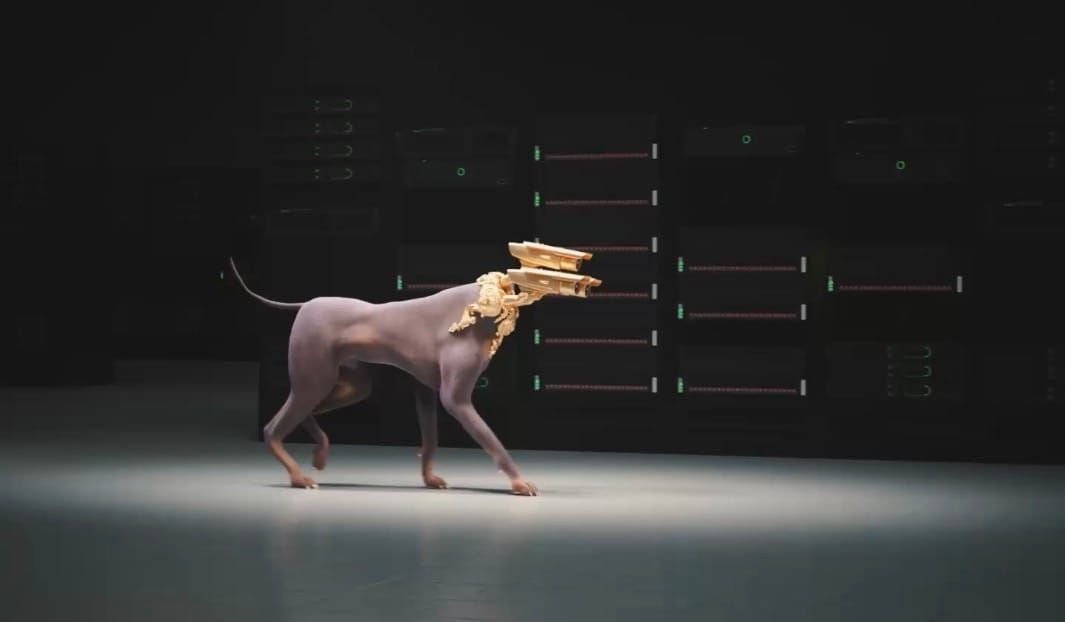
Today, content consumption habits have undergone significant changes and directly influence the cultural sector, especially digital art. According to Gloria Mark, a professor of informatics at the University of California, Irvine, the way we pay attention to screens has changed significantly over the past two decades. Twenty years ago, when her team first began tracking office workers in 2004, people spent an average of two and a half minutes on a single screen before switching tasks. By 2012, that number had dropped to 75 seconds. And not so long ago, in the book Attention Span, published in 2023, Mark highlighted that the average has now fallen to just 47 seconds. Even more striking is the median: 40 seconds. That means half of all observed screen interactions end in a task switch within 40 seconds, with a 47-second digital attention span.
This shift gave rise to streaming as a new cultural model, replacing the conventional online platform with a mode of content best suited to the new patterns of content consumption.
The streaming model made it possible to discover contemporary artists in the same way we discover music and films: through scrolling, personalised recommendations, and curated digital feeds.
Screen as a Gallery
Digital art has long since established itself within the art market. Over time, a dedicated ecosystem evolved to define how digital works are distributed, collected and experienced.
While most online platforms remained archives, marketplaces or exhibition spaces, CIFRA, Daata, Electronic Arts Intermix and Artcast adopted a streaming model.
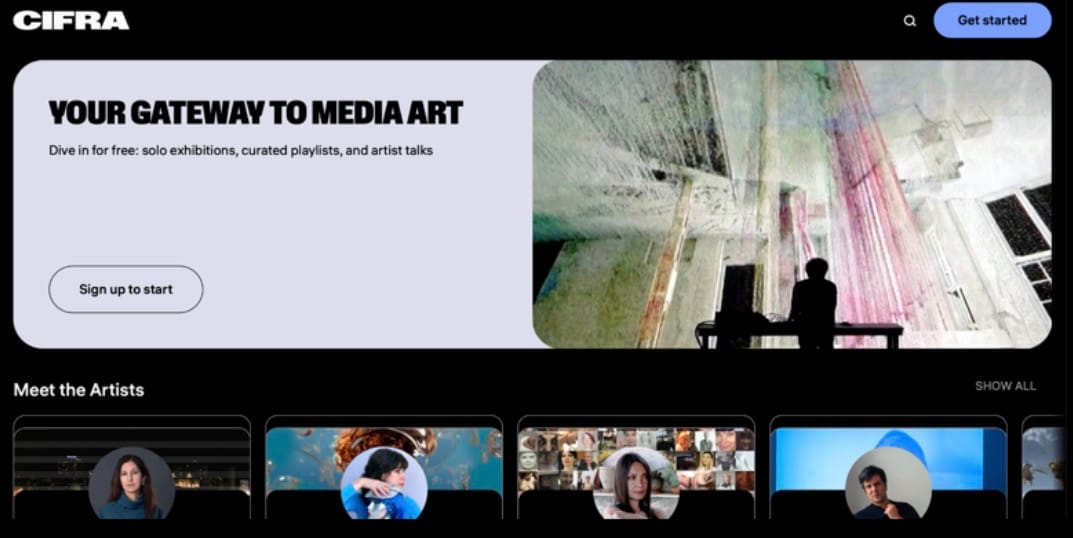
UAE-based platform CIFRA, founded in 2023, is a successful example of streaming model amplification in the art sector. Dedicated entirely to new media art, it showcases digital artworks through curated playlists, online exhibitions, and a well-constructed editorial narrative. It is accessible not only on mobile devices and computers, but also on Smart TVs The platform itself enables audiences to experience artworks without the time limitations typical of gallery and museum exhibitions.
Also, in 2026, CIFRA established the Artistic Vision Council, an international advisory board that contributes to the platform's curatorial and strategic development. Chaired by media art curator Olga Shishko, the Council brought together leading figures including Christiane Paul, Lev Manovich, Oliver Grau, David Elliott, Daniela Arriado and Martin Honzik, providing expertise on programming, editorial initiatives and the broader development of CIFRA.
One more part of CIFRA’s ecosystem is platforms’ Award, supporting artists, curators, and cultural practitioners. It offers not only integration into CIFRA’s storytelling through interviews, social media and short formats, but also a grant to create and promote new artwork.
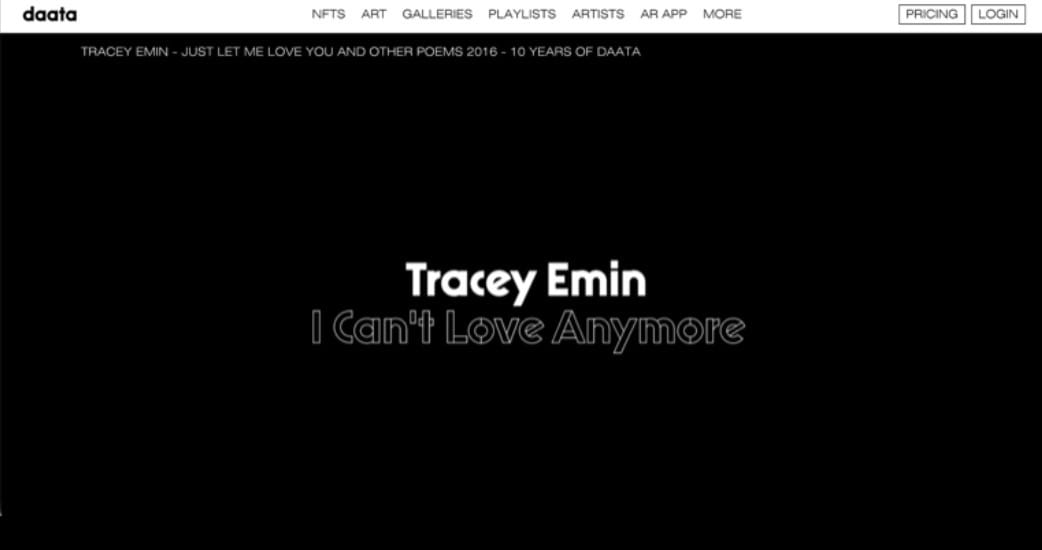
Another example of the platform is Daata. Founded in 2015 by curator David Gryn, it was dedicated to commissioning, exhibiting and collecting contemporary digital art. It works with emerging and established artists to produce original digital artworks across video, animation, sound and web-based media. In addition to offering works for acquisition, Daata enables users to stream or download artworks across a range of devices, including computers, mobile devices and Smart TVs As a result, its programme combines artist commissions with curated playlists and includes collaborations with museums, galleries and major art fairs such as Frieze and Art Basel, positioning digital art within an online viewing environment rather than a conventional white-cube exhibition space.
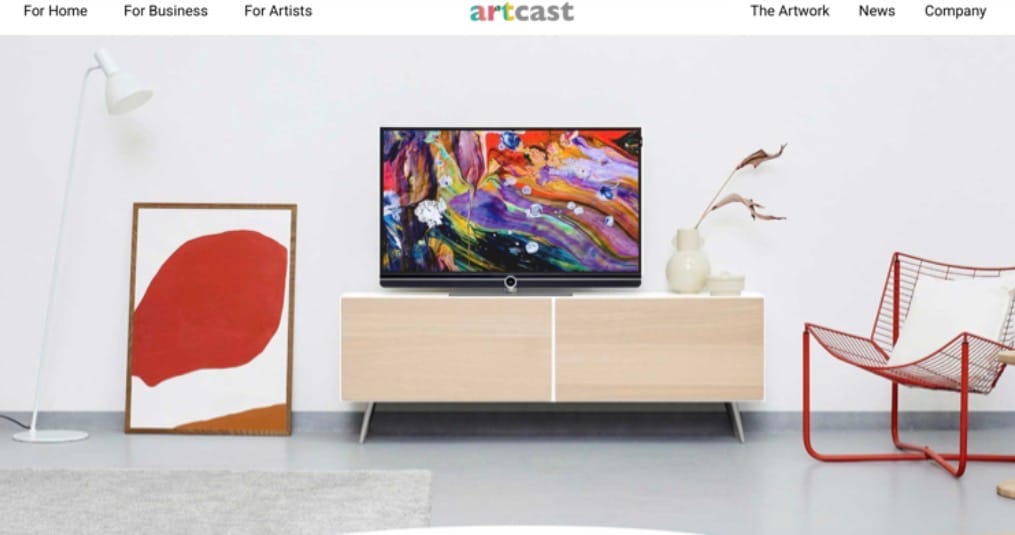
One more example of a platform built around the streaming model is Artcast. Created in 2004, Artcast brought curated art and visual programming to connected screens, including Smart TVs, computers and mobile devices. Originally developed as a provider of high-definition art for television, the platform has evolved into a subscription service that offers audiences the opportunity to discover thousands of artworks alongside museum exhibitions, documentary films, and immersive visual experiences. By adopting the interface and delivery model of mainstream streaming services, Artcast offers another way to experience digital art. Also, through partnerships with museums, artists and cultural institutions, it extends the reach of curated exhibitions beyond the physical gallery space into everyday viewing environments.
Art Market Shift: New Generation of Audience and Collectors
The migration of art to screens suggests that streaming is about to become an important component of museum practice rather than simply another distribution channel. As audiences grow accustomed to discovering culture through on-demand digital platforms, museums face an opportunity to extend their collections beyond the physical visit. Instead of limiting access to temporary exhibitions or fixed opening hours, streaming offers continuous engagement, allowing artworks, curatorial narratives and public programmes to remain accessible long after an exhibition has closed.
The growing preference for on-demand digital platforms is also evident in how collectors discover and acquire art. According to the Avant Arte Collector Report, collectors aged 18 to 39 now account for 46% of active art buyers, making them the fastest-growing segment of the market. Taking into account their purchasing behaviour, it is possible to highlight that it reflects a fundamentally digital mindset. Research conducted by MyArtBroker found that 76% of Generation Z collectors complete their purchases entirely online, bypassing the traditional gallery experience altogether.
This change is already reshaping the patterns of art collecting. For example, Art Basel & UBS Art Market Report identifies digital art as one of the most widely collected categories among high-net-worth buyers, with 51% of surveyed collectors reporting having acquired digital artworks. The report also notes a growing demand for time-based media, including film, video art, and installation, suggesting a focus on screen-based artistic practices.
Between Culture and Innovation
The evolution of digital art platforms and, as a result, the amplification of streaming models suggests a new perspective on discovering art through a format familiar to contemporary audiences. Rather than replacing museums, streaming can extend their reach, allowing exhibitions, collections and curatorial projects to remain accessible long after a physical show has ended.
Museums are unlikely to lose their role as places of encounter. Seeing an artwork in person remains an experience that cannot be replicated on a screen. However, it is impossible to ignore that digital platforms are beginning to occupy a significant space in the cultural landscape today.
by Sofia Barysheva