
Cruise as a symphony: interview with Benjamin Squires
The range of possibilities music offers for conveying emotions and sensations is constantly expanding. We spoke with composer Benjamin Squires about the process of creating a musical work, his experience in film, and what it’s like to compose a piece inspired by a cruise.
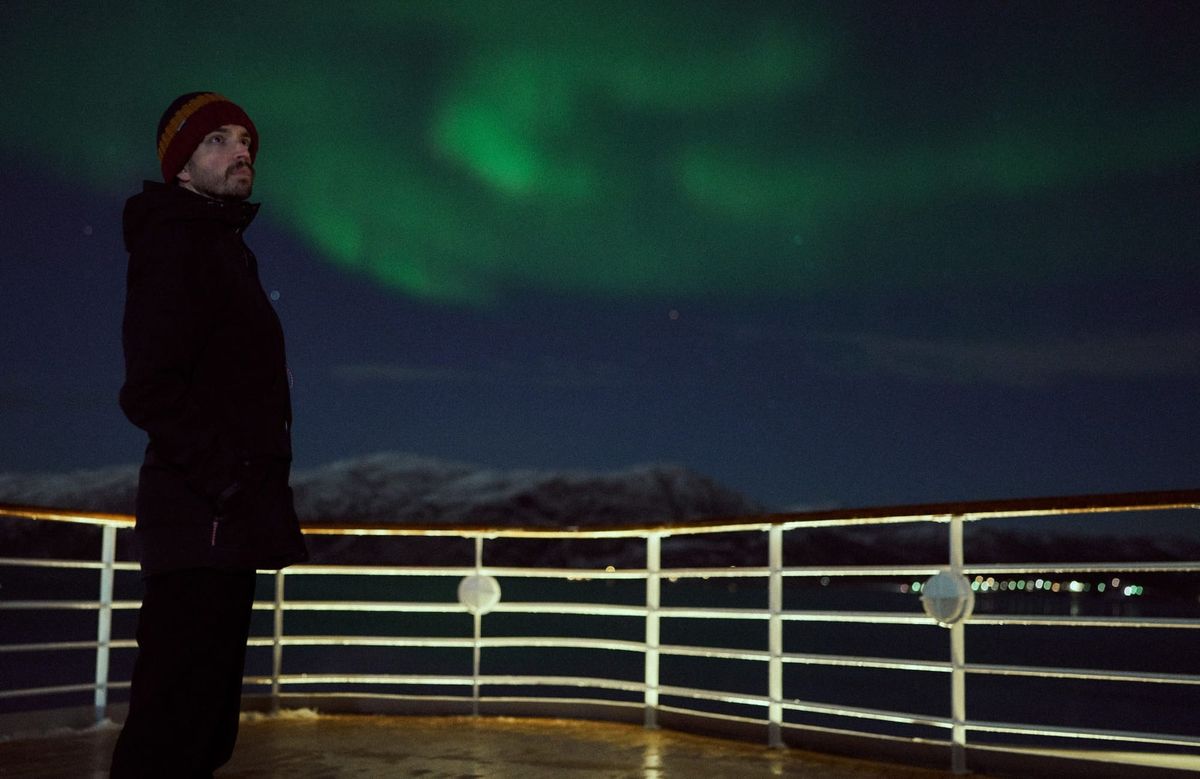
Soundtrack for the Seas is built around the idea that every destination has its own sonic identity. When you arrive somewhere unfamiliar, what do you listen for first? Is there a particular sound that instantly tells you where you are?
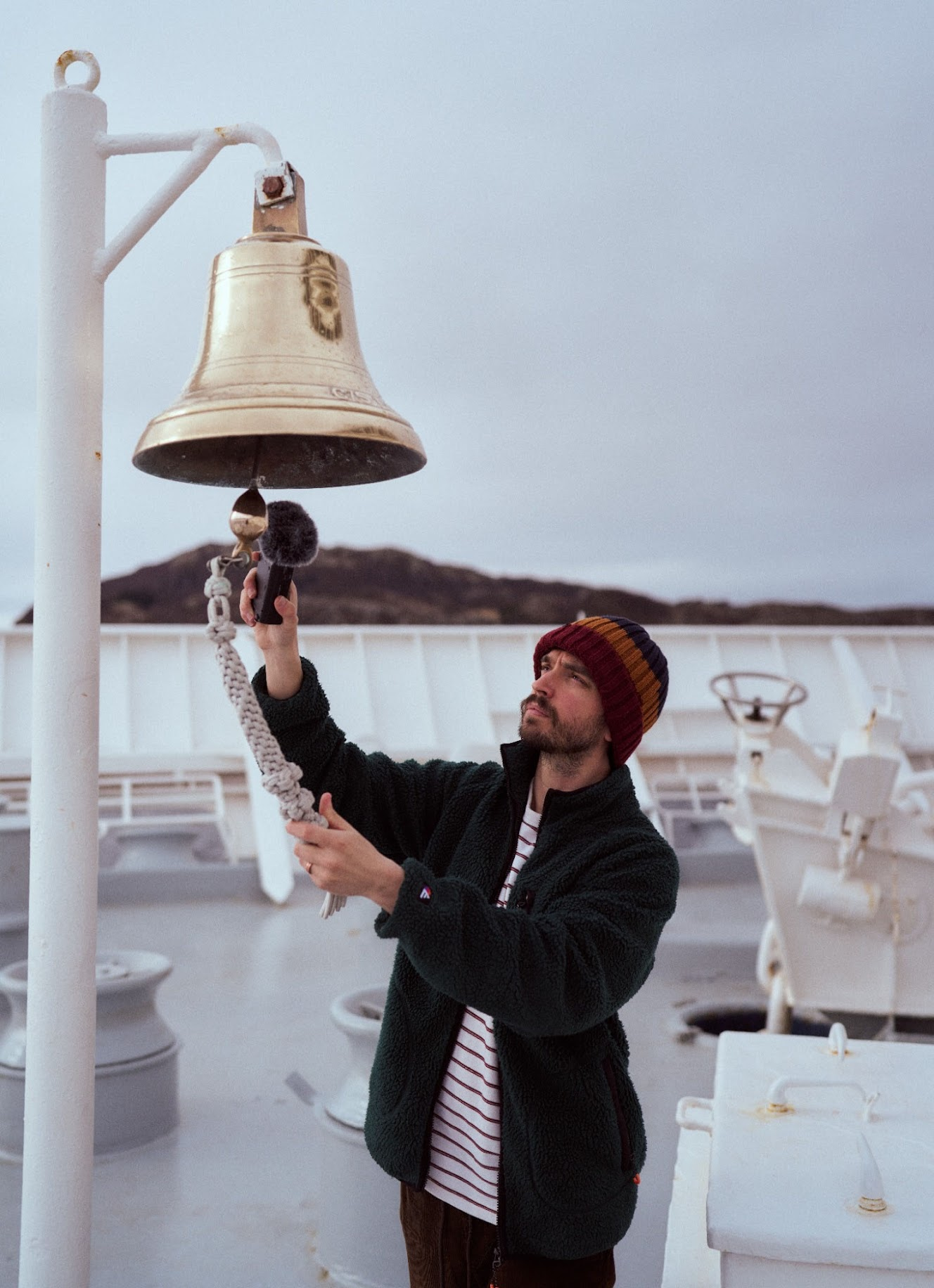
I suppose sound is interesting in the sense that you don’t really have a choice what you’re hearing! But on Soundtrack for the Seas, my hearing was focused for two different reasons; from a practical point of view, were there any sounds on board (or at our destination in Norway) which were tonal enough to use directly in the album? And secondly, how can I translate the ambiance and atmosphere of sounds that you hear every day on a Fred. Olsen cruise into music? The roar of the ship setting sail for the first time and the gentle chatter in the restaurants are exactly the kind of sonic inspirations that are present in tracks like Voyage and Balmoral. As for finding tonal sounds to use directly in the music, it didn’t take long to register the sounds of ship bells ringing and cruise guests singing to know that they would be well worth recording.
You have worked on productions as different as Avatar and Wicked. What did those projects teach you about using music to build worlds rather than simply accompany them?
World building is really helped by finding the right instrumentation. In the Avatar trailer I worked on, it was often about finding sounds that originate from a different culture but feel at home in an alien world. There are sounds of Native American flute chiffs, a Bulgarian choir and Japanese Taiko drums. On Soundtrack for the Seas, that world building comes from the sound of real guests humming, the ring of bells from reindeers or ships, and one track features a Hardanger fiddle, which is a traditional stringed instrument from Norway.
Film scores often disappear into the background when they're doing their job well. Do you ever feel that the best music is the kind audiences don't consciously notice?
It’s a real tightrope walk! Original music for films shouldn’t sound like it’s desperate to be heard, but no one wants to be an unmemorable composer. Audiences resonate with music that moves them, but sometimes it’s obvious you’re trying to move them, and that’s a problem when it becomes manipulative. If I'm scoring a sad scene in a film, I want the music to tell the audience “it’s okay to feel sad here”, not “you have to feel sad here”. But then fundamentally after all is said and done, I want someone to go home and think “I’d like to listen to that soundtrack again”.
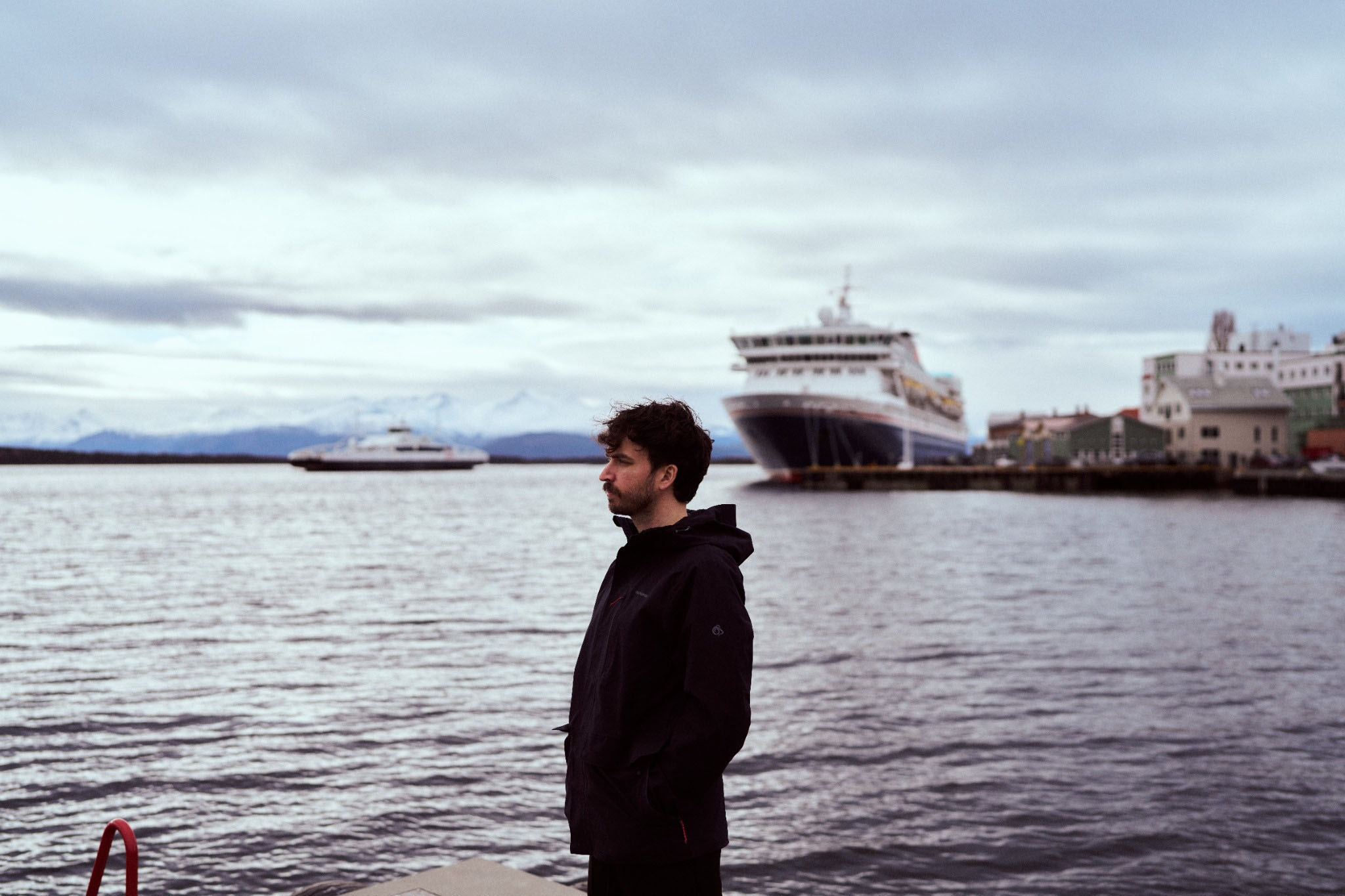
This project asks passengers to experience travel through sound rather than images. Do you think we underestimate how much memory is shaped by what we hear?
Absolutely - mute the soundtrack in your favourite film and you’ll notice. Take away the local artists playing in the town square while you’re on holiday and you’ll feel it. Before I started writing Soundtrack for the Seas, research by Fred. Olsen found that 68% of people agree that music heightens the emotions associated with memory. I have songs that transport me back to very specific memories of my life, some good, some bad, but all of them cemented by music and sound.
Cruise ships are often associated with visual spectacle. Why was it important for Fred. Olsen to invest in a soundtrack instead of another visual campaign?
I think new creative territory is really exciting, and Soundtrack for the Seas is the first of its kind, which definitely makes it a worthwhile endeavor. I worked with Fred. Olsen on the soundtrack for their TV campaign last year and we both really enjoyed that process, so composing a score for their cruise experience was a genuinely exciting and natural extension of the working relationship. And the way that the music will be utilised on the ships, in cabins and in the spas, is something that will be sure to create memories for the guests. I love the idea of someone waking up to Voyage while the captain announces that you’ve crossed the Arctic Circle!
You've worked across film, television and now a branded cultural commission. How differently do you approach storytelling when the client is a brand rather than a director?
It depends on the brand! Fred. Olsen has been a dream to work with because the brief was so artist-forward. The storytelling is entirely my own, and the subjects presented in each track were mine to suggest. Their direction has always been “what does a Fred. Olsen cruise sound like to you?” and I got to fulfill that with my own storytelling desires. The tracklist is ordered in such a way that it does present itself as a story - the ship sets sail, you are in awe at the spectacle of it. Eventually you’re surrounded by nothing but open waters, and take a moment to relax. You land at your first destination and soak in new culture, and are amazed by the impossible vistas that surround you. Finally, you get to witness the very thing that the whole journey is about, which in my case, was the Northern Lights.
Is there a place whose soundscape has stayed with you long after you left? What made it unforgettable?
So many places. I’m going to cheat and talk about the album again, but the sonic identity and atmosphere at Air Studios where we recorded the orchestra is incredible. The way the players sound in that hall is impossible to forget. That location is synonymous with me hearing the orchestra play my music for the first time. Outside of music, I just love the sound of nature and nothing else, either in a forest with leaves rustling or on a quiet beach with the gentle waves rushing towards you. I think we can all picture ourselves in those scenarios, and sound plays a huge part in that.
AI can now generate convincing music in seconds. What do you think remains uniquely human in composing?
From my point of view as a composer, I think learning the craft is deeply rewarding in a way that prompting a computer to spit out some contextless sounds can never be. Having an individual to work with on a project also opens up the possibility for new musical ideas that you’d never considered. I think it will become more and more important for audiences to know that what they’re listening to is real.
Looking back at your career, was there one project that fundamentally changed the way you think about music?
Every single project seems to add a new bow to my quiver, one where you wonder how you got by without it on previous gigs. They come in the form of new ways to write, new ways to mix, new ways to communicate with directors or even new ways to balance your workload. The project that really changed everything was when, for the very first time, I wrote music for my own short film in college. It gave me an itch that I haven’t stopped and don’t intend to stop scratching.
Finally, if you could compose the soundtrack for any museum, city or cultural institution in the world—with no limitations—which would you choose, and why?
I’d selfishly write a theme for my hometown, Barnsley! Where I’ve lived since I was born. I’m more than a bit of a homebird and I do feel close to where I live. It’d be joyous to gather hundreds of local musicians and give the place an official anthem.
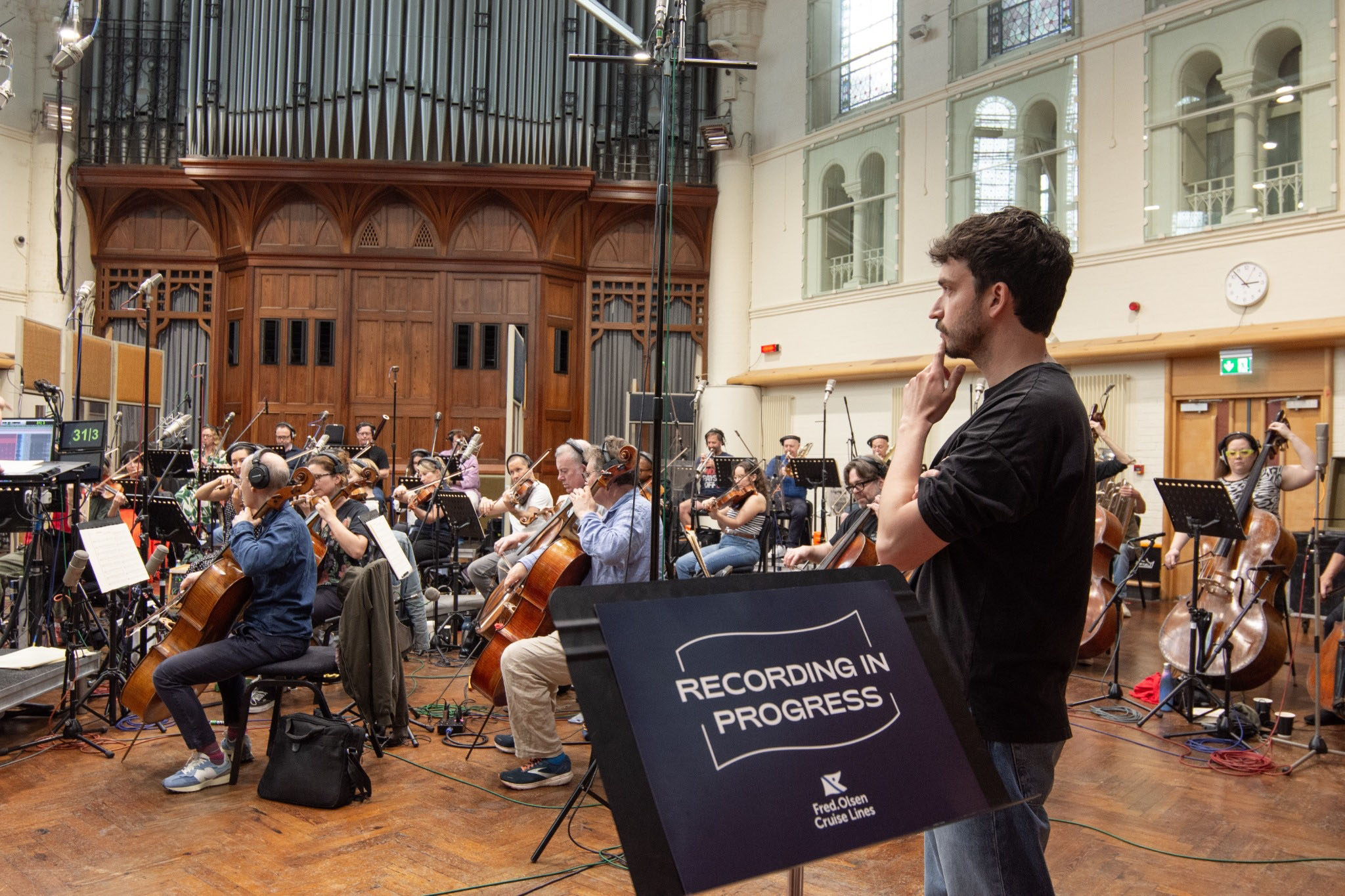
Credit: Benjamin Squires’ new album, Soundtrack for the Seas, is out now on Spotify and YouTube. The album was inspired by Ben’s time aboard a Fred. Olsen Cruise Lines voyage to seek out the Northern Lights and is the world’s first original musical score for a cruise. You can see a behind the scenes look at the album here.