Can Swearing Be Cultural Heritage?
A conversation with Jon Link, co-founder of Modern Toss
The UK Swear Map is funny on first encounter, but it's also a serious archive of regional language. At what point did you realise this project was about cultural preservation as much as comedy?
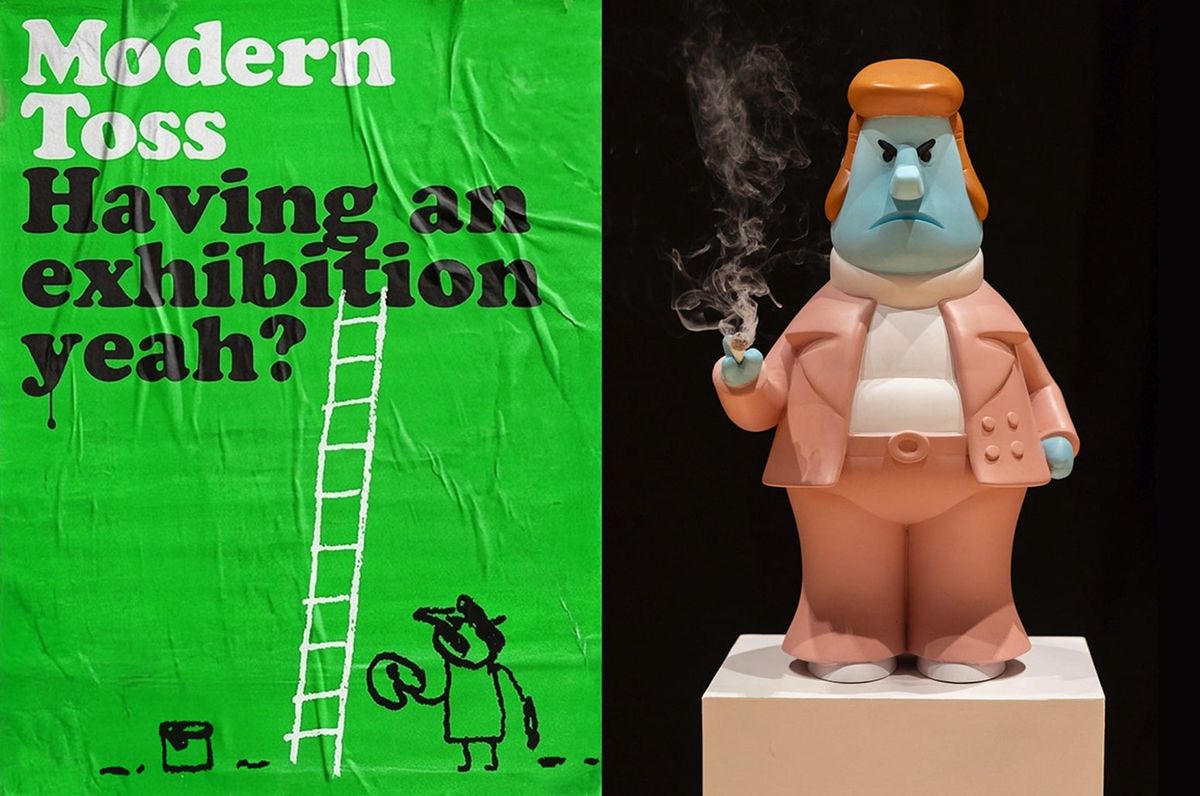
We had an exhibition in Liverpool and it was suggested to us we should make a localised version of our periodic table of swearing. So after some initial research and speaking to a handful of locals, we came up with the Mersey Addendum, I’d never heard of most of the words which were all brilliant, but even in that small sample of words there was discussion amongst the group about what was right and wrong, or how words had changed between generations. That's when it stopped being just a joke format and became about capturing something that could be genuinely disappearing, or at least changing faster than anyone's writing it down.
Swearing is often excluded from dictionaries, museums and official language records. Why do you think it's such an important part of Britain's cultural identity?
It's oral history, and that's hard to capture. Swearing works from the bottom up, it's creative, it expresses how people actually feel, often under stress, and it's spoken far more than it's written. That's exactly why it falls through the cracks: compared to the written word, only a tiny amount of spoken language gets recorded at all. There used to be a massive archive of sound recordings on the BBC site, people just talking, old recordings from all over the country, and it seems to have disappeared, which tells you how fragile this stuff is. Dictionaries can tell you a word existed; they can't tell you how a bloke in Barnsley actually says it. Dialogue is a completely different thing to the written word, it's why we've always tried to make our cartoons sound like people talking, with the jokes coming out of that.
The project was developed with linguists from the University of Sheffield. How did working with academics change the way you approached humour? Were there any discoveries that genuinely surprised you?
By chance our next exhibition after Liverpool was in Sheffield, which happens to have one of the top universities for dialect research. I sent an email and the next day I was in a meeting with Dr Chris Montgomery discussing the Swear Map. We come at it from completely different angles, he's got survey methodology and I've got a press-button map that shouts bollocks at you when you press it. But the overlap is the interesting bit. He told me the prevailing assumption is that language is getting flattened and homogenised, but the Swear Map suggests that isn't the case, or at least it's more complicated than that. Regional swearing is alive and well. It's early days, but the ambition is for it to genuinely work for both of us: proper research and proper jokes. And people interacting with research rather than it sitting in an academic journal.
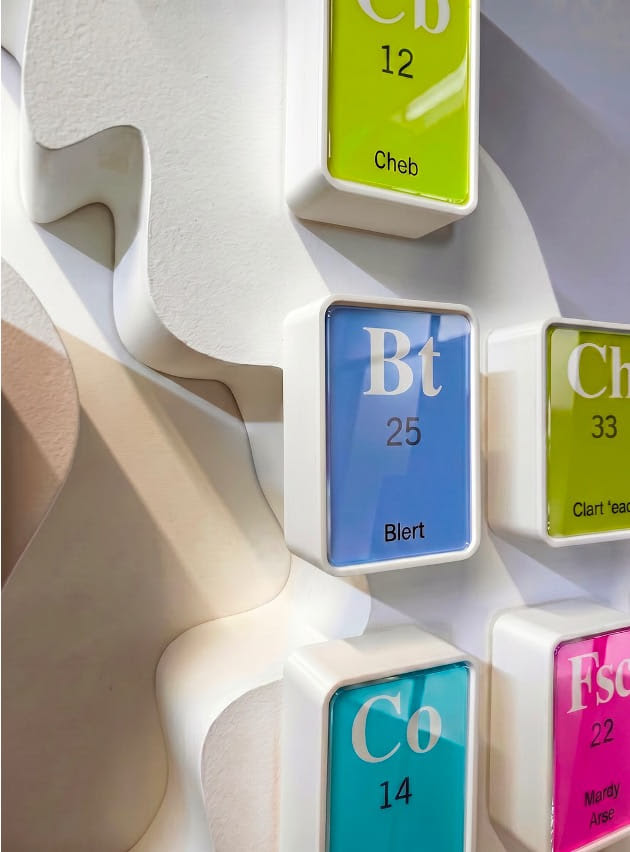
The exhibition notes that AI often struggles with regional accents and non-standard English. Do you see the Swear Map as a playful artwork, or also as a critique of how technology is flattening language and regional identity?
Most voice technology is trained on American English, or at best a sort of standard-issue British accent, there's a whole genre of videos of Scottish people shouting at voice assistants that won't understand them. So in a way the Swear Map is the opposite of that: a machine that only speaks non-standard English. Real people and accents, one button per region, coming out of a telephone handset. It did start off as a playful idea, but the more we've got into it the more we see it as recording a snapshot of swear history, capturing not just the words but the accent and dialect they come in. Something that shows regional identity and national identity at the same time.
Modern Toss has spent more than two decades documenting the absurdities of everyday British life. Looking back, what has changed most about the way Britain laughs—or swears?
The biggest change is that people are much more aware of what they look like and sound like, even how they laugh or smile in photos, people end up performing a public version of themselves. Twenty years ago swearing was more unselfconscious; now people clock themselves doing it. And the swearing itself shifts, words drift in and out of acceptability between generations faster than before, which is half of what the Swear Map arguments are about. But what hasn't changed is how annoyed people get at stuff. We can't help it. It's the same grievances with different haircuts and weirder technology.
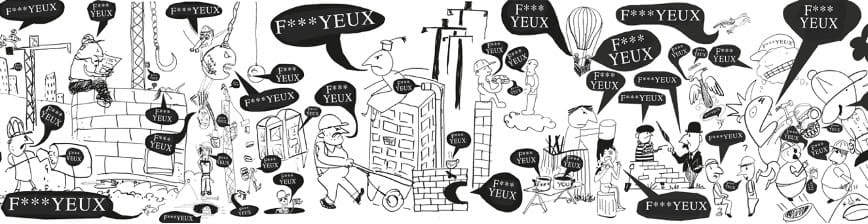
Much of your work has become unexpectedly archival. From the Periodic Table of Swearing to the F**yeux Tapestry* and now the UK Swear Map, do you think humour can sometimes preserve history better than official institutions?
A lot of our stuff borrows the formats institutions use, a periodic table, a tapestry, a specimen collection, a map. We made a Flies of the British Isles piece: 350 handmade flies in clay and wire, each one named, laid out like a natural history display. Once you lay everything out like that and have a look at it, it does start behaving like an archive whether you meant it to or not. And I think humour can preserve history really well, old episodes of Porridge perfectly capture a version of the time they were set in, and they're still watchable, they still transmit the feeling and tone of the times. Official records tell you what happened; comedy tells you what it felt like. I'm not sure what else can do that."
Finally, if someone visited the exhibition without knowing Modern Toss, what would you hope they leave thinking about—not just swearing, but Britain itself?
There's a lot to look at and listen to , 20-plus years of Britain, or whatever it's called, observed, chewed over and reconstituted into multiple thought nuggets. Hopefully they'll leave without a headache, and with a vague idea that you can have a laugh with stuff, whatever the fuck it is.