7 Questions with Simon Wroe
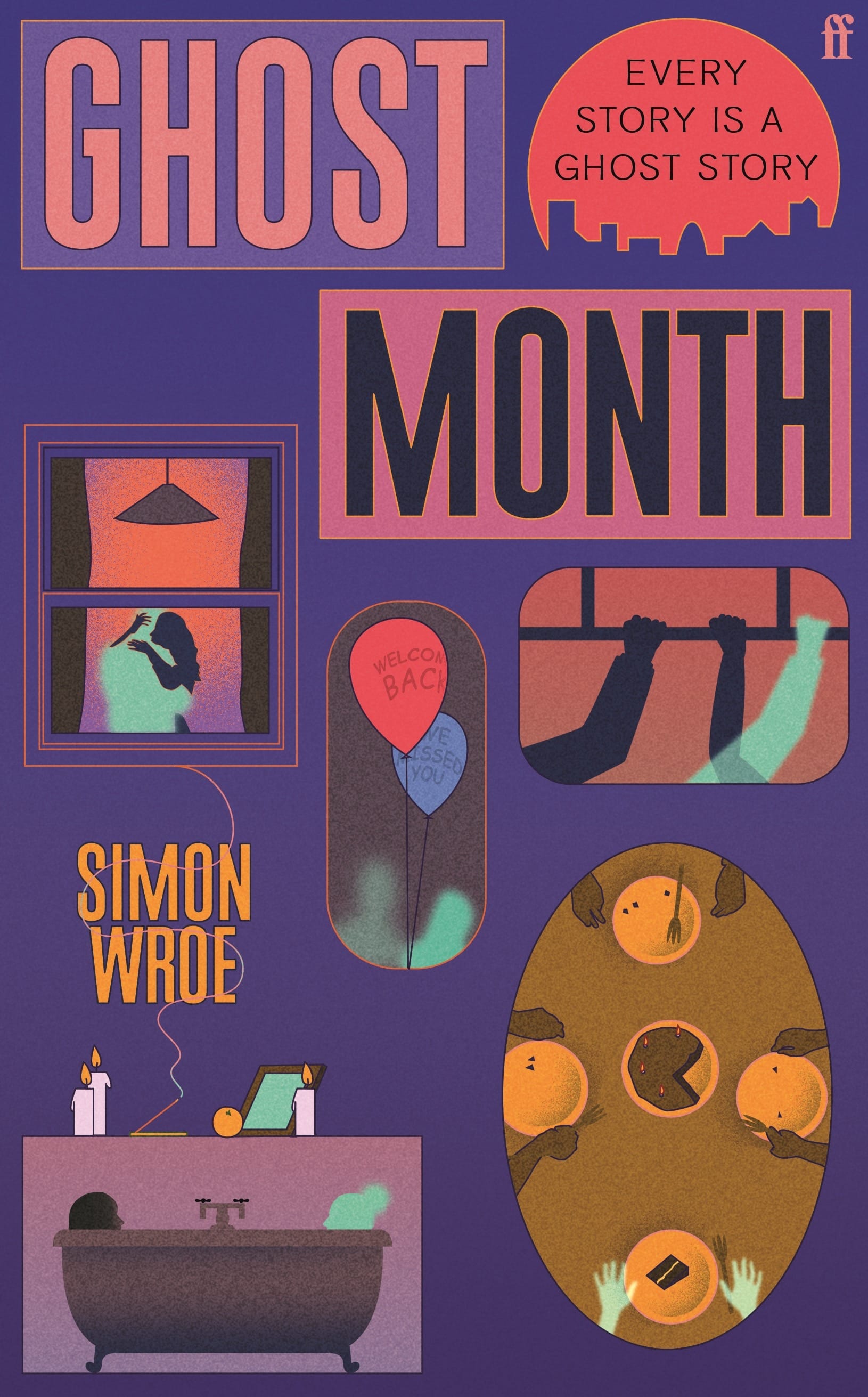
It’s not spooky season yet, but the ghosts are already back. They’re not here to scare us; instead, they make us reflect on death, grief, and the small, unseen stories of big cities — stories we may not see, but can somehow feel. An interview with Simon Wroe, author of Ghost Month.

1.Every culture has its own way of living with the dead, but Ghost Month imagines a London where ghosts become part of everyday bureaucracy and commerce. Why did speculative fiction feel like the right way to explore grief rather than writing about it realistically?
I think Londoners, and the English generally, are not great at dealing with their dead or talking about their grief. We repress a lot. The novel's speculative conceit, that people's ghosts come back for a month a year, puts grief and death back in front of people. They must face all the things they have tried to hide or forget, and find a way to live with them. Of course, there are ways to do that emotionally in fiction too, but I liked the idea of making these memories and grievances figurative.
2. One of my favourite ideas in the novel is that capitalism adapts to absolutely everything—even ghosts. From rented partners to services for the dead, the supernatural quickly becomes another market. Were you making a point about modern consumer culture, or did those ideas simply emerge naturally as you built the world?
Living in the era of late-stage capitalism, one almost expects any large-scale event will be swiftly commodified. But in societies like ours where capitalism is a structuring force, where it forms a kind of 'law of the land', at moments of intense uncertainty and change capitalism becomes a sort of coping mechanism for people. It's not a great tool for this, its solutions are limited, but it's established itself as a comprehensive world-view and so people have almost no option but to turn to it. The book takes this further, but the underlying principle is not a speculation: I've no doubt that if the dead did return, people would soon be trying to sell you extra sofas for your ghosts.
3.London itself feels like a city constantly haunted by previous versions of itself. Did the city shape the novel, or could Ghost Month only ever have taken place here?
I always saw Ghost Month as a big London novel, spanning neighbourhoods and stories and disparate lives and cultures. To that end, I suppose it could have been set in any major metropolis, but London is the city I know best, a place I have watched change over the decades, which holds all these different memories and hauntings for me.
4. Ghost stories are usually about fear, but yours seems much more interested in memory, longing and unfinished relationships. What do you think ghosts represent today?
Every age gets the ghosts it deserves, the ghosts that speak to it. In Victorian times, ghosts represented the limits of knowledge, the things beyond man's rapidly expanding domain. They were unknown and unknowable forces, usually angered by some meddling with the order of things, often terrifying. Today, I think we're all haunted by technology. Your phone is full of ghosts. The internet is a great archival tomb of the dead, of the past. Emails, dating apps – the list feels endless. We live much closer to past lives, people we used to know, other lives we could have led. We live in an age that never forgets. I feel our ghosts would reflect that.
5. There seems to be a renewed appetite for speculative fiction that isn't really about the future, but about understanding the present. Why do you think readers are increasingly drawn to stories that slightly distort reality instead of escaping it completely?
I think readers are increasingly drawn to both sorts of stories! Genres of outright escapism, like sci-fi and fantasy, are bigger than ever. But it's also true that speculative fiction is having a moment. I think the reality we all live in today is so inherently strange and disconnected that the future feels too big and fragmented a concept to deal with as one whole. We already live in a thousand different worlds. But perhaps, on a smaller scale, how we live now has made us all more comfortable with smaller distortions to reality. It's increasingly difficult to knowwhat's real, society might be about to collapse, but on the plus side, we might get some interesting books and films and TV out of it...
6. Humour runs through even the novel's most emotional moments. Do you think comedy allows readers to approach difficult subjects more honestly than straightforward drama?
I don't know if it's a universal law, but I certainly find humour a useful means of coming at heavy things sideways. It's not a means of undercutting difficult subjects. It's my experience that the rest of life doesn't stop when you're going through a tricky time, there is still comedy and banality, and keeping these factors present only adds to the pathos of your struggle.
7. Finally, if readers put Ghost Month down and found themselves looking at London differently the next morning, what would you hope they notice?
I'd hope they might think more about the everyday ghosts which haunt this city. Not the murder victims and tragedies necessarily, but the smaller, quieter ghosts: the old man who always used to sit out on that step, the neighbourhood characters now gone, the shop that used to be there, the dodgy club on that corner, what this street might have been like ahundred years ago. I don't mean this nostalgically. I accept that the city is a place of constant change. But I think London feels more impressive and impossible to imagine all the other faces it has worn.