The price of perfect sound: Audiophilia - a very expensive hobby
Some people spend hundreds of thousands chasing the perfect sound. Others just order a cocktail. We dive into the world of audiophilia, its latest obsession with listening bars, and the best places in London to hear what all the fuss is about.
And how to try it for the price of a drink?
There’s a particular breed of person who can hear the difference between two amplifiers – or will swear blind that they can. Every other sentence out of their mouths involves “warmth”, “air” or “soundstage”. They own more records than socks, and almost every one of them has, at some point, spent a sum on speakers they’d rather not say out loud (and they’re nowhere near done).
Welcome to audiophilia – a hobby with a long history, a cult following and, crucially, no spending ceiling whatsoever.
So what is it, exactly?
The word itself is simple enough: an audiophile is a lover of sound (philein is Greek for “to love”). It first appeared in print in 1951, in High Fidelity magazine, just as the hi-fi boom was getting going (high fidelity meaning sound reproduced as faithfully as possible, without distortion). By the mid-1950s, hi-fi had become a full-blown obsession in America. And it wasn’t big corporations driving it, but enthusiasts, preaching the gospel to anyone who’d listen.
Seventy-odd years on, the obsession hasn’t changed: to hear a recording as close as possible to how it sounded in the room where it was made.
Everything else – the kit, the jargon, the arguments – follows from that.
Built, not bought
Here’s what outsiders tend to miss: true hi-fi geeks rarely stroll into a shop and buy the priciest system on the shelf. Oh no, they build, tinker and hunt down vintage valves as if they were Aladdin’s lamps, chasing that famous warm “valve sound”. They source rare drivers and cables as thick as pythons, swap parts, nudge the speakers two centimetres to the left – and start all over again. Every time, it’s an attempt to cheat physics just a little, in pursuit of something very specific: the snap of a snare, the warmth of a bassline, the groove that brings a record to life.
And no, hipsters didn’t invent this. Back in the 1950s, hi-fi enthusiasts were assembling their own speaker systems because nothing off the shelf was good enough. That spirit is alive and well: Nam Tran, who runs the audio bar Ōdiobā in Stockport, once drove 36 hours to Germany to collect hand-built horns for a single speaker set-up.
So what does all this cost?
It’s complicated. Yes, specs matter – as do materials, finishes and the name on the badge. But what audiophiles are really paying for is how the music makes them feel: the goosebumps, the aural ecstasy, the moment. And that’s impossible to price fairly. Which is why the market runs from perfectly sensible to frankly absurd.
One veteran with 45 years in the hobby called a £120,000 system the price of perfection, while a single pair of Wilson Audio Chronosonic XVX speakers will set you back £395,000 – and each one weighs 310kg. (Arguably, pricing here is even more subjective than in the art market: a painting at least has provenance.)
Nowhere is this clearer than with cables. High-end speaker cables can cost thousands – one 12-foot pair sold for $7,250 – and audiophiles have been arguing for decades about whether they make any audible difference. Some blind tests say they do; others, not so much. In one 2024 experiment on an audio forum, listeners couldn’t reliably tell a copper cable from a banana.
Why the hype is back
Audiophilia might sound like a niche for pipe-smoking retired engineers, but the culture around it is having a moment. In 2025, UK vinyl sales grew for the 18th year running, reaching 7.6 million records: more than 30 times the size of the market in 2008, according to the BPI. People want to own music again, and to hear every last nuance of it.
The good news? You don’t need your own system to do that – Japan worked this out a century ago. Its music cafés first appeared in the 1920s, when records were expensive and hard to come by. The idea was simple: one expert, one serious sound system, their vast record collection – and a room full of people who’d come to listen. The first jazz kissa were dark and hushed; talking was frowned upon.
In other words, the original listening bar was never about luxury. It was about access: a chance to hear music on equipment you could never afford at home.
London’s listening-bar boom
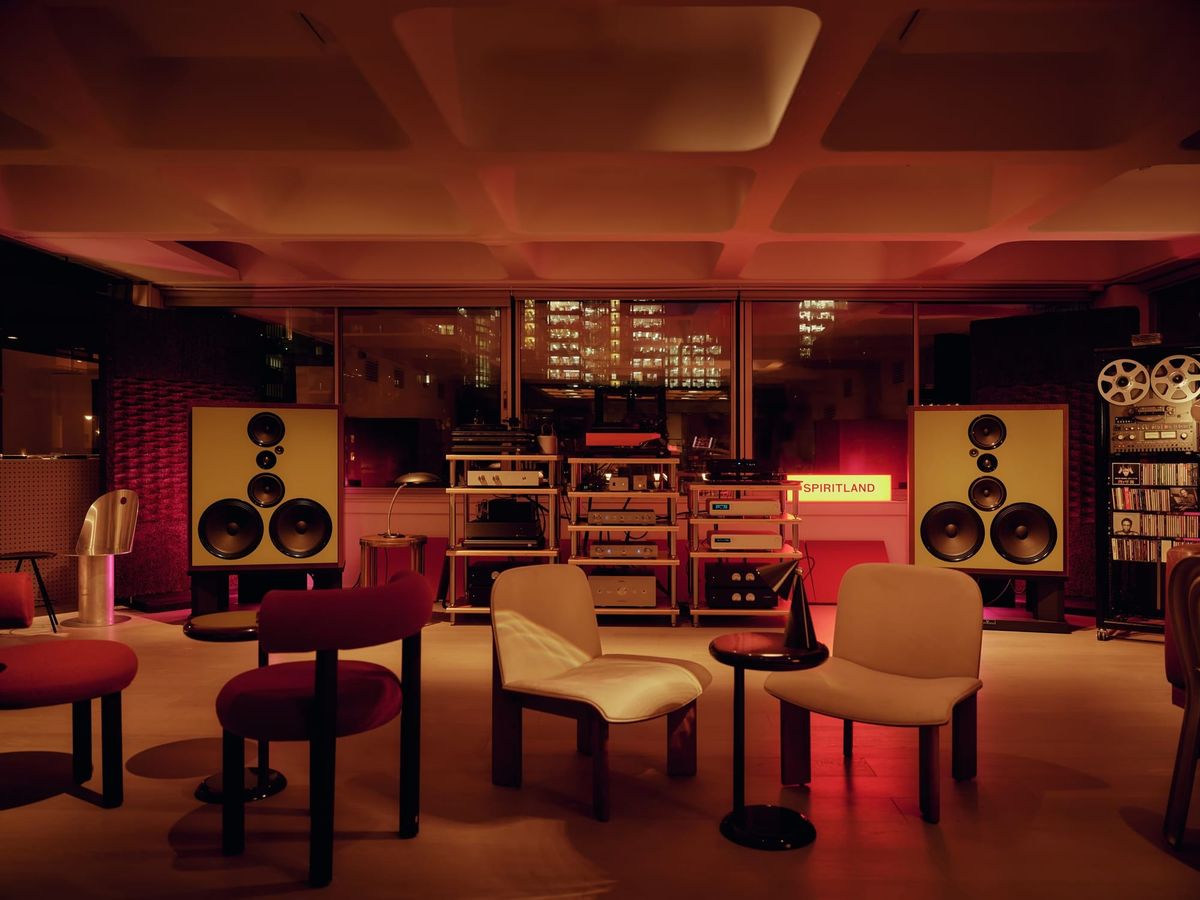
In the 2010s, the idea made its way to the world’s big cities. In London, Spiritland opened its café-bar in King’s Cross in 2016, inspired by its Japanese predecessors; Beck, the Beach Boys and IDLES have all used its sound system for album playbacks. This year, Spiritland turned ten and opened a second room at the Barbican.
Since then, the city has filled up with them – from Jumbi in Peckham to Jazu in Deptford and Equal Parts on Hackney Road. People want to listen to music together and find new common ground. Clubbing every weekend can be exhausting; listening bars offer a gentler night out, where the music matters but you can still hear your friends.
But not every bar with decent speakers deserves the name. The real ones are built around sound from day one: Equal Parts lined its walls with walnut and felt to control the acoustics, and plays nothing but vinyl – always full albums, always in order. They’ve also developed a starter pack all of their own: highballs, armchairs, fusion menus and a loo that reads you a novel.
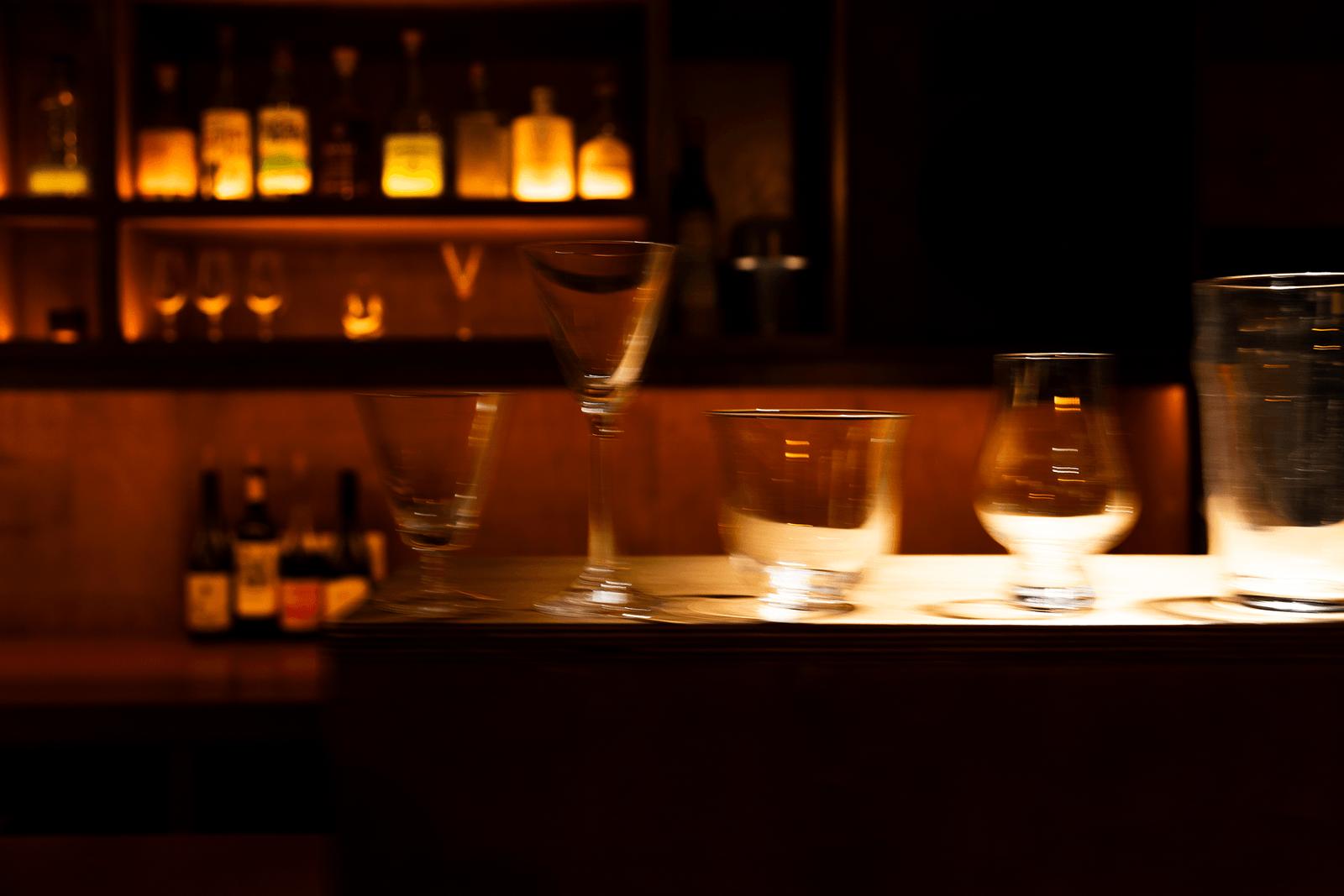
- The highball. Japanese whisky highballs are practically the official drink – Oakland’s Bar Shiru built its entire menu around them. In London, expect mezcal negronis, natural wine and short, punchy cocktails.
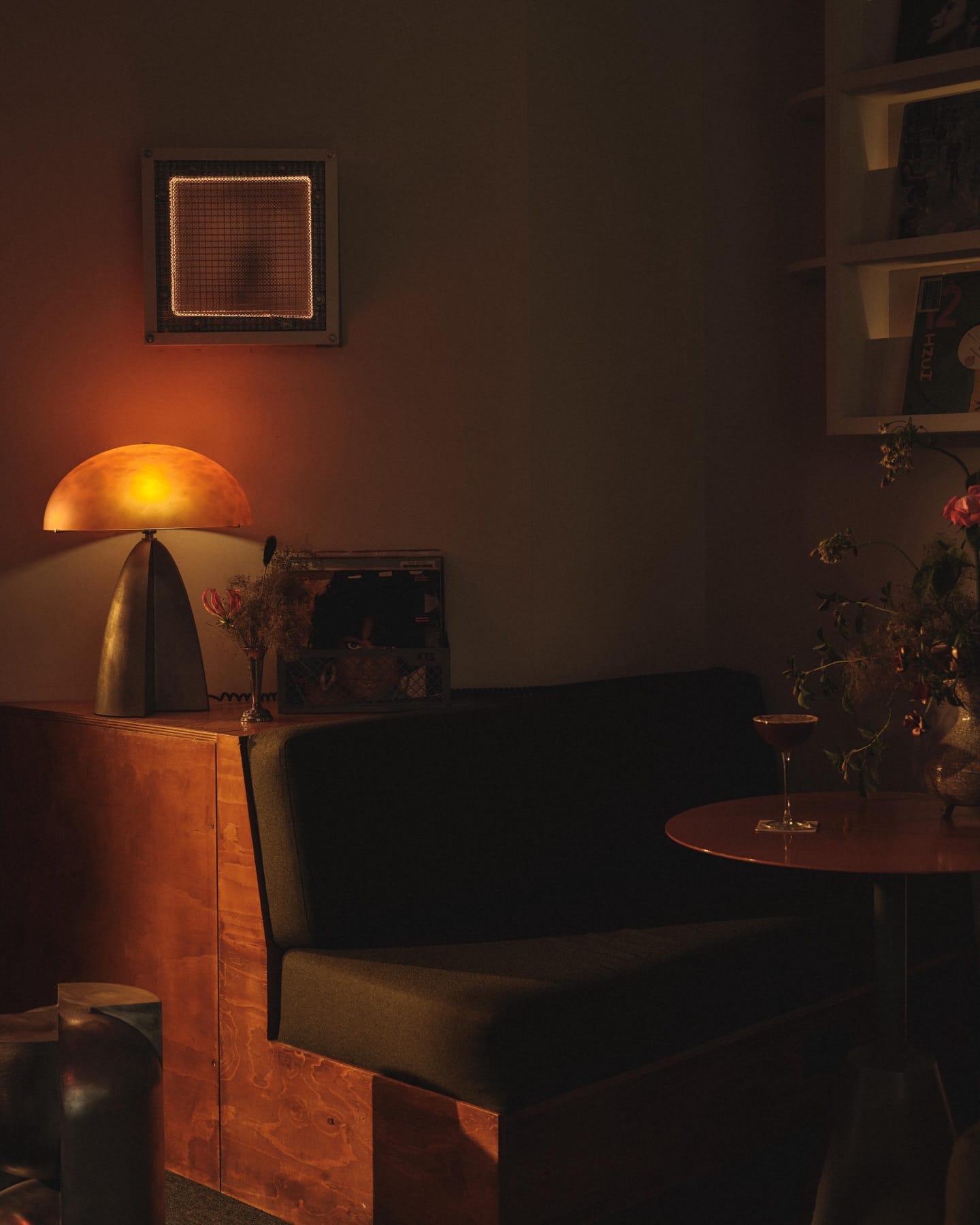
- The Eames chair. The furniture is chosen so you’ll never want to leave: squishy sofas, handmade stools or, at Lion in Tokyo, rows of velvet seats angled just so towards the speakers.
- The fusion menu. Small plates with clever little twists: Caribbean flavours at Jumbi, yakitori grilled over binchōtan at Junsei, East Asian dishes and sake at Mad Cats, Italian aperitivo at Equal Parts.
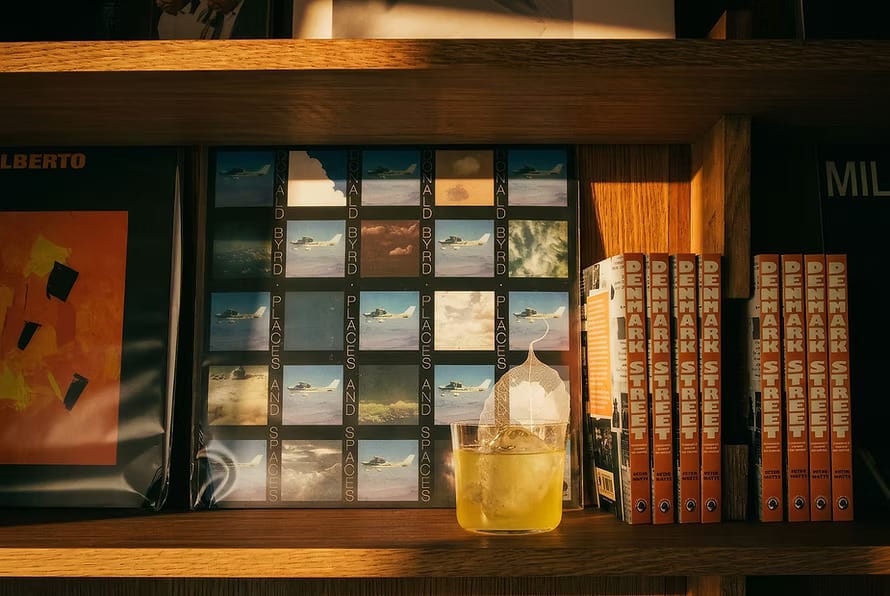
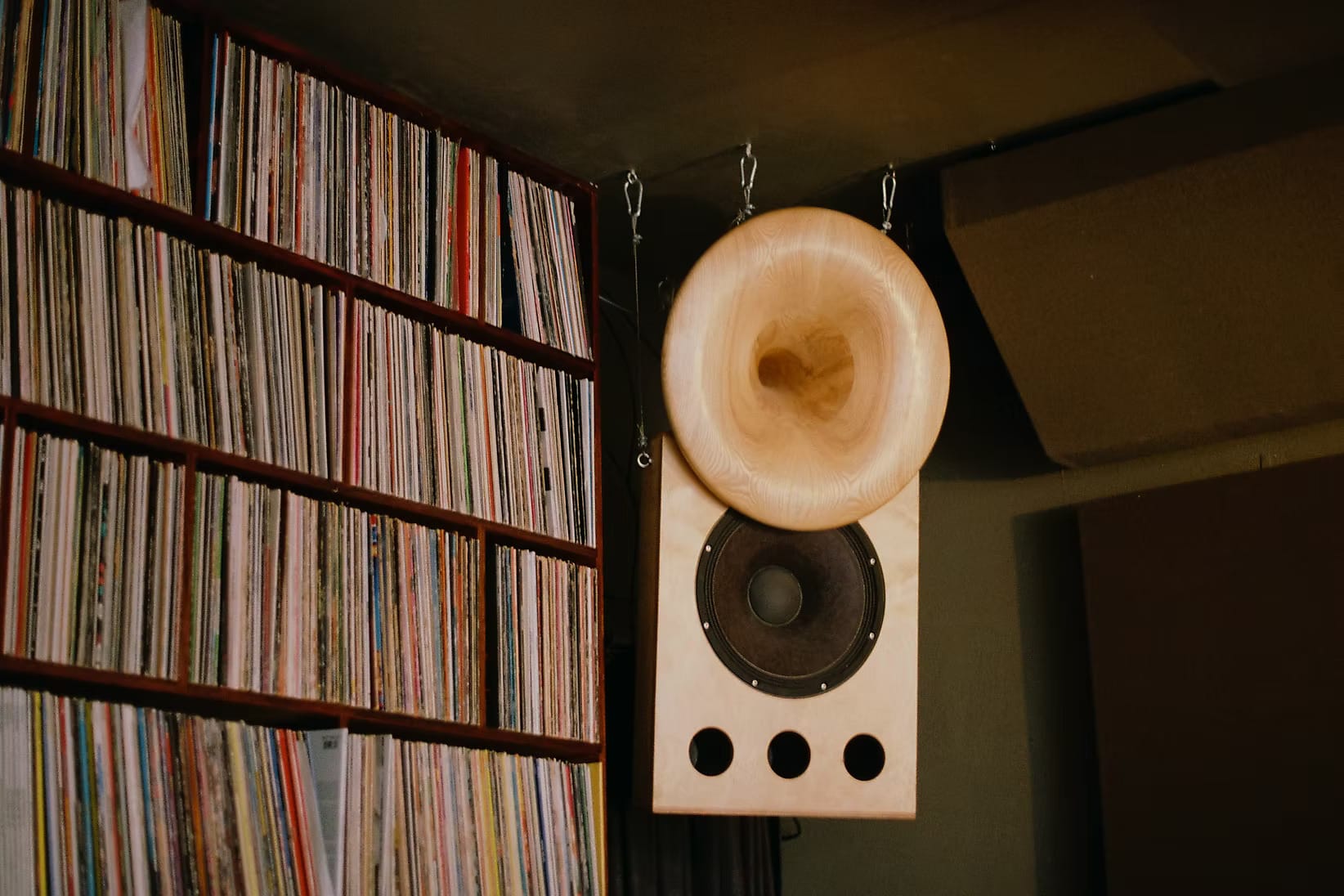
- The wall of vinyl. Warm wood, softly lit shelves, speakers that dominate the room and a collection running floor to ceiling. Goodbye Horses in De Beauvoir holds around 4,000 records.
Now it’s time to hear it for yourself. Here’s our pick of London’s listening bars:
- Spiritland at the Barbican
- Jumbi, Peckham
- Chiave, Shoreditch
- Altar, Leytonstone
- Moonrays, Soho
- Goodbye Horses, De Beauvoir
- New Forms, Chelsea
- Jazu, Deptford
Subscribe to our newsletter!
Weekly and monthly roundups of the best of London.